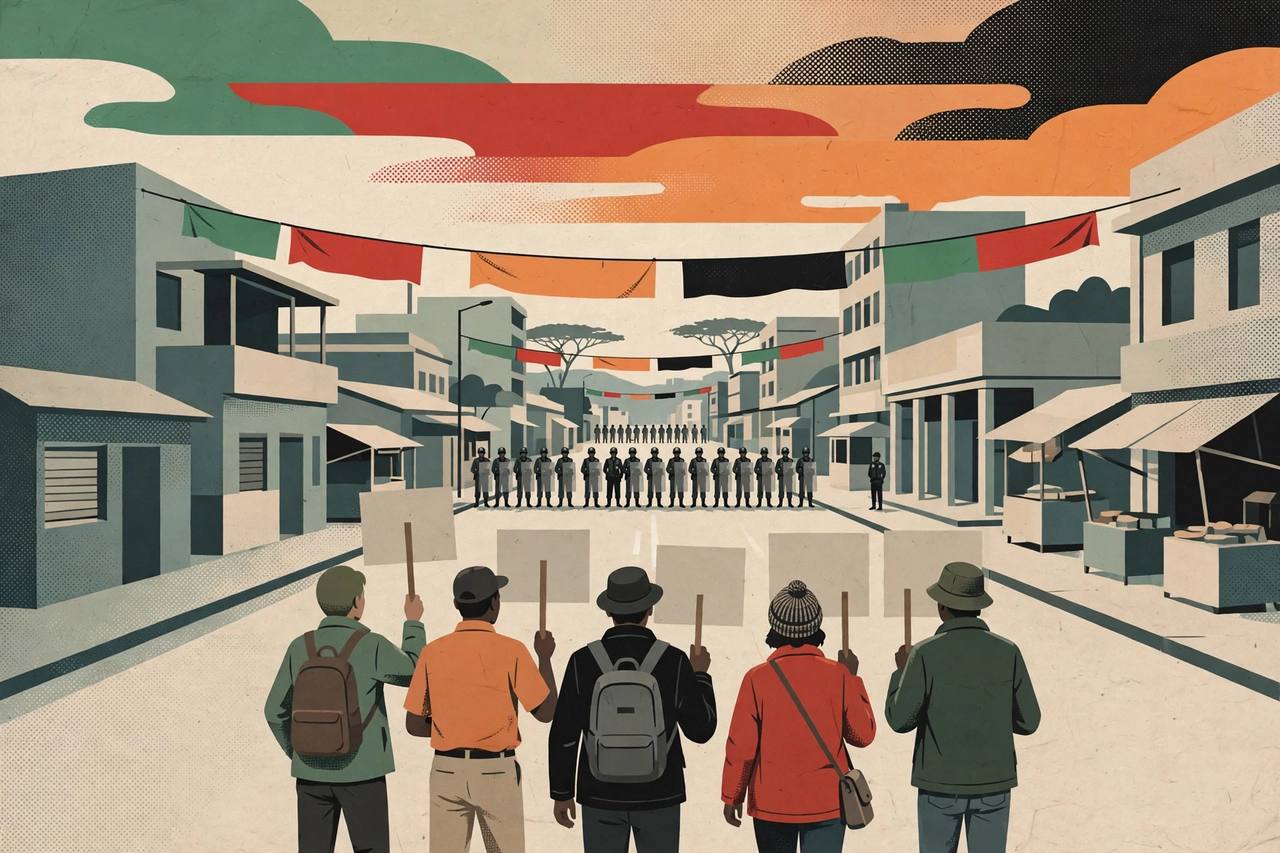
Zambian authorities have banned a planned protest against proposals to remove the country's presidential term limits, deepening concern over political freedoms in the southern African nation. The march, organised by civil society groups and human rights defenders, had been scheduled for Tuesday, 25 November, in the capital, Lusaka.
Source: Al Jazeera report (via 234radio)
The protest was aimed at petitions by three organisations aligned with the governing United Party for National Development (UPND), which have asked the National Assembly to remove the constitutional restrictions on presidential terms. If the limits are scrapped, President Hakainde Hichilema could seek to stay in office beyond 2031, when his second and final five-year term is due to end.
Police said they stopped the march because a pro-government youth group had announced a rival demonstration in favour of scrapping the limits, raising the risk of clashes. The organisers have appealed against the decision. Linda Kasonde, a former president of the Law Association of Zambia and one of the organisers, said the group had written to the police asking for another date and had appealed to the home affairs minister.
Home Affairs and Internal Security Minister Clement Andeleki defended the ban and rejected the suggestion that Hichilema wants a third term. 'There is no third term that the president wants,' he told Al Jazeera. The decision came days after Justice Minister Jack Mwiimbu pledged to protect citizens exercising their right to petition parliament for the removal of the limits.
Why the ban matters
Hichilema swept to power in 2021 on a promise of democratic reforms, and he had repeatedly criticised African leaders who sought to extend their rule through constitutional amendments. His government now faces growing scrutiny over political freedoms after a disputed general election in August, and the campaign to scrap term limits has drawn opposition from civil society organisations, the influential Catholic Church and the Law Association of Zambia, which have called for an end to the debate.
The row is unfolding alongside the prolonged detention of some of Hichilema's most prominent opponents. Brian Mundubile, who finished second in the presidential race, his running mate Makebi Zulu and several other opposition figures have been held for more than 100 days over allegations of attempting to overthrow the government and engaging in seditious activities. A day before the High Court was due to rule on their continued detention, prosecutors produced a charge sheet alleging treason — a non-bailable offence that carries a possible life sentence. Their trial is expected to begin in 2027.
The accused say the charges are politically motivated. Muhabi Lungu, secretary-general of the Tonse Alliance, the opposition coalition led by Mundubile, alleged the prosecutions were intended to weaken the opposition ahead of possible constitutional changes.
Mundubile and his co-accused were charged with treason last week after more than 100 days in detention — the case now sits at the centre of the term-limit row. The treason case against Zambia's opposition leaders
The organisers are waiting for the police to offer an alternative date for the march, while the petitions to scrap term limits sit before the National Assembly. Whether the debate ends — as the Church and the lawyers' association demand — or moves into parliament will be the next test of Hichilema's democratic credentials.
Zambia is not alone in this debate: removing presidential term limits has been one of the most contested issues in African politics, with leaders in several countries accused of using constitutional change to stay in power. Hichilema's own past criticism of such moves is now being quoted back at him by his critics at home.