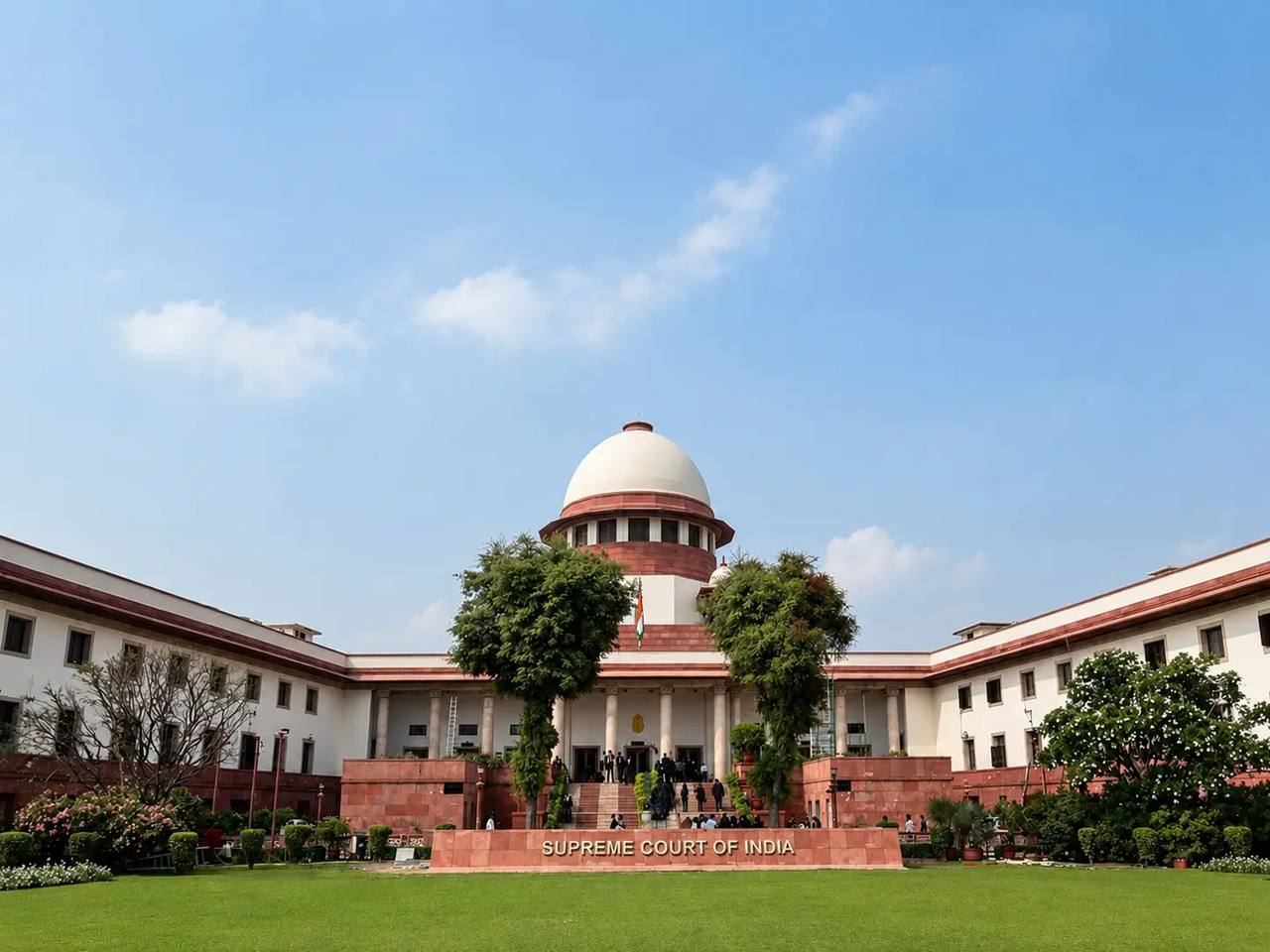
The Supreme Court on Monday expressed serious concern over what it called flagrant violations of building bye-laws across the country, questioning how municipal authorities were allowing sanctioned building plans to be breached and demolition orders to go unenforced.
Source: LiveLaw
A bench of Justices B.V. Nagarathna and Sanjeev Sachdeva was hearing the pan-India proceedings in Loganathan v. State of Tamil Nadu & Ors., a case that began with a single unauthorised structure in Chennai and was later expanded into a nationwide examination of unauthorised constructions and the commercial use of residential premises.
"What is the price paid for sanctioning of a plan? What is the price paid every time there is a check at every stage of the building? What is the price paid by the person to see that the demolition does not take place?" — Justice B.V. Nagarathna
Justice Nagarathna said municipal corporations were permitting certain persons to breach building bye-laws and build beyond sanctioned plans, with authorities acting in collusion with them. She questioned why hotels, gaming parlours, software companies and eateries were being allowed to operate in residential areas in Karnataka.
The court observed that unauthorised constructions often flourished with the active connivance of civic authorities, who allegedly expected state governments to regularise the violations, particularly before elections.
Cities are shared civic spaces
The bench underlined that cities are shared civic spaces and not merely an aggregation of individual property entitlements, and that the rule of law is rendered hollow when the authorities entrusted with enforcing it fail to do so. It said violations of building regulations damage civic infrastructure, including roads, drainage systems and traffic capacity, and that compliance with bye-laws is an elementary civic responsibility, referring to the fundamental duties under Article 51A of the Constitution.
Scope narrowed, states asked for suggestions
The court narrowed the scope of the nationwide proceedings, observing that they cannot become a platform for relief in individual cases. It disposed of all pending applications seeking individual relief, giving the parties liberty to approach the municipal corporations, municipalities, tribunals or High Courts concerned, and clarified that the pendency of the proceedings should not stop authorities from acting in accordance with law.
Source: The Bar Bulletin
For the larger systemic issue, the court directed state governments and Union Territories to place their suggestions on record through affidavits filed by responsible officers, with municipal corporations coordinating through the Municipal Commissioner or the Secretary in charge of municipal administration.
The original case had become infructuous, the court was told at the outset of the hearing, but the bench said it remained interested in examining the wider question of building-regulation violations and enforcement failures by municipal authorities.
Background
The Loganathan case began as a challenge to sealing and demolition notices for an unauthorised ground-plus-one building in Chennai. The court dismissed the special leave petitions in February 2026, but on March 25 expanded the proceedings nationwide, impleading municipal corporations and municipalities in the capital cities of all states and Union Territories and asking them to list residential areas being used for non-residential purposes. In September, it directed authorities to prioritise sealing premises where commercial activity was being carried out in areas earmarked for residential use.