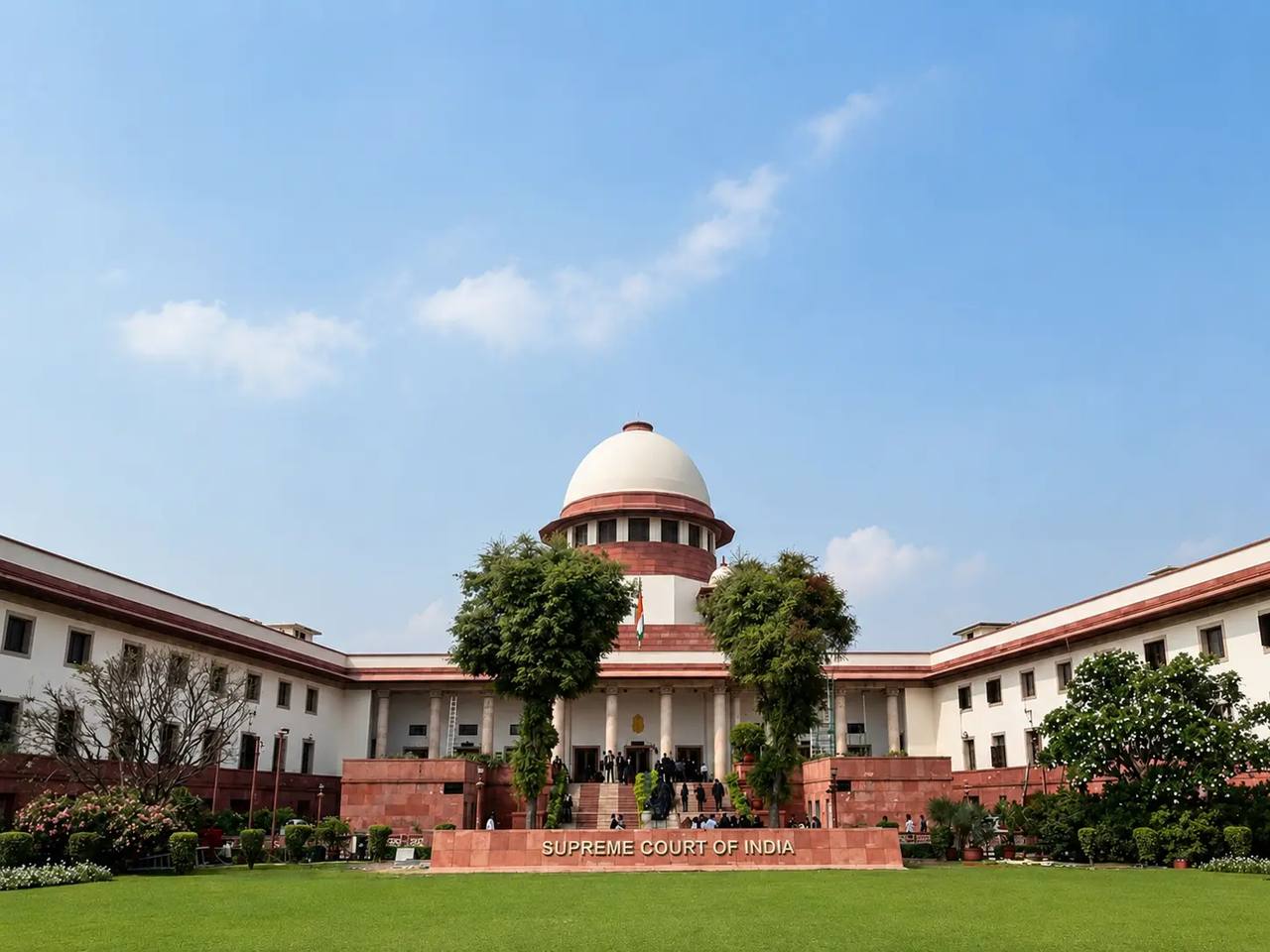
The Supreme Court on Friday asked the Uddhav Thackeray faction to explain the difference between 'dissent' and 'defection' under the Tenth Schedule of the Constitution, in the long-running Shiv Sena dispute.
Source: LiveLaw
A bench of Chief Justice of India Surya Kant and Justices Joymalya Bagchi and V Mohana put the question to senior advocate Kapil Sibal, appearing for the Thackeray faction. "Next time you need to explain from your point of view that according to you what is dissent and what is defection," the Chief Justice told him. The hearing will resume on Wednesday.
What each side is arguing
The Thackeray faction contends that the Shinde group MLAs incurred disqualification under the Tenth Schedule, and that the Maharashtra Assembly Speaker erred in refusing to disqualify them. Sibal argued that the Shinde MLAs' intention to 'exit' the alliance could not qualify as mere 'dissent', and pointed to a Constitution Bench ruling in Subhash Desai v. Principal Secretary, Government of Maharashtra.
The Shinde faction, represented by senior advocate Dhruv Mehta, says skipping a legislature party meeting cannot amount to voluntarily giving up party membership. "Dissent is not defection," Mehta told the court, arguing that absence from the June 21, 2022 meeting of the Shiv Sena legislature party does not meet the test under Paragraph 2(1)(a) of the Tenth Schedule.
Mehta also questioned the way the June 21 meeting was called — a WhatsApp message sent at 12:31 pm, a minute after the meeting had begun at 12:30 pm — and said it was not a whip, had no agenda and passed no resolution. He further disputed the Thackeray camp's reliance on an attendance register, which the Speaker had found unreliable.
Justice Bagchi observed that the idea of defection and dissent has to be seen on the principles and character of the government itself: in a unitary party government there is no dispute that it is defection, but in a coalition government the question is different.
What is at stake
The court is hearing the Thackeray faction's challenge to the Maharashtra Speaker's refusal to disqualify MLAs of the Eknath Shinde faction, and a connected petition by Uddhav Thackeray against the Election Commission's decision to recognise the Shinde faction as the official Shiv Sena and allot it the 'bow and arrow' symbol.
Sibal submitted that the two factions could not both be 'Shiv Sena' at the same time, and noted that the Shinde group later joined hands with NCP leader Ajit Pawar. The Chief Justice, in turn, put the Shinde side's case to him: the group says it continues to be part of the party, and its grievance is only against the alliance with the NCP and the Congress. The case is Sunil Prabhu v. Eknath Shinde, SLP (C) No. 1644-1662 of 2024, with connected matters.
Source: LawChakra