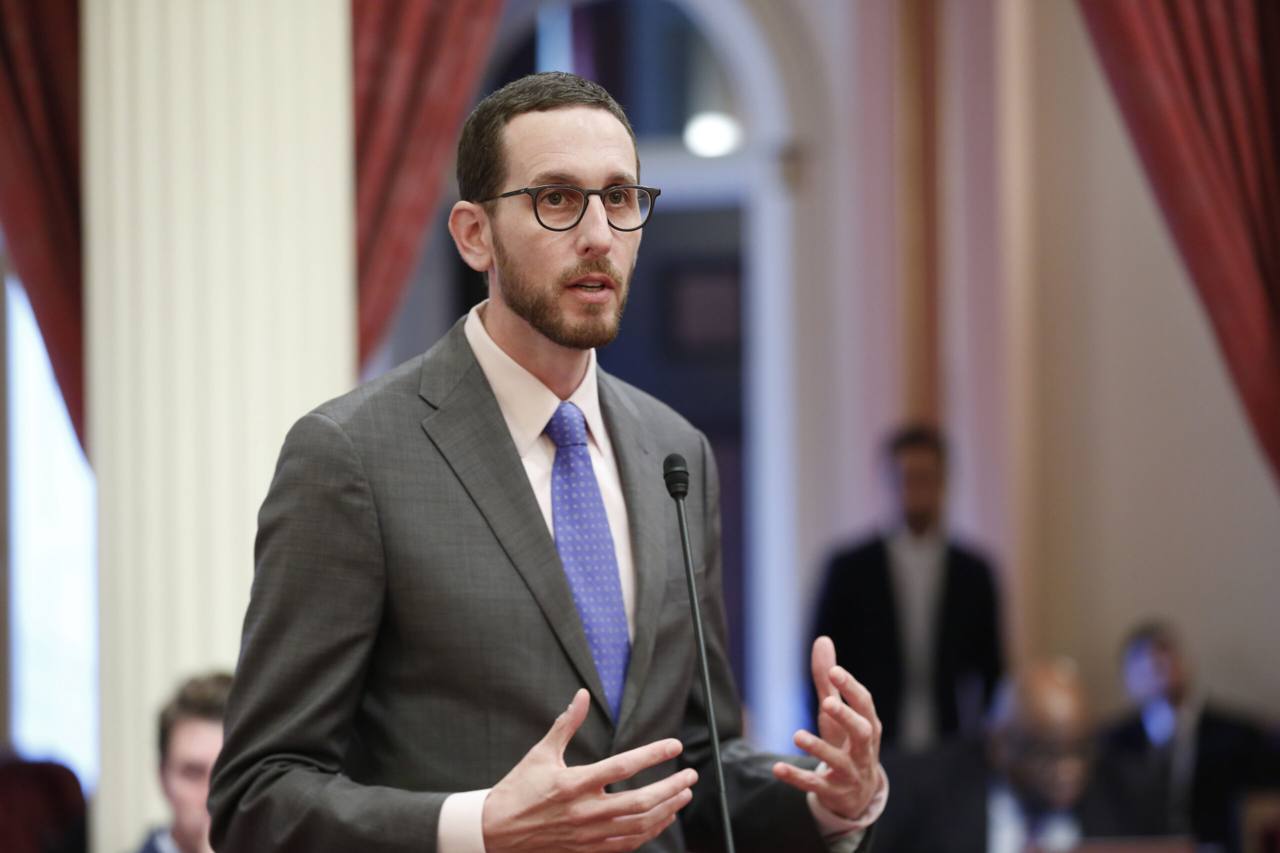
San Francisco Supervisor Connie Chan conceded defeat on Wednesday evening, November 4, 2026, to California state Senator Scott Wiener in the race for California's 11th Congressional District — the seat former House Speaker Nancy Pelosi has held for 40 years. The concession, reported by ABC7 News and KTVU, effectively settles one of the most watched Democrat-versus-Democrat contests in the country, even though the Associated Press still listed the race as “Too Early to Call” on Wednesday night, with ballots still being counted across the city.
Source: ABC7 News / US News Pulse
Chan was direct in her concession statement. “While we expect the margin to narrow significantly, we do not have a clear path to victory. I congratulate Scott Wiener on his election,” she said. The statement acknowledged both the mathematics of the count and the outcome it pointed to, and it made no suggestion of disputing the result.
The numbers at the concession
Associated Press figures put the count at 97,876 votes for Wiener and 78,594 for Chan — about 55 percent to 44 percent, a margin of roughly 19,000 votes out of more than 176,000 ballots tallied. The AP's results page showed 259 of San Francisco's 453 precincts reporting, an estimated 57.38 percent of the vote counted, and the race call status still “Too Early to Call.” A concession and a call are different things: a concession is a campaign's political decision, while a call is a statistical judgment by vote counters — which is why the formal label had not caught up with the campaigns on Wednesday night.
Source: Associated Press election results, CA-11
A seat that defined an era
California's 11th District covers the whole of San Francisco and is one of the most Democratic districts in the United States. Pelosi, first sent to Washington in the 1980s, rose from it to become Speaker of the House twice and one of the most powerful figures in American politics. She announced in November 2025 that she would not seek re-election, opening the seat for the first time in a generation — and turning the real contest into a fight inside San Francisco's own Democratic politics rather than a party-versus-party race.
Both finalists were Democrats and both were well known in the city, but they came from different wings of it. Chan, a member of the San Francisco Board of Supervisors, ran with establishment backing: Pelosi endorsed her in May 2026, citing her decades of service in health care, education and labour, and U.S. Senator Adam Schiff also backed her. Wiener, who has served in the California Senate since 2016 representing San Francisco in Sacramento, finished first in the June primary and built his run without Pelosi's endorsement.
Reporting on the campaign described clear policy differences between the two: Chan, backed by labour and progressives, argued new data-centre construction should pause until strong federal safeguards exist, and emphasised rent assistance and stability for existing residents; Wiener, backed by business voices, favoured safety standards that balance AI regulation with innovation, argued for using federal support to speed up new housing supply, and opposed the billionaires' wealth tax that Chan supported. In the final days, former candidate Saikat Chakrabarti also filed a Federal Election Commission complaint alleging Wiener's campaign coordinated illegally with a supportive super PAC — a complaint Wiener's campaign called false, and on which the FEC was not expected to act before the election.
Why California counts slowly — and why the margin may narrow
California counts mail ballots that were postmarked by Election Day and arrive afterwards, so big-city counts run for days. Chan herself predicted the margin would “narrow significantly” as those ballots are tallied. But with a lead of roughly 19,000 votes and only about 57 percent of the vote counted, her campaign concluded the remaining ballots could not plausibly erase Wiener's advantage — the judgment behind Wednesday evening's concession.
What this means for Bay Area and diaspora readers
For the large Punjabi and South Asian communities of San Francisco, the wider Bay Area and California's Central Valley, the change is generational: for the first time since the 1980s, San Francisco will be represented in the House by someone other than Pelosi. Wiener arrives in a Congress that Democrats are preparing to control in both chambers after Tuesday's midterms, which gives a first-term member from a safe seat an early place inside the majority's housing, technology and health-care debates — the same issues on which he and Chan split during the campaign.
What happens next
Counting in San Francisco continues, and the Associated Press is expected to formally call the race for Wiener once the remaining ballots confirm a lead that cannot be overtaken; California's results will then go through certification. Wiener will take the seat when the new Congress convenes in January 2027, and House Democrats hold their leadership election on November 18. Chan remains a San Francisco supervisor. Awaaz Punjab will update this story when the AP call and the certified margin land.