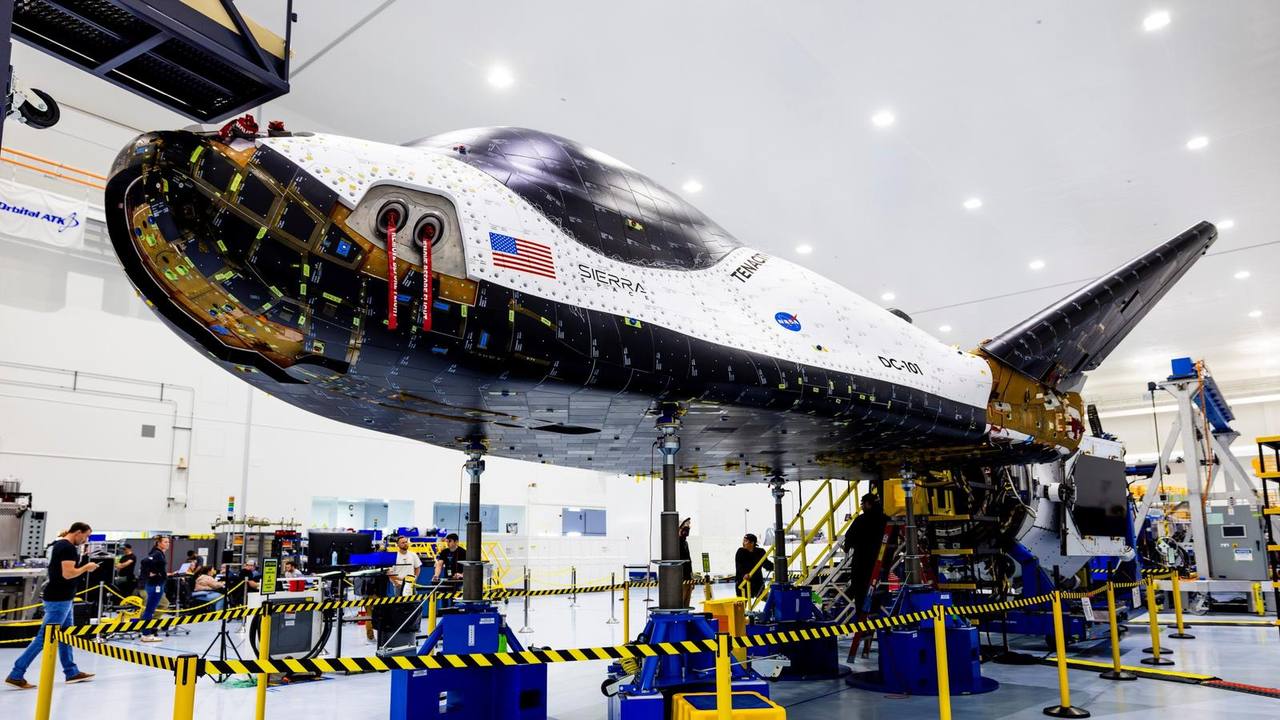
California's central coast is about to become the landing strip for America's next spaceplane. The Federal Aviation Administration has licensed Sierra Space to bring its Dream Chaser reusable spacecraft back from orbit and land it on the runway at Vandenberg Space Force Base in Santa Barbara County, clearing one of the last regulatory hurdles before the long-delayed vehicle's first flight.
Source: SpaceNews
The FAA said on November 9 that it had issued Sierra Space a Part 450 vehicle operator license for Dream Chaser reentries at Vandenberg, and the company announced the approval publicly the following day. In its statement, the agency said the license was issued well in advance of Sierra Space's targeted mission date and within the statutory 180-day timeframe, after an environmental review that found no significant impacts from the proposed landings.
Source: FAA statement via Blaze Trends
A Florida launch, a California landing
The approval covers the landing half of the mission. Dream Chaser's first flight, known as SSC Demo-1, is planned to launch from Florida aboard a United Launch Alliance Vulcan Centaur rocket, circle the Earth in low orbit, then glide back through the atmosphere and touch down horizontally on the Vandenberg runway — the first orbital runway landing by a commercial winged vehicle since NASA retired the Space Shuttle fleet in 2011. Neither the FAA nor Sierra Space has announced a launch date, and timing depends on the availability of a Vulcan Centaur.
The first vehicle, named Tenacity, is a lifting-body spaceplane with wings that fold so it fits inside the rocket's nose cone at launch. According to figures in the FAA's environmental assessment, it is designed to carry about 5,500 kilograms (12,100 pounds) of cargo to orbit and return up to 1,850 kilograms (4,080 pounds) to Earth. Sierra Space says the spaceplane keeps forces on returning cargo below 1.5 times Earth's gravity and can land on any runway long enough for a Boeing 737, which matters for delicate experiments and equipment that a hard capsule splashdown could damage.
Source: Defence Blog
Capsules splash into the ocean and can take hours to recover. A winged vehicle that lands on a runway puts fragile cargo — research samples, manufactured materials, sensitive equipment — in technicians' hands within minutes, and at a gentler 1.5 g instead of a capsule's harder ride down.
From station freighter to free-flyer demo
The flight's purpose has shifted over a decade of development. Sierra Space won a NASA contract in 2016 to resupply the International Space Station, but after repeated delays, including problems with the vehicle's propulsion system, NASA and the company revised the agreement in September 2025. Under the new plan, Tenacity's debut will be an independent free-flyer demonstration mission that does not dock with the station, leaving NASA free to order resupply flights later if the demonstration succeeds.
Source: Defence Blog
The debut will not fly empty. In September, Sierra Space signed national security and commercial customers to fly payloads on the first mission alongside NASA cargo, although the company has not identified the customers or the payloads and says it is still finalizing the manifest.
Why Vandenberg won the runway
Vandenberg was not always the primary landing site. When the FAA began its environmental review in 2024, Sierra Space proposed landing Dream Chaser at the former Space Shuttle runway at Florida's Kennedy Space Center and listed Vandenberg only as a contingency site. The final environmental assessment covered both locations, and the license issued this month names the California base as the destination — giving the state a new role in human-rated spaceflight infrastructure and the Santa Barbara County base, long known for polar-orbit launches, a recurring stream of orbital landings as well.
Source: FAA / AIAA Aerospace Daily
For California readers, the practical footprint is modest but real: up to four landings a year, each announced in advance, bringing a sonic-boom corridor and recovery operations to the central coast, plus the engineering and support work that follows a vehicle home. Vandenberg already anchors thousands of space-sector jobs in Santa Barbara and San Luis Obispo counties, and a second mission type — landings, not just launches — deepens that role.
What happens next
SpaceNews reports Sierra Space is now planning the first flight for the spring of 2027. The company had earlier described the flight as targeted for late 2026, tied to Vulcan Centaur availability, and with only weeks left in the year it has not confirmed whether that earlier target still holds. What is settled is the paperwork: with the Part 450 license in hand, the main federal licensing hurdle for reentry is cleared, and the next milestone is a confirmed launch slot in Florida — after which California will watch the sky for a spaceplane coming home.
Source: SpaceNews