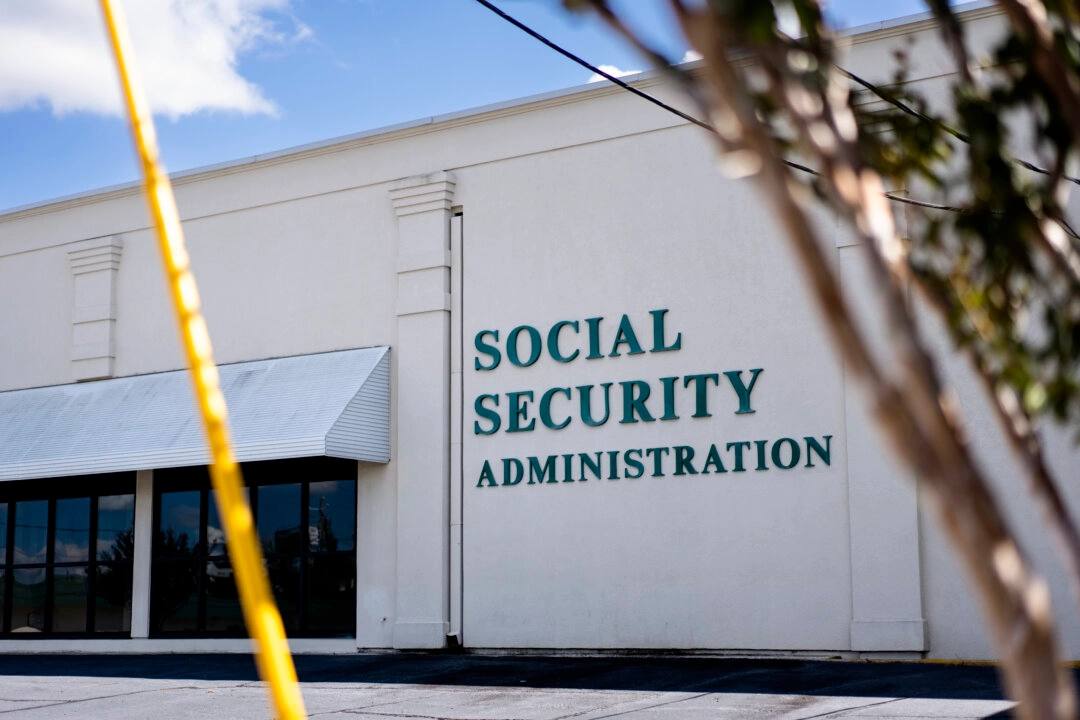
President Donald Trump signed the Claiming Age Clarity Act into law on Friday, November 20, 2026, ordering the Social Security Administration (SSA) to rewrite the labels it uses for the three ages at which Americans can start claiming retirement benefits — so that the names themselves explain how much money is at stake. The bipartisan law, H.R. 5284, does not change benefit amounts, taxes or the ages at which people can claim. It changes only the words the government uses to describe those choices, after research showed the old terms confused the very people they were meant to guide.
The three new names
Under the law, the earliest claiming age, 62 — long called the 'early eligibility age' — becomes the 'minimum monthly benefit age'. The age at which a worker qualifies for 100 percent of the benefit calculated from their lifetime earnings — the 'full retirement age', generally 66 or 67 depending on birth year, and 67 for anyone born in 1960 or later — becomes the 'standard monthly benefit age'. And age 70, the point up to which waiting keeps raising the monthly payment, becomes the 'maximum monthly benefit age', replacing the old term 'delayed retirement credits'.
Why the old words confused people
The change grew out of research at the University of Southern California's Center for Economic and Social Research, which found the old vocabulary actively misled people. The word 'retirement' wrongly suggested a person had to stop working to claim benefits. 'Full retirement age' wrongly suggested the monthly payment had reached its biggest possible amount at 67 — when in fact it keeps growing until 70. And 'early eligibility age' said nothing about the permanent penalty for claiming at 62.
The numbers behind that confusion are stark. Claiming at 62 can leave a worker with a monthly benefit up to 30 percent smaller than waiting until 67. For people born in 1960 or later, claiming at 62 pays 70 percent of the full benefit, while waiting until 70 pays 124 percent. Research cited by the Bipartisan Policy Center Action found that claiming at 70 instead of 62 raises the monthly benefit by more than 75 percent — a higher payment that lasts for life and can carry over to a surviving spouse. Yet 62 percent of new beneficiaries in 2024 claimed before full retirement age.
Source: Benzinga
How the bill became law
The bill was introduced in the House by Representative Lloyd Smucker, a Pennsylvania Republican, and Representative Don Beyer, a Virginia Democrat, and in the Senate by Senators Tim Kaine of Virginia, Bill Cassidy of Louisiana, Chris Coons of Delaware and Susan Collins of Maine. It passed the House by voice vote in December 2025 and the Senate by unanimous consent in September 2026, with support from AARP and the Committee for a Responsible Federal Budget. President Trump signed it on November 20, and the White House confirmed the signing in its list of bills signed into law.
'The confusing government terminology will now be replaced with straightforward language that better explains how the age at which someone claims Social Security affects their monthly benefit,' Smucker said in a statement. Beyer added: 'Thanks to our bill, now signed into law, seniors and older workers will now be better informed as they approach crucial decisions about retirement.' Senator Kaine welcomed the enactment, saying he was glad his bipartisan bill to help people understand the benefits they are entitled to is now law.
Source: Rep. Lloyd Smucker, House of Representatives
What it means for retirees — including in the diaspora
For the millions of Americans approaching retirement — including many Punjabi-American seniors and near-retirees in the United States — the practical effect is simple: the next time they visit the Social Security Administration's website or receive its letters, the three claiming ages will be described by what they pay, not by bureaucratic labels. Nobody needs to take any action, and nobody's current payment changes. But anyone deciding when to claim will now see, in the name itself, that 62 is the smallest cheque, 67 is the standard cheque and 70 is the largest.
The Social Security Administration has 12 months from enactment — until November 20, 2027 — to update its website, forms, guidance and printed materials with the new terms. The law does not change when anyone can claim, how benefits are calculated, or what anyone is paid. People planning their retirement can already check their own benefit estimates at ssa.gov.
The change is deliberately narrow: it fixes language, not policy. But its supporters say that is the point — for a decision that shapes a household's income for the rest of a person's life, the words on the page should make the trade-off obvious. The old labels hid it; the new ones state it.