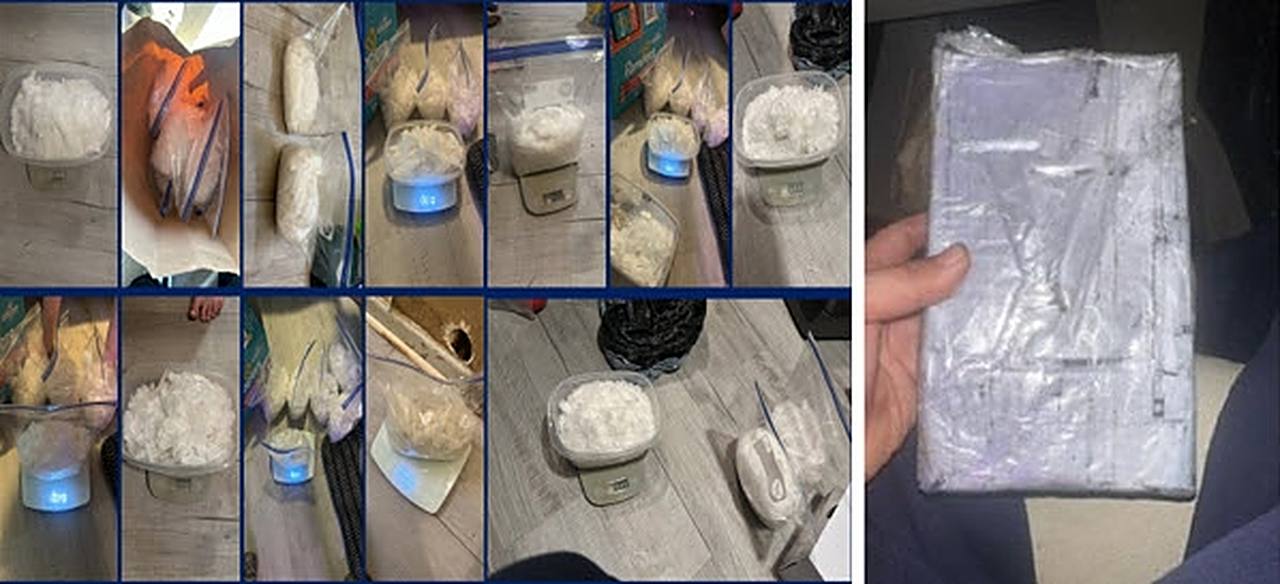
ATHENS, Georgia — A federal judge in Athens has sentenced Josue Serda, 28, of Jefferson, to life in prison and Orlando Muckle, 52, of Athens, to 30 years in prison in two separate cartel-linked drug trafficking cases, the U.S. Attorney's Office for the Middle District of Georgia announced. U.S. District Judge Tilman E. “Tripp” Self III imposed both sentences on Thursday, November 5, and federal authorities announced them alongside new charges in a third investigation — a case in which more than 100 kilograms of methamphetamine were allegedly hidden inside cabbages.
Source: Now Georgia, reporting the U.S. Attorney's Office announcement, Nov. 6, 2026
Together, the three investigations involved more than 200 kilograms of methamphetamine, fentanyl and cocaine, along with multiple seized firearms, according to the U.S. Attorney's Office. All three cases are part of the federal Homeland Security Task Force initiative targeting cartels and transnational criminal organizations. There is no parole in the federal prison system, so both sentences mean what they say: Serda will spend the rest of his life behind bars, and Muckle, who will also serve 10 years of supervised release after his prison term, will be in his eighties before he is free.
Life sentence: the CJNG fentanyl and meth supplier
Prosecutors said Serda was a supplier for the Jalisco New Generation Cartel — Cartel Jalisco Nueva Generación, or CJNG — and helped distribute more than seven kilograms of fentanyl and more than 50 kilograms of methamphetamine in the Athens area between January 2024 and May 2025. A federal jury convicted him on July 8 after a seven-day trial in Athens (case 3:25-CR-00010) of conspiracy to distribute controlled substances, four counts of distributing fentanyl, two methamphetamine distribution offences — one of them on premises where a person under 18 was present — and a firearms offence, according to the Justice Department.
Source: U.S. Department of Justice, Middle District of Georgia, July 2026 verdict release
At a news conference on Friday, U.S. Attorney Will Keyes said Serda had acknowledged in a message that the fentanyl he was moving could kill people, but that the money was too good — and that Serda at times moved fentanyl while his toddler was present. “We're not spending our time targeting the drug dealer on the street corner — we are trying to go up the chain as quickly as we can,” Keyes said, describing investigators' aim of reaching the people at the top of trafficking operations, whom he described as profiting the most from others' suffering.
Source: WPGA News (Gray Media), reporting the U.S. Attorney's announcement, Nov. 7, 2026
Court records cited by prosecutors add a striking detail about the day of Serda's arrest. When FBI SWAT agents arrived at his home on August 26, 2025, Serda contacted a drug supplier in Mexico through WhatsApp and warned Alicio Yanez-Pineda, known as “Cochito,” that the FBI was there, telling him to have a truck scheduled to deliver narcotics that day turn around. Prosecutors also cited Serda's 2015 conviction for threatening a police officer, including threatening to have cartel associates harm the officer's family. A co-defendant, Gregory Robinson, 32, of Athens, was convicted in the same July trial on conspiracy and fentanyl charges and also faced a maximum of life in prison, the Justice Department said at the time of the verdict.
30 years: the Gulf Cartel cocaine distributor
In the second case, Muckle — also known as “Lando” — pleaded guilty on August 6 to possession with intent to distribute cocaine. Investigators said he obtained cocaine through sources associated with the Gulf Cartel and distributed it in the Athens area. FBI surveillance identified two apartments used in the operation: Muckle stored cocaine at one on Jennings Mill Parkway and used another on Macon Highway for drug transactions, and investigators made multiple controlled cocaine purchases from him using a confidential source. Searches in July 2025 uncovered 26 kilograms of cocaine that Muckle admitted he intended to distribute.
Third case: methamphetamine hidden in cabbages
The third investigation produced charges, not a conviction. Raul Perez-Mondragon, 30, of Querétaro, Mexico, appeared in federal court on Thursday, November 5, before U.S. Magistrate Judge Charles Weigle and remains in federal custody awaiting trial, with an immigration detainer also in place. Investigators seized more than 100 kilograms of methamphetamine and multiple firearms from an Athens residence on Deer Creek Court after surveillance allegedly showed Perez-Mondragon distributing drugs from the home. Prosecutors allege the methamphetamine was concealed inside cabbages wrapped in green cellophane to avoid detection, in packages of about one kilogram each, with shipments allegedly containing as many as 300 packages. He faces drug conspiracy and possession-with-intent charges and two firearms charges, one of them possessing a firearm while unlawfully present in the United States. The charges are allegations; Perez-Mondragon is presumed innocent unless proven guilty beyond a reasonable doubt.
“Cartel-connected drug trafficking organizations pose a serious threat to our communities, fueling violence and putting lives at risk through the distribution of deadly drugs and the proliferation of illegal firearms,” said Marlo Graham, the FBI's Special Agent in Charge in Atlanta. Athens-Clarke County Police Chief Jerry Saulters credited cooperation among agencies for the results: “The distribution of fentanyl, methamphetamine, and cocaine brings violence, addiction, and significant harm to our communities.”
The investigations brought together the FBI, the Drug Enforcement Administration, Homeland Security Investigations, the Athens-Clarke County Police Department, the Georgia Bureau of Investigation and the Georgia Department of Community Supervision. Athens — a university city of roughly 130,000 people in Clarke County, about 70 miles northeast of Atlanta — sits on the U.S. 29 and State Route 316 corridors feeding the Atlanta metro, a reminder of how cartel supply chains now reach well beyond border states and big cities into mid-sized Southern communities.
Why this matters on Georgia's highways
For the Punjabi truck drivers who run Georgia's freight corridors — Interstate 85 through Athens' orbit, Interstate 20 and the Atlanta distribution belt — cases like this one are the upstream end of a chain they see from the cab: cartel product moving in bulk through warehouse country, and the enforcement operations that follow it. Fentanyl is the deadliest part of that chain. Just two milligrams — a few grains — can be a lethal dose, which is why prosecutors treat kilogram-quantity fentanyl supply as a mass-casualty risk and why Judge Self's life sentence for a 28-year-old supplier drew no objection from the investigators who built the case.
What happens next
Serda's life sentence and Muckle's 30-year term are final unless appealed; neither man is eligible for parole. Perez-Mondragon's case now moves toward trial in federal custody, where a conviction on the methamphetamine and firearms charges could bring decades in prison — but he has not been convicted of anything, and the cabbage-concealment account remains the prosecution's allegation until a jury hears it. Keyes said the task force's work continues up the chain, toward the cartel-linked suppliers above the three Athens defendants. This report is based on the U.S. Attorney's Office announcements reported by Now Georgia and WPGA, and on the Justice Department's release on the July verdicts.