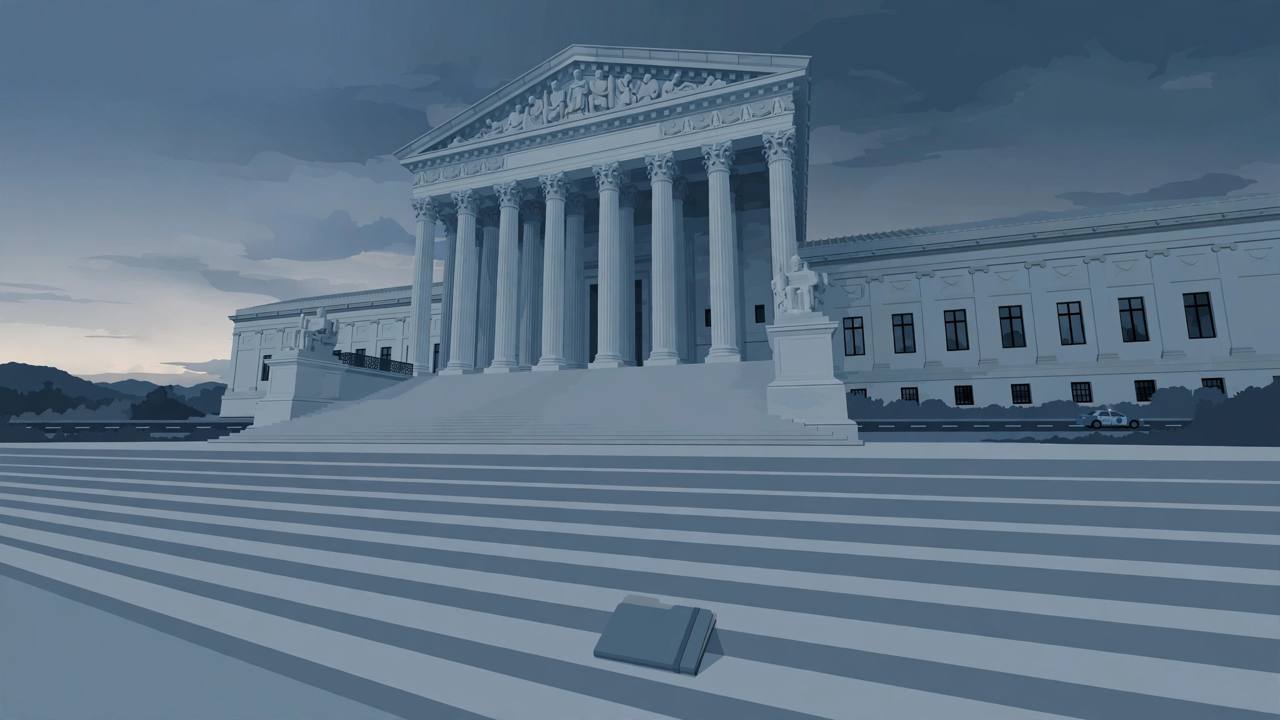
The United States Supreme Court on Monday, November 9, 2026, declined to hear the appeal brought by the family of Ricky Cobb II, the 33-year-old man shot and killed by a Minnesota state trooper during a traffic stop on Interstate 94 in Minneapolis in July 2023. The refusal, issued without a ruling on the merits, leaves in place lower federal court decisions that dismissed the family's civil rights lawsuit against Trooper Ryan Londregan and Trooper Brett Seide.
Source: Twin Cities Local News
For the Cobb family, the order closes the last federal courtroom door in a case that has run for more than three years — through a criminal prosecution that was filed and then dropped, a civil lawsuit dismissed on qualified-immunity grounds, an appeals court affirmation, and now a Supreme Court that has chosen not to intervene. Reporting on the decision stressed a point lawyers repeat in every denial of review: the Supreme Court's refusal to hear a case is not a decision that the shooting was justified, and it sets no new precedent on the constitutional questions the family raised.
Source: Minnesota Current
What happened on Interstate 94 on July 31, 2023
Cobb, 33, was stopped on Interstate 94 in Minneapolis in the early hours of July 31, 2023, after troopers said they could not see taillights on his car. According to the court record summarised in the appeals proceedings, Cobb — who had a warrant — refused to get out of the vehicle and instead put the car in drive. Trooper Ryan Londregan, who had arrived at the stop after Troopers Seide and Erickson, fired his weapon, killing Cobb. The shooting was captured in circumstances later examined frame by frame in both the criminal and civil cases, and it ignited a statewide argument in Minnesota about traffic stops, warrants and the use of deadly force.
The criminal case: charged with murder, then dropped
Hennepin County Attorney Mary Moriarty charged Londregan with second-degree unintentional murder, first-degree assault and second-degree manslaughter — a rare step against a serving trooper, and one that drew strong support from Cobb's family and fierce backlash from law-enforcement organisations, which argued the trooper had faced a dangerous, fast-moving situation. On June 2, 2024, Moriarty dismissed the charges, announcing that new evidence disclosed by the defence would make it impossible to prove beyond a reasonable doubt that the use of force was unauthorised. The dismissal ended the criminal prosecution but not the family's legal fight.
The civil case: qualified immunity at every level
Cobb's mother, Nyra Fields-Miller, acting for his estate, sued Londregan and Seide in federal court under Section 1983, alleging an unreasonable seizure and excessive force. On October 30, 2024, U.S. District Judge Nancy Brasel dismissed the lawsuit, finding that Londregan's use of force was objectively reasonable and that both troopers were protected by qualified immunity — the doctrine that shields officials from civil damages unless they violate a clearly established constitutional right. On July 7, 2026, a three-judge panel of the U.S. Court of Appeals for the Eighth Circuit — Judges Steven Colloton, Raymond Gruender and Jonathan Kobes — affirmed the dismissal in full, holding that the estate had shown neither a constitutional violation nor a breach of clearly established law.
Source: Minnesota Lawyer
Why the denial matters beyond one family
Qualified immunity is one of the most contested doctrines in American policing law. Supporters, including police unions, say officers making split-second decisions cannot work under the threat of personal lawsuits judged in hindsight. Critics — among them the Cobb family's lawyers and civil-liberties groups — say the 'clearly established law' test makes accountability nearly impossible unless an earlier case matches the facts almost exactly. Because the Supreme Court declined review without comment, that debate continues in Congress and state legislatures rather than in this case: the Eighth Circuit's reasoning now stands as the final word for Minnesota and the other states in its circuit.
When the Supreme Court declines to hear an appeal, the lower court's ruling simply stays in force for the parties. The justices give no reasons, the denial carries no opinion on whether the shooting was lawful, and the same legal question can return to the court in a future case.
What happens next
With the federal civil case ended, there is no further appeal available to the family in this lawsuit, and the criminal case has been closed since June 2024. As of the latest reporting, Cobb's family had been contacted for comment on the Supreme Court's decision and had not responded. The case remains a reference point in Minnesota's continuing debate over State Patrol traffic-stop practices and police accountability — a debate that will now proceed in the legislature and in other cases, not in the Cobb file itself.