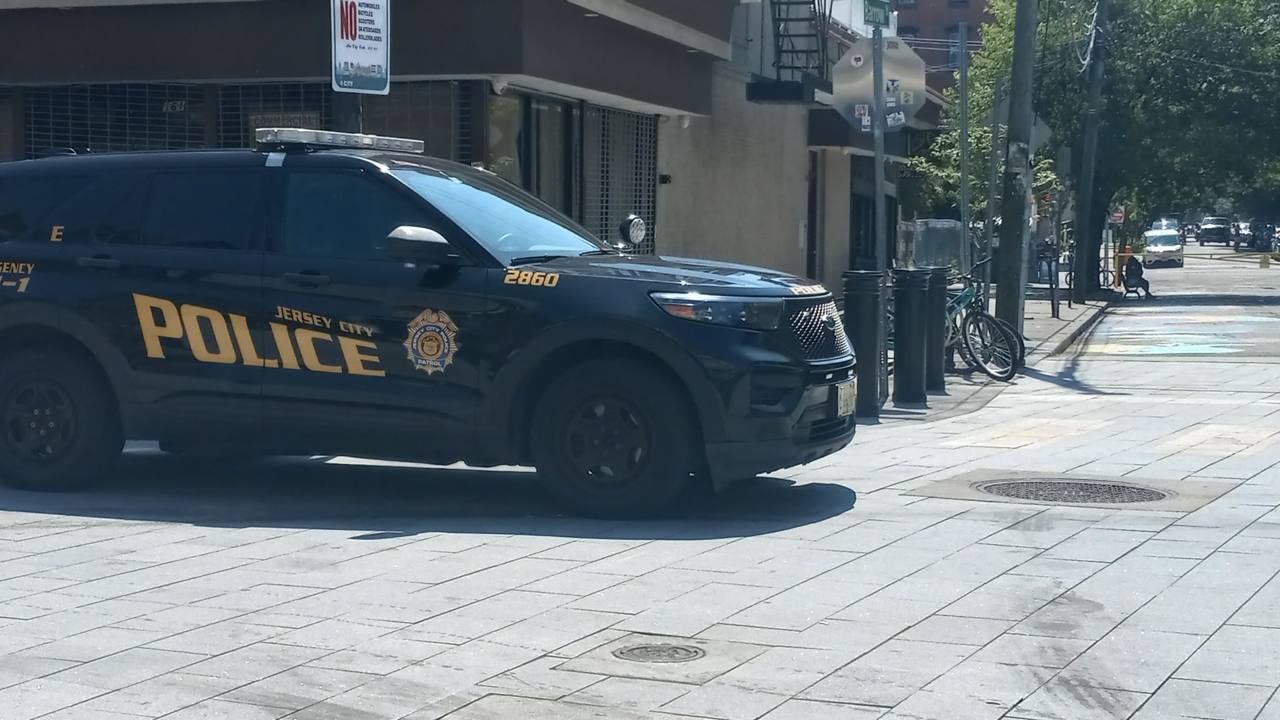
Jersey City will start 2027 with two hometown officers at the top of its public safety leadership, after Mayor James Solomon announced on Tuesday, November 10, that Police Lieutenant Travis Ragland will become Chief of Police and Jocelyn Roldan will become Acting Director of the Department of Public Safety. The City of Jersey City said the two bring nearly four decades of combined experience in the Jersey City Police Department, and both were born or raised in the city they will now lead.
Source: City of Jersey City
The appointments carry two historic firsts. Ragland will be Jersey City's first Black police chief in nearly 40 years — the last Black officer to hold the job was Walter Adams in the late 1980s — and Roldan will be the first Latina woman to lead the Department of Public Safety. Roldan steps in as acting director on January 1, 2027, and Ragland takes command of the police force on February 1, 2027.
Two careers built on Jersey City streets
Ragland, born and raised in Jersey City, joined the Police Department in 2005 and brings more than 21 years of law enforcement experience, the city said. Most recently he served as a police lieutenant and Traffic Unit Commander, leading a team of sworn and civilian personnel and supporting the city's Vision Zero traffic safety initiative. He worked closely with outgoing Police Chief Robert Kearns on planning security for major citywide events, including America's Sail 250th on the Hudson, the Fourth of July fireworks and events surrounding the 2026 FIFA World Cup, which the city said helped keep hundreds of thousands of attendees safe. Earlier in his career he served in patrol, in narcotics investigations and in the Hudson County Prosecutor's Office Homicide Unit.
Roldan was raised in Jersey City and joined the department in 2009. She previously served as Chief of Staff to the Public Safety Director, coordinating priorities across the Police, Fire, Emergency Management, Quality of Life and Parking Enforcement divisions and the crossing guard operations. She has also served as Internal Affairs Commander — the unit that investigates the police themselves — as well as Executive Officer and Sergeant, overseeing investigations and coordinating with the Hudson County Prosecutor's Office and the New Jersey Attorney General's Office. She is also acting commander of the city's East District.
"Public safety starts with strong leadership, accountability and commitment to the people who call Jersey City home," Mayor James Solomon said. "Jocelyn and Travis have spent their careers serving this city and they understand the communities, challenges and people behind the work."
The change ends the tenure of Public Safety Director Anthony Ambrose, who was originally supposed to stay for three months and served well beyond that commitment, the city said. Ambrose will work with the incoming leadership team to support the transition. Under his tenure, the city said, crime in Jersey City declined by about 25 percent citywide. His administration launched JC IMPACT, the department's data accountability system, introduced intelligence-led policing, established Domestic Violence and Traffic units, reformed off-duty deployment and strengthened the partnership with the Hudson County Sheriff's Office.
Traffic safety was Ragland's proving ground
Ragland takes the chief's office after leading the unit the mayor rebuilt first. Solomon re-established the Traffic Enforcement Division by executive order after taking office, and on October 19 the city transferred 10 officers from patrol into the division, bringing it to 19 officers, including eight motorcycle operators, paid for with asset forfeiture funds rather than tax dollars, the city said in its November 2 announcement. The division issued 1,495 summonses in the week after the transfer, up 81 percent from 824 the week before. The work is part of the city's Vision Zero commitment to eliminate traffic deaths and serious injuries, and beginning in November, command staff and traffic officers are attending the captain's meeting in each of the city's four police districts to hear residents' traffic concerns directly.
Source: City of Jersey City
"I was born and raised in Jersey City, and for the past 21 years, I've had the privilege of serving the city that raised me," Ragland said. "As Chief, my priorities will be building trust with our community, using data- and intelligence-led policing to address the root causes of crime and residents' concerns, and making sure our officers have the support they need to do their jobs effectively." Roldan said leading the department she grew up in was "an incredible honor," and promised leadership, resources and support for staff, stronger accountability and a department responsive to the community.
Outgoing Chief Robert Kearns, who said he has served the people of Jersey City for 39 years, endorsed his successor. "Serving as Chief of Police has been the greatest honor of my career," Kearns said. "I am proud of what we have accomplished together and confident that the department is in good hands with Chief Ragland."
Why Jersey City watches this closely
Jersey City, across the Hudson River from New York City, is one of the most diverse cities in the United States, and its policing decisions are watched well beyond City Hall. The city is home to a large South Asian community, including Punjabi and other Indian families and businesses around Journal Square and Newark Avenue, as well as large Filipino, Egyptian, Hispanic and Black communities in neighbourhoods such as Greenville, Bergen-Lafayette, the Heights and Journal Square. For those residents, the new leadership's promises — complaint handling, traffic enforcement on dangerous blocks and trust between officers and immigrant communities — will be measured in daily encounters, not ceremonies.
What happens next
Roldan takes over the Department of Public Safety first, on January 1, 2027, with the police, fire and emergency management divisions under her direction, while Ambrose supports the handover. Ragland follows on February 1, 2027, succeeding Kearns as chief. Their first tests will be visible ones: whether the traffic division's early summons numbers turn into fewer deaths and serious injuries on city streets, whether JC IMPACT data reporting continues, and whether the intelligence-led model Ambrose built survives the change of command.
Source: Urban City Podcast Group