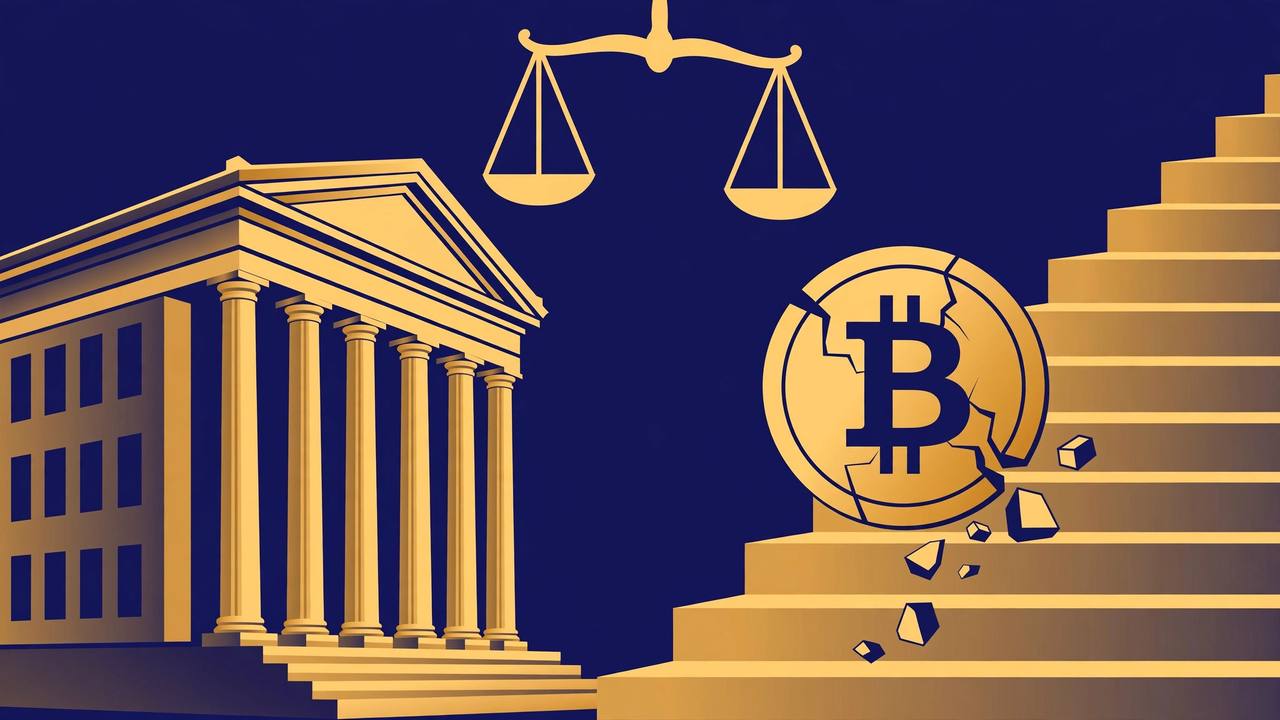
New York Attorney General Letitia James announced on Wednesday, November 25, 2026, that a New York court has ordered the founders of collapsed cryptocurrency platform NovaTech to pay $1,367,023,585 — about $1.37 billion — for running a Ponzi scheme that defrauded hundreds of thousands of investors around the world, including about 11,000 New Yorkers.
The judgment, issued in the Commercial Division of the New York Supreme Court by Justice Anar Rathod Patel, holds Cynthia and Eddy Petion, the married couple who founded NovaTechFx (NovaTech), jointly liable for $1,134,549,691 in disgorgement and $232,473,894 in prejudgment interest. Three NovaTech entities share the liability. The attorney general's office said the award can now be docketed as a money judgment.
A platform that barely traded at all
NovaTech presented itself as a cryptocurrency and foreign-exchange trading platform and promised investors weekly returns of 2% to 4% — 15% to 20% a month. Between August 2019 and May 2023, investors deposited $1,160,544,294 in cryptocurrency into NovaTech wallets, according to the attorney general's filing. Only $25,994,603 — about 2.24% of the money taken in — was ever placed with a trading provider, B2Broker. The state says every withdrawal, every 'weekly return' and every recruitment bonus was paid out of other investors' deposits, not from trading profits.
That is the structural signature of a Ponzi scheme, prosecutors say: a business that pays old investors with new investors' money while claiming the profits come from trading. The U.S. Securities and Exchange Commission, in its own complaint in August 2024, alleged NovaTech raised more than $650 million from over 200,000 investors between 2019 and 2023.
Targeted through faith and community
James's office says the Petions deliberately targeted immigrant families — above all Haitian New Yorkers — through prayer groups, social media and WhatsApp group chats, promoting the scheme in the Creole language and leaning on religious faith and community trust. 'NovaTech cruelly targeted immigrant families through faith and community groups with the promise of a better life while robbing them of their life savings,' James said in her statement.
The couple's earlier venture followed the same pattern, the state says. AWS Mining, a cryptocurrency mining company the Petions promoted before NovaTech, promised investors a guaranteed 200% return and collapsed in April 2019. Cynthia Petion and AWS Mining were ordered to pay a further $6.2 million combined for that scheme — $4,694,712 tied to Petion's AWS Mining profits and $1,455,666 from AWS Mining itself.
A lawsuit that outlasted the fugitives
James sued NovaTech and AWS Mining in June 2024. The Petions fled the United States and never answered the case; in August 2025 a default judgment established their liability and banned them from the securities, commodities and cryptocurrency industries. On October 22, 2026, the attorney general's office asked the court to fix the amount at about $1.37 billion. Wednesday's judgment sets that figure.
Four of the scheme's top promoters have already settled separately, agreeing to pay a combined $5,975,861 and accepting permanent bans from the securities, commodities and cryptocurrency industries: Martin Zizi ($2.9 million), Frantz Ciceron ($2.05 million), James Corbett ($750,000) and Ricardo Roy Sr. ($275,861).
What happens next — and will victims get their money back?
That is the open question. The Petions fled the country before the default judgment, and it is not clear where they are or how much of the $1.37 billion can ever be collected. The attorney general's office said it would pursue enforcement of the judgment, and James called the ruling 'some semblance of justice' for the victims. Anyone who invested through NovaTech or AWS Mining and has not yet contacted the authorities should reach out to the New York Attorney General's office.
Promises of guaranteed weekly returns of 2% to 4% — and pitches delivered through prayer groups, WhatsApp chats or trusted community figures — are classic warning signs of a Ponzi scheme. Legitimate investments never guarantee returns, and no trading platform can pay steady weekly profits whatever the market does. Families approached with such offers should check the promoter's registration with state or federal regulators before sending any money.
This report is based on the New York Attorney General's press release of November 25, 2026, and the court documents in the case.
Source: New York Attorney General