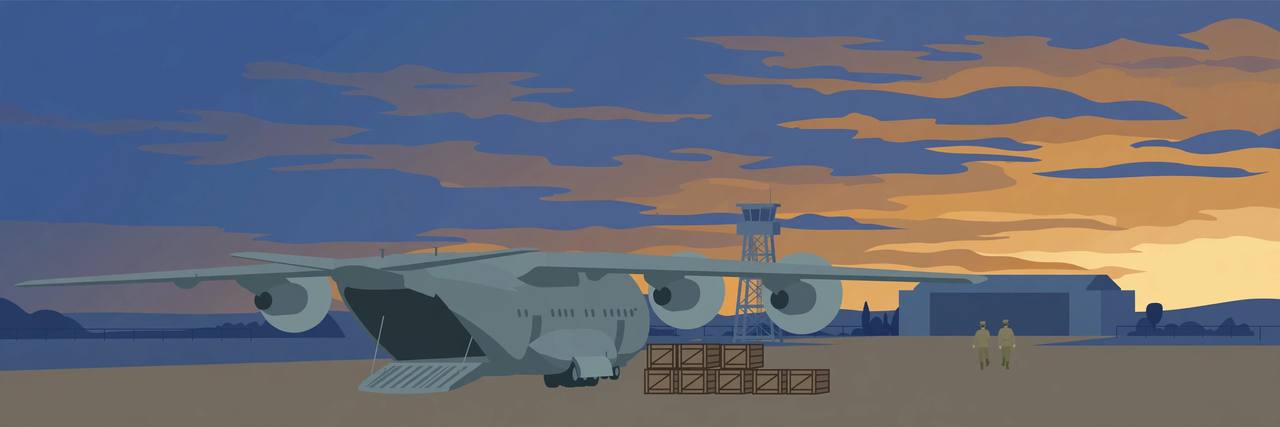
A former colonel in the Bolivian Air Force was extradited to the United States on November 19 and made his first appearance in a Manhattan federal court on November 20, to face charges that he used a Bolivian military air base to help move cocaine bound for the United States, federal prosecutors in New York announced.
Source: U.S. Department of Justice, Southern District of New York
Henry Richard Crespo-Guzman, 56, also known as “Colonel Crespo,” was arrested by Bolivian authorities on August 28, 2026, and was flown to the United States after the Justice Department's Office of International Affairs worked with the Government of Bolivia to secure his arrest and extradition. The case has been assigned to U.S. District Court Judge Victor Marrero in Manhattan.
The charges
Crespo-Guzman is charged with three federal counts: conspiring to import cocaine into the United States; using, carrying and possessing machineguns and destructive devices in furtherance of that cocaine importation conspiracy; and conspiring to use and carry machineguns in furtherance of the conspiracy. The charges are accusations, and he is presumed innocent unless and until proven guilty.
According to the superseding indictment and public court filings cited by prosecutors, the alleged conspiracy ran from at least September 2020 to August 2021, while Crespo-Guzman was a colonel in the Bolivian Air Force. Prosecutors allege he worked with others to manufacture and distribute large quantities of cocaine intended for importation to the United States. The announcement did not give a specific weight of cocaine.
A military air base at the centre of the case
As part of his duties, prosecutors say, Crespo-Guzman had access to airfields and military facilities, including an Air Force base in Cuatro Canadas, Bolivia. They allege he used the base to safeguard the transportation of cocaine loads for ultimate importation to various countries, including the United States.
Prosecutors allege that during the investigation Crespo-Guzman held meetings at the base while dressed in his official Bolivian Air Force uniform, with subordinate airmen standing guard with automatic weapons. At one such meeting, they say, he described the base as part of a restricted military zone, discussed the types of aircraft it could accommodate, and detailed the quantities of cocaine and the time needed to load it onto aircraft there. Prosecutors say he and his co-conspirators then agreed to, and did, manufacture cocaine intended for importation to the United States.
What U.S. officials said
“Crespo-Guzman abused his position in the Bolivian military to aid drug traffickers by providing military facilities and armed personnel. As alleged, the defendant personally participated in a cocaine importation conspiracy that was intended to bring planeloads of cocaine north for ultimate importation into the United States.”
DEA Administrator Terrance C. Cole said the extradition “sends a powerful message to those who abuse positions of public trust to facilitate the trafficking of dangerous drugs into the United States: no one is beyond the reach of American justice.” He said Crespo-Guzman allegedly exploited his position in the Bolivian military to protect cocaine trafficking operations that threatened American communities, and he commended DEA personnel and Bolivian law enforcement partners whose cooperation made the extradition possible.
How the extradition was secured
U.S. Attorney McDonald thanked the DEA, the U.S. Department of War's Southern Command, the DEA Lima Country Office, the U.S. Department of State, the U.S. Embassy in La Paz, the Department of Homeland Security's Homeland Security Investigations Bolivia Office, INTERPOL Bolivia, the Bolivian National Police, and Bolivia's Fuerza Especial de Lucha Contra el Narcotráfico — Grupo de Inteligencia y Operaciones Especiales (FELCN–GIOE) for their assistance and partnership.
What happens next
The case will now proceed in Manhattan federal court before Judge Marrero. It is being handled by the Southern District of New York's National Security and International Narcotics Unit, with Assistant U.S. Attorneys Matthew J.C. Hellman, Adam Z. Margulies, David J. Robles and Chelsea L. Scism in charge of the prosecution. The Justice Department noted that the maximum potential sentences are prescribed by Congress and provided for informational purposes only, and that any sentencing would be determined by the judge.
What is solid
- Crespo-Guzman was extradited from Bolivia to the United States on November 19, 2026.
- He was arrested by Bolivian authorities on August 28, 2026, and made his initial appearance in Manhattan federal court on November 20, 2026.
- He faces three federal counts, including conspiring to import cocaine into the United States.
What is only claimed
- The cocaine-trafficking and machinegun conduct described in the indictment is alleged — it has not been proven in court.
- Crespo-Guzman is presumed innocent unless and until proven guilty.
McDonald described the case as the latest example of the office's work with the DEA to root out what he called cocaine-fueled corruption.
Source: U.S. Department of Justice, Southern District of New York