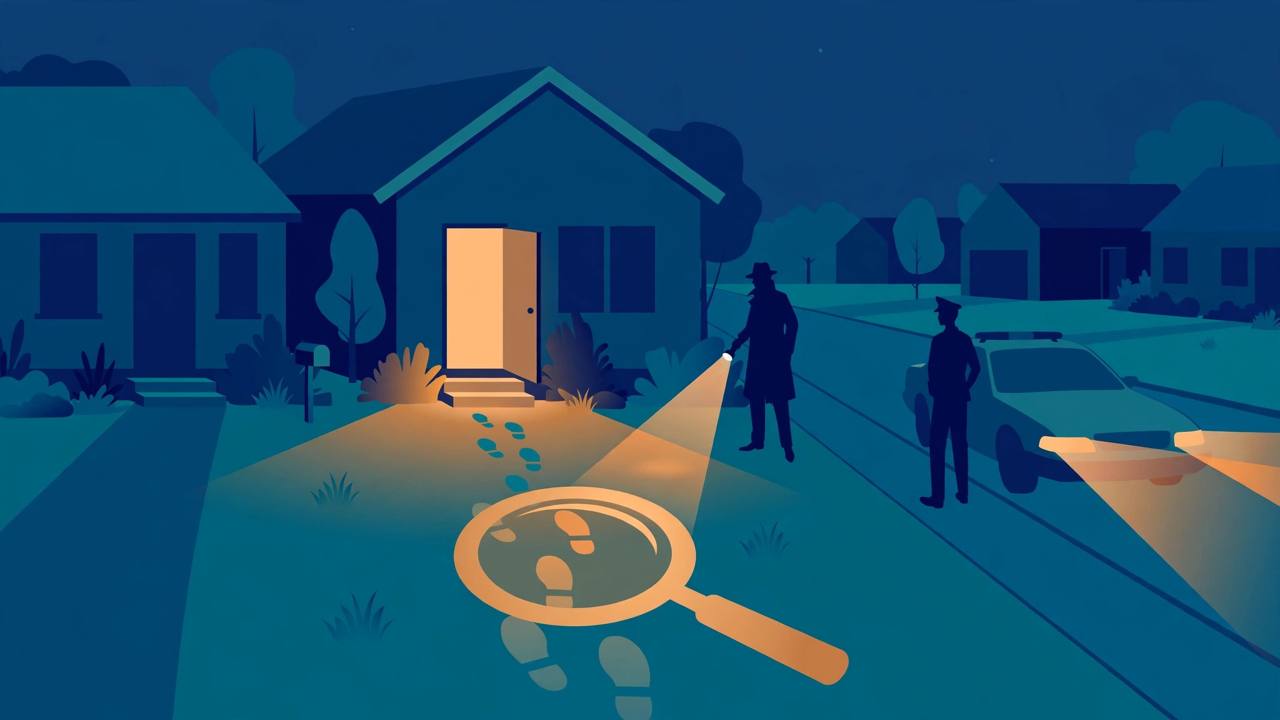
The Raleigh Police Department says it has broken a months-long pattern of residential break-ins that cost victims more than $380,000 in stolen property, announcing on Tuesday, November 10, 2026, that Stephen Neal Trotter Jr, 52, faces 23 separate warrants containing 40 felony charges. The charges are allegations: Trotter has not been convicted of anything in this case, and he is presumed innocent unless prosecutors prove the charges in court. He is being held in the Forsyth County Jail with no bond, according to the department's release.
Source: Raleigh Police Department release, reported by WPTF News (Raleigh), Nov. 10, 2026
According to the release, the pattern began to emerge on May 15, 2026. An unknown suspect was targeting neighbourhoods mostly in Raleigh's Southwest District, and also in its North District, using a prying tool to force entry through the side or back door of homes whose residents were out of town. Once inside, police say, the intruder targeted a distinctive list of goods: silver kitchenware sets, jewellery items, watches, security safes — and firearms. The break-ins happened at night, between 11:00 p.m. and 4:00 a.m. The total dollar value of stolen property in the pattern is over $380,000, the department said.
Source: ABC11 (WTVD, Raleigh-Durham) reporting on the cross-city investigation, Nov. 10, 2026
How two cities' files were matched
Raleigh analysts did not work the pattern alone. During the investigation, Raleigh PD analysts created multiple Crime Pattern Reports and shared them with law-enforcement partners statewide — the step that cracked the case. On November 4, 2026, analysts and detectives with the Greensboro Police Department, about 80 miles west of Raleigh, responded to the pattern report with a name: Stephen Neal Trotter Jr, whom Greensboro had identified as a suspect in similar crimes in its own jurisdiction. Greensboro shared several pieces of evidence linking Trotter to specific Raleigh cases, the release says — and, decisively, surveillance evidence from victims in the Greensboro cases was shared and compared: the suspect seen on surveillance in Greensboro was, police say, the exact same suspect seen in surveillance footage filed with the Raleigh cases.
With that match in hand, Raleigh detectives consulted the Wake County District Attorney's Office, and on November 8, 2026, 23 separate warrants were sworn out containing 40 felony charges. The charges named in the release are second-degree burglary, larceny after break and enter, and larceny of a firearm. Secondary coverage of the announcement also reported that Trotter has pending cases in Guilford County — Greensboro's county — for similar offences earlier in the year, and that the wider investigation remains active; those Guilford matters are separate allegations and were not detailed in Raleigh's release.
In North Carolina, second-degree burglary is the unlawful breaking and entering of someone's dwelling at night with intent to commit a felony inside — the classic night-time home-intrusion charge. Larceny after break/enter covers the theft that follows the forced entry, and larceny of a firearm is charged separately because stolen guns carry their own risk: a firearm taken from a home safe can move quickly into other crimes, which is one reason police treat the gun counts in a burglary series as a priority of their own.
What the chief said — and what it means for residents
Raleigh Police Chief Rico Boyce addressed victims first in the department's statement: “First and foremost, I want to acknowledge the victims of these burglaries and the impact these crimes have had on them. I also want to recognize and thank the detectives and analysts for their hard work, dedication, and thorough investigation that helped bring this investigation to a successful resolution. Finally, I want to thank the Greensboro Police Department for their assistance in bringing the suspect into custody. Their professionalism and diligence highlights the importance of teamwork and collaboration in holding offenders accountable and protecting community members.”
For households in the Southwest and North districts — and for the wider Raleigh–Durham area, home to a growing Punjabi and South Asian community alongside the Research Triangle's workforce — the pattern itself carries the practical lesson police documented: the homes hit were empty because residents were travelling, entries came through side and back doors rather than the street-facing front, and the goods taken were the portable, high-value items burglars can carry in minutes, including firearms kept in safes. A six-month pattern ending only when two departments pooled their pattern reports and surveillance is also why officers urge residents who find a door forced or property missing to report it even when the loss seems small: in this case, it was the accumulated reports, formally written up and shared statewide, that produced a name.
What happens next
Trotter remains in custody in Forsyth County — the Winston-Salem area, west of Greensboro — held with no bond on the Raleigh warrants, while the Wake County charges move into the court process, where prosecutors must prove each count and the defence can challenge the surveillance identification and the evidence linking him to individual addresses. Police have not publicly released the specific neighbourhoods targeted beyond the Southwest and North district descriptions, and coverage of the announcement said the investigation is still active, so residents who experienced a similar night-time break-in since May and have not reported it should contact Raleigh police. Awaaz Punjab will follow the Wake County court filings as the case proceeds.