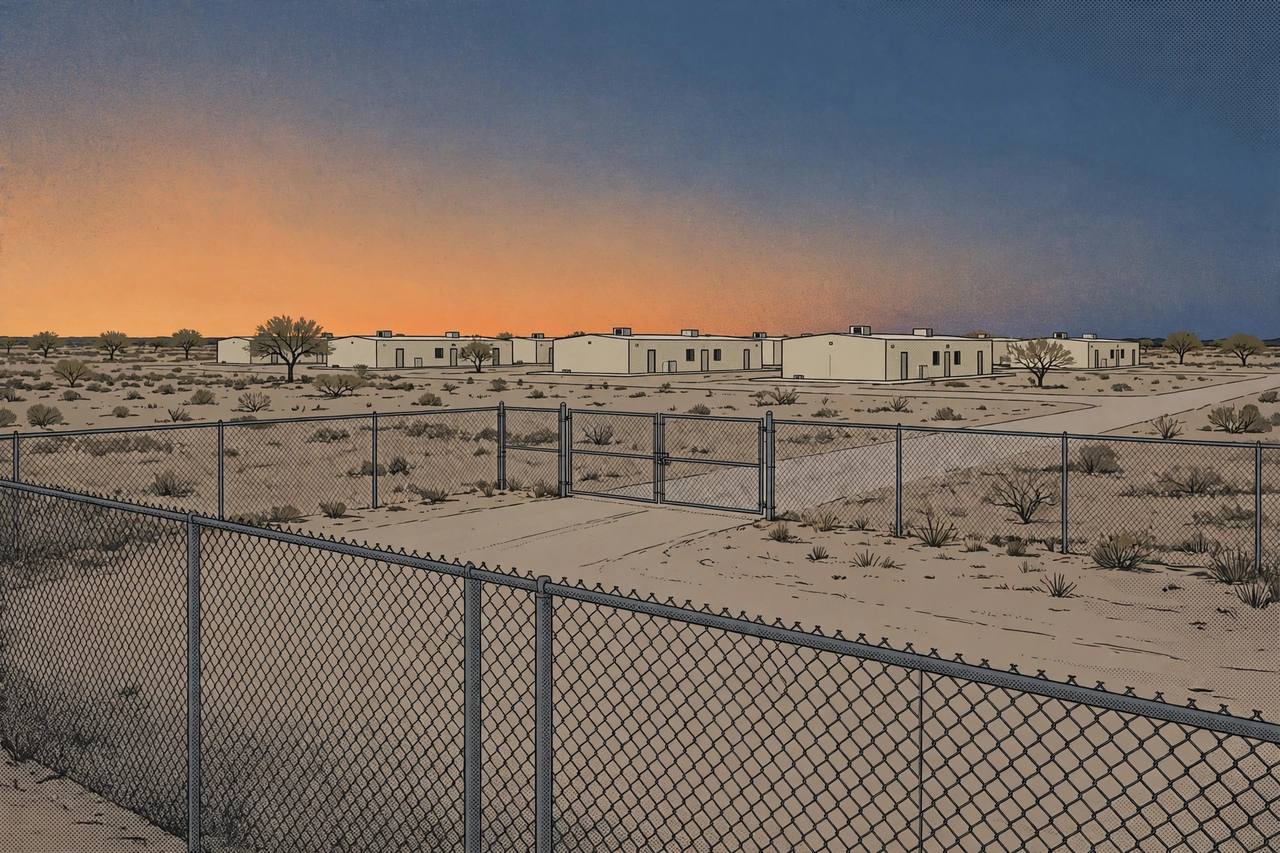
An El Paso high school senior and her family walked free late on Friday night, November 20, after spending 29 days in immigration detention at the Dilley facility in South Texas — an ordeal that began with an arrest in El Paso on October 22 and ended only after weeks of rallies by her classmates and mounting pressure from Texas lawmakers. The family's legal team confirmed the release to ABC-7 El Paso.
Source: KVIA ABC-7
The family — Venezuelan nationals who have lived in El Paso for several years — was detained by U.S. Immigration and Customs Enforcement (ICE) on October 22 and taken to the South Texas Family Residential Center in Dilley, more than 500 miles from their home. The parents, Pablo Jose Guerrero-Pimentel and Dolores Emilia Zarraga-Colina, were held with their two daughters, aged 17 and 11. The 17-year-old is a senior at El Paso High School; her younger sister is 11.
A month behind fences, 500 miles from home
For 29 days the family remained inside Dilley, a facility that holds parents and children together while their immigration cases proceed. Their lawyer, Kate Lincoln-Goldfinch, said the detention traumatised both girls. The 11-year-old lost weight because she could not eat the food served at the facility, the lawyer said, and their mother was not receiving adequate treatment for her medical problems. The family says it is in valid immigration proceedings, holds work permits and has no criminal record.
ICE has given a different account. In a statement to KVIA, the agency said the family entered the United States illegally on August 12, 2022, was released into the country under the Biden administration, and was detained in October during what ICE called targeted enforcement arrests. ICE said the family was in custody together at Dilley pending a hearing before an immigration judge and would receive due process — and that, in the agency's view, neither parent had documentation to remain in the United States legally.
The community that would not let go
Back in El Paso, the case became a cause. Students and parents gathered on the marble steps of El Paso High School on a Tuesday evening to call for the family's release, in a rally organised almost entirely by students. The 17-year-old is a member of the school's Tigerettes dance team, studies cosmetology in the school's Center for Career and Technology Education programme, works part-time and volunteers with older adults in the community. In September, her school crowned her a lady-in-waiting at homecoming. On November 6, Senior Night, her classmates carried her photograph onto the football field because she was sitting in detention more than 500 miles away.
The political pressure grew through the week. Congresswoman Veronica Escobar led a group of House Democrats in a letter to Homeland Security Secretary Markwayne Mullin and Acting ICE Director David Venturella urging the family's release, and on Friday, November 20, fifty-seven Texas House Democrats — 44 sitting members and 13 members-elect — sent their own letter demanding the family be freed on humanitarian parole. The letter asked that, if ICE did not release them, the agency provide a written answer by December 1 explaining why each girl was being held past 20 days and whether either was considered a flight risk or a danger. Texas Governor-elect Gina Hinojosa has called for an end to family detention.
Source: Rep. Veronica Escobar
What Dilley is — and why it matters
The Dilley centre, formally the South Texas Family Residential Center, was closed in 2024 and reopened in 2025 by the second Trump administration as it resumed detaining families as part of its mass-deportation campaign. It operates under an agreement between ICE and the City of Dilley, and the private company CoreCivic runs the facility. Conditions there have drawn sustained scrutiny: a ProPublica investigation published in February 2026, 'The Children of Dilley', reported mothers and children raising concerns about food, water and medical care inside the facility.
Under the Flores settlement, the federal court agreement governing children in immigration custody, children are generally not to be held for more than 20 days. This family was held for 29 days — nine days past that mark — a point the Texas lawmakers' letter made explicitly.
What happens next
The family is returning home to El Paso, where a GoFundMe campaign organised by a community supporter is raising money to help them rebuild after nearly a month in detention. Their asylum case continues, and they will now pursue it from home, where they can communicate more easily with their legal team and prepare for upcoming court dates. The lawmakers' demand for written answers by December 1 still stands — and other families and children remain detained at Dilley, where the future of family detention is now a live question for the incoming Texas leadership.
For the classmates who rallied, marched and carried a photograph onto a football field, the release is a victory. For the families still inside Dilley, it is a reminder that the same fight continues. Awaaz Punjab will keep following the family's case and the wider question of family detention in Texas.