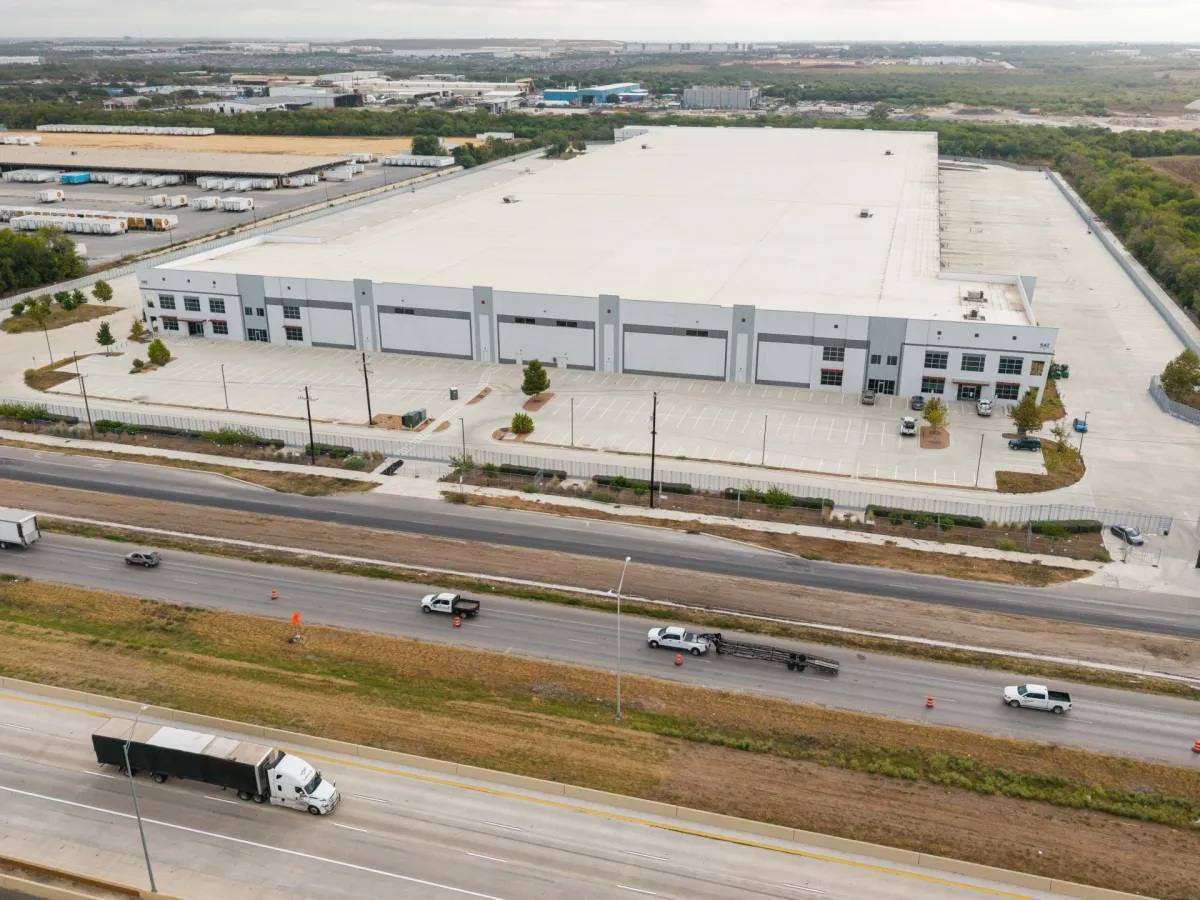
The future of one of the largest planned immigration detention projects in Texas was put in doubt on Monday, November 9, 2026, as the City of San Antonio and the U.S. Department of Justice began discussing an agreement that could pause both the city's lawsuit and the conversion of a giant East Side warehouse into a detention facility — and the city's mayor publicly confirmed that the federal government has agreed to carry out the environmental review the lawsuit was filed to force.
Source: KSAT (via Europe Says), Nov 9, 2026
Speaking on Texas Public Radio's “The Source” on Monday, Mayor Gina Ortiz Jones said the Department of Homeland Security (DHS) has agreed to comply with environmental review requirements for the planned facility, potentially resolving the central dispute in the federal lawsuit San Antonio filed on October 13. “DHS has said that they will comply and do an environmental review, and so that was the whole crux of the case,” Jones said. Her comments were the first public confirmation from city leadership that the federal government has accepted the review the city sued to obtain.
Source: San Antonio Report / Texas Public Radio (via T-SPAN), Nov 9, 2026
What is planned at 542 SE Loop 410
The project at issue is the conversion of a nearly 640,000-square-foot warehouse at 542 SE Loop 410, on San Antonio's East Side, into an immigration detention and processing facility capable of holding up to 1,500 people. ICE has projected the facility could open as early as next spring. In late August, ICE awarded a $17.3 million contract to GardaWorld Federal Services LLC to renovate the warehouse and provide wraparound services to operate it; federal records show that contract has since grown to $61.8 million. The agency also paid $51 million in October for a pair of office leases at Brooks, on the city's Southeast Side, which would give federal immigration operations a longer-term presence in the area.
Source: KSAT, Nov 9, 2026
The lawsuit: NEPA, the APA, and five unanswered letters
San Antonio sued DHS, U.S. Immigration and Customs Enforcement (ICE), DHS Secretary Markwayne Mullin and Acting ICE Director David Venturella in October, asking a federal court to block the conversion. The city says the federal government skipped the environmental review required under the National Environmental Policy Act (NEPA) — the 1970 law that obliges federal agencies to study a major project's effects before work begins — and violated the Administrative Procedure Act. City officials argued the review is necessary to evaluate the facility's potential effects on the surrounding community, including its infrastructure, economy and environment: what a 1,500-person facility would mean for water, sewer, power, emergency services and traffic on the East Side. Before suing, the city sent five letters to DHS and ICE requesting details about the conversion, its environmental impacts and opportunities for public input — months of attempts that, city officials say, produced no answers.
Source: San Antonio Report / Texas Public Radio, Nov 9, 2026
How the talks began — and what a pause would cover
According to the City Attorney's Office, after the Department of Justice was made aware of the lawsuit, federal officials reached out to the city to discuss an agreement under which the government would comply with the environmental review. The agreement being discussed would pause the lawsuit while the reviews are conducted, and work to convert the warehouse into a detention facility would also be on pause — but the city stresses the agreement is still in the works, not final. Court records tell the same story of early negotiation: the two sides began talking shortly after the suit was filed, San Antonio asked a judge to remove an October 26 deadline to seek emergency relief, and an October 22 motion stated that “the parties are now negotiating a stipulation that would obviate the need for immediate emergency relief.” U.S. District Judge Jason K. Pulliam granted that request the same day, placed the pending request for injunctive relief on hold, and ordered both sides to give the court a status update by noon on November 30.
Source: KSAT, Nov 9, 2026; court filings reported by San Antonio Report
CONFIRMED by the mayor on Monday: DHS has agreed to conduct the environmental review. STILL UNCLEAR: whether federal officials have agreed to suspend renovations or other development work while the review is conducted — the court filings do not specify the terms of any agreement, and DHS did not respond to requests for comment on Monday. NOT settled: the facility itself — the city says it has not abandoned its opposition, and its stated ultimate goal remains no ICE detention facility in San Antonio.
Jones was careful on Monday to say the scope of the review remains an open question. “We want to make sure that that [the review] is in line with what we expect,” she said, adding that the city will keep watching the site: “We continue to monitor, and we continue to make sure that we understand what is and is not happening.” She said the city could take additional legal action if federal officials fail to follow through on the review or proceed with development before it is completed. The City Council has separately approved a resolution directing officials to explore additional legal and administrative measures to prevent or delay the facility, and to extend those efforts to the two Brooks office leases; Jones said the city is still awaiting updates on the leases.
Source: San Antonio Report / Texas Public Radio, Nov 9, 2026
Why this fight matters beyond one warehouse
San Antonio is one of several U.S. municipalities that have sued the federal government over ICE warehouse conversions, and city leaders have framed the strategy plainly: an environmental review takes time, and time can force a second look at a project of this scale. For East Side residents, the immediate questions are practical — construction traffic on Loop 410, one of the freight and commuter ring roads around San Antonio; demand on water, sewer and power; and what a 1,500-bed detention operation means for a neighbourhood that says it was never consulted. For immigrant communities across Texas — including the Punjabi families of the Houston, Dallas and San Antonio corridors who follow every detention-capacity decision closely — the case is also a test of whether a city can use environmental law to slow, or stop, the rapid build-out of detention space. “Look, pushing back has had the effect that we want up until now,” Jones said. “Obviously, the ultimate effect is no ICE detention facility in San Antonio.”
Source: San Antonio Report / Texas Public Radio, Nov 9, 2026
What happens next
The next fixed point is noon on November 30, when both sides must update Judge Pulliam on the status of their negotiations. Before then, the questions are whether the stipulation is signed, whether it formally pauses conversion work at 542 SE Loop 410 as well as the lawsuit, and how broad the environmental review will be — a short assessment or the longer, fuller study the city originally sought. ICE and DHS had not commented as of Monday evening. If the talks collapse, the city's request for injunctive relief can come back before the court, and the lawsuit resumes in full.