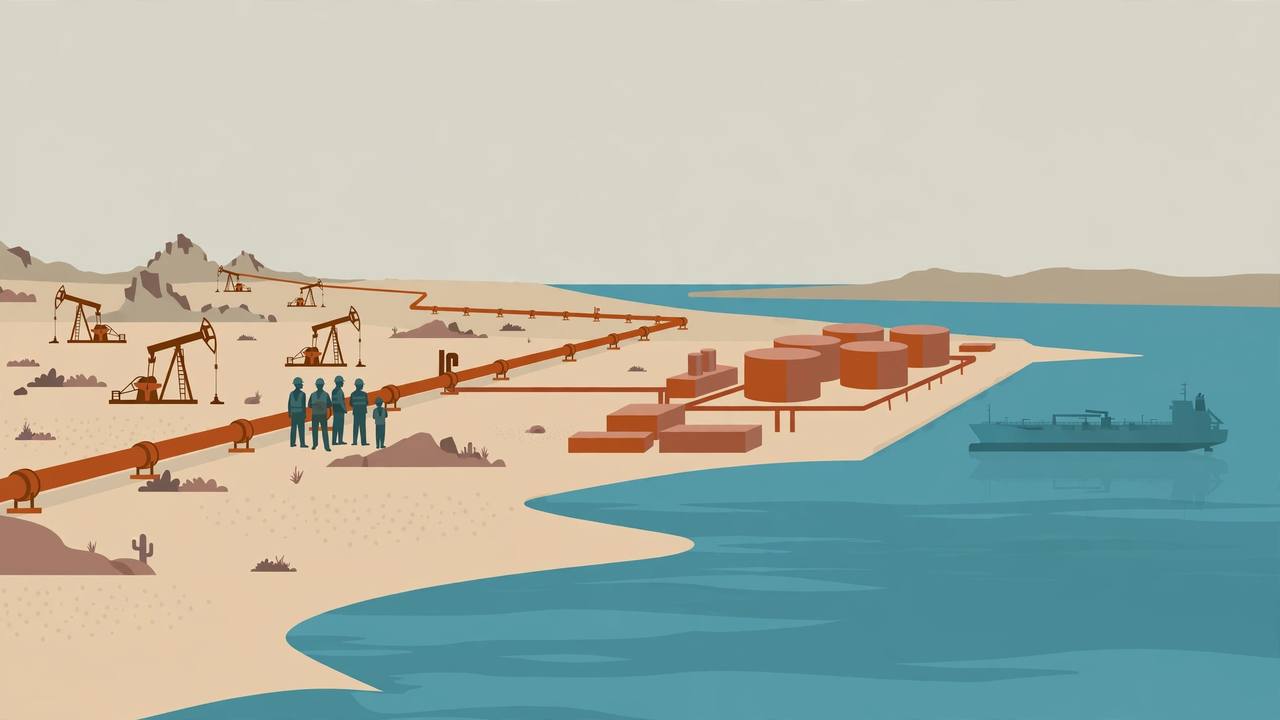
Abu Dhabi National Oil Company (ADNOC) has denied a Bloomberg report that it is weighing a third crude oil pipeline to bypass the Strait of Hormuz — a line that, according to the report, could have been opened to other Gulf producers as well as ADNOC's own exports.
Source: investingLive (Bloomberg report)
Bloomberg reported on Wednesday, citing people familiar with the matter, that ADNOC was considering a new pipeline from the UAE's western coast to the port of Fujairah, which sits outside the strait on the Gulf of Oman. The report said ADNOC had described the plan to some Asian customers, that it was not finalised, and that its route could still change. No cost or timeline was given.
Source: OilPrice (Bloomberg report)
"We have advised Bloomberg that this report is not accurate and purely speculative," an ADNOC spokesperson told the outlet. With that denial on the record, the third-pipeline plan remains unconfirmed — a reported idea, not an announced project.
Why a third line would have been different
ADNOC's existing bypass serves its own exports: a pipeline from its western onshore fields to Fujairah, plus a second line — the West-East Pipeline — that it said in May it was accelerating for completion in 2027, roughly doubling that capacity. Both carry ADNOC crude. A third line open to third parties would have turned Fujairah into a regional route around Hormuz for other producers too, extending the UAE's reach beyond its own oil.
That direction fits the course the UAE has taken since leaving OPEC in May, with plans to invest in pipelines, rail, roads and at least three eastern ports to cut its reliance on the strait, investingLive reported. Neighbours are moving the same way: Saudi Arabia plans to expand its East-West pipeline to the Red Sea, and Kuwait is in talks about alternative routes.
Saudi Arabia's own Hormuz bypass is already being expanded as Gulf producers race to cut their exposure to the strait. Read: Aramco East-West Pipeline Expansion — Saudi Arabia's Hormuz Bypass
Bypasses reduce the risk — they do not remove it
The urgency comes from the war. The Strait of Hormuz was almost shut at the height of the US-Israeli war on Iran, and although shipping traffic has since picked up, vessels are still frequently targeted. But the bypasses themselves are inside the battlefield: Fujairah has been attacked several times during the conflict, and Saudi Arabia's East-West line was briefly halted after an attack in September, investingLive reported.
For the lakhs of Punjabi and Indian workers across the Gulf — in the UAE's ports, logistics yards and oil services among them — every new route around Hormuz is also a jobs-and-safety question: pipelines and east-coast ports mean work that does not depend on tankers running a mined and missile-threatened strait.
Oil markets took the denial in stride. Brent crude was trading near $93.65 a barrel on Thursday morning, down about 1 percent, extending a slide driven by hopes that Washington's midterm defeat makes a renewed escalation with Iran less likely. A shared bypass line would, over time, chip away at the Hormuz risk premium in prices; with ADNOC rejecting the report, traders said that premium stays anchored to shipping attacks and transit volumes through the strait itself.
Oil has fallen for four straight sessions as traders bet the midterm result lowers the odds of a fresh US strike on Iran. Read: Oil Prices Plunge as Trump's Midterm Defeat Raises Iran Peace Hopes
What happens next
The concrete milestone for Gulf oil is not the denied third line but the second one: ADNOC has told some Asian refiners that cargoes could load at Fujairah from early 2027 once the West-East Pipeline is ready. Until then, Fujairah's roughly 2 million barrels a day of bypass capacity — yaani about 20 lakh barrels every day that never enter the Strait of Hormuz — remains the Gulf's main insurance policy, and its limits are the story traders will keep watching.