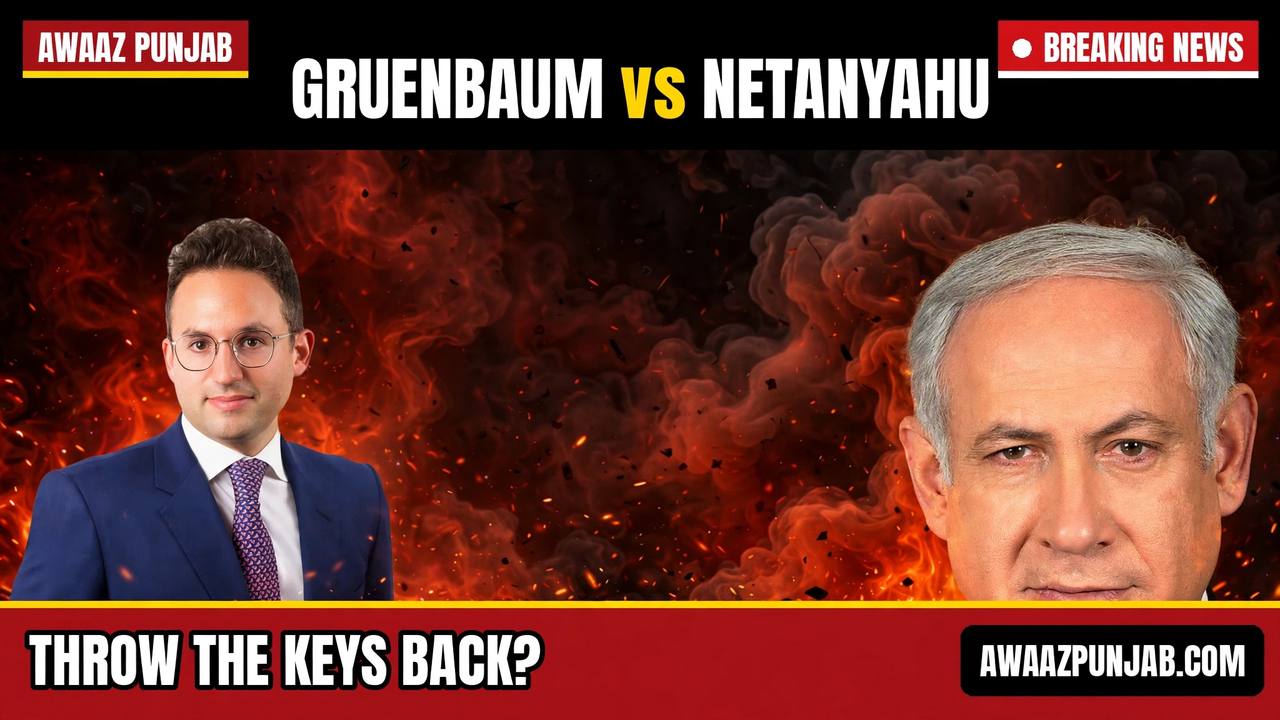
The Board of Peace, the Trump-chaired body overseeing the Gaza ceasefire, has warned it will hand Gaza's mandate back to the United Nations if Israel keeps blocking the plan it was created to carry out, a senior adviser to the board said in an interview published on Friday.
The Board told the UN Security Council last week that the Gaza ceasefire could collapse without full implementation of the deal. Read the earlier report
What Gruenbaum said
"We were very, very patient in giving Israel its space. But it's frustrating for us that now that the election is over, even though it's not over with a conclusive coalition, [Israel is] not moving forward with commitments that were already promised by [Benjamin] Netanyahu made to [US] President [Donald] Trump," Josh Gruenbaum, a senior adviser to the Board of Peace, told the Israeli news site Ynet.
Source: Ynet, reported by Times of Israel
"If this political leadership [in Israel] is now telling us that they no longer want to honor what they committed to, then just let us know now — and we're basically going to throw the keys back to the UN to oversee the mandate [for Gaza] or let the next US administration decide the future policy of Gaza," Gruenbaum said.
Why the board says it is stuck
Gruenbaum said the board is at a standstill because political elements inside the Netanyahu government have blocked the steps needed to replace Hamas as Gaza's governing authority. Israel has declined to sign the agreement that would allow an International Stabilization Force to deploy in Gaza, and it has not approved the documents that would let vetted Palestinian police recruits travel to Egypt for training before returning to the territory.
Without an international force and a working police service, there is no body ready to receive Hamas's weapons under the plan, Gruenbaum said. The board is also waiting on Israel to approve the National Committee for the Administration of Gaza, the technocratic body meant to run the territory.
He stressed the board is not asking Israel to withdraw troops or compromise its security. "The plan is not a smorgasbord, it's not a Chinese menu," he said. "It is the comprehensive 20-point plan," and "the whole thing needs to be implemented in totality."
Why the board waited — and why it is speaking now
The board held off putting heavy pressure on Israel before the October 27 election, judging that Netanyahu would be reluctant to make concessions his rivals could portray as weakness towards Hamas. The election produced no decisive outcome, and coalition talks could drag on for months. Netanyahu remains interim prime minister, with his Gaza policy unchanged.
Hamas agreed on July 30 to the board's disarmament proposal, but Netanyahu said the proposal did not go far enough, and implementation has stalled since. Egypt is pressing Hamas on the weapons question, and Egyptian officials say Hamas leaders back handing over weapons, according to reports from the talks.
The alternatives if the plan collapses
Board representatives have shown Israeli officials a presentation setting out what happens if the plan falls apart. The options listed include UN or UNRWA oversight of Gaza, administration by the Palestinian Authority or by Hamas, a future US administration deciding Gaza policy, or Israel assuming full responsibility for the territory — including all humanitarian, administrative and other costs for its people.
A 'catastrophic winter' warning
Gruenbaum also accused Israel of failing to let enough humanitarian aid into Gaza as winter approaches. "We have a disastrous winter approaching. We've already seen a lot of the headlines about flooding, and Israel needs to answer the call from the international community to prevent this crisis," he said, while stressing he did not absolve Hamas of its own obligations towards Gaza's population.
More than 1,600 Palestinians have been killed in Gaza since the October 2025 ceasefire, according to tallies cited in the reporting, and Gaza's health ministry counts 1,671 deaths since the truce began. The board has already called Gaza's flooding an immediate humanitarian emergency.
Background: the 20-point plan
The Board of Peace was created in January 2026 to carry out President Donald Trump's 20-point plan to end the Israel-Hamas war. The framework called for a hostage-prisoner exchange in its first phase, followed by Hamas surrendering its weapons, a technocratic Palestinian administration taking over Gaza, Israeli forces withdrawing and reconstruction beginning. Netanyahu endorsed the framework in September 2025, and a ceasefire agreement was reached the following month. The UN Security Council gave the board its mandate in November 2025.
What is solid
- Gruenbaum warned in the Ynet interview that the board could hand the Gaza mandate back to the UN.
- Israel has not signed the agreement for the International Stabilization Force to deploy, and has not approved police training documents for Egypt.
- Hamas agreed to the board's disarmament proposal on July 30; Netanyahu said it did not go far enough.
What is only claimed
- Whether Israel is deliberately blocking the plan or has legitimate security objections to the force's terms — the board blames political blockage; Israel has not responded to the interview in the reporting read.
- Whether Hamas will actually hand over its weapons if the force and police are in place — Egypt says Hamas leaders back a handover; no handover has happened.
What happens next
The board's warning puts the choice to Israel's caretaker government: approve the force and police arrangements, or watch the body created to run Gaza's transition hand the job back to the UN. Coalition talks in Israel could run for months, and no Israeli response to Gruenbaum's interview was reported in the coverage read. The coming winter, with flooding already hitting Gaza, adds urgency to the aid question regardless of the political standoff.