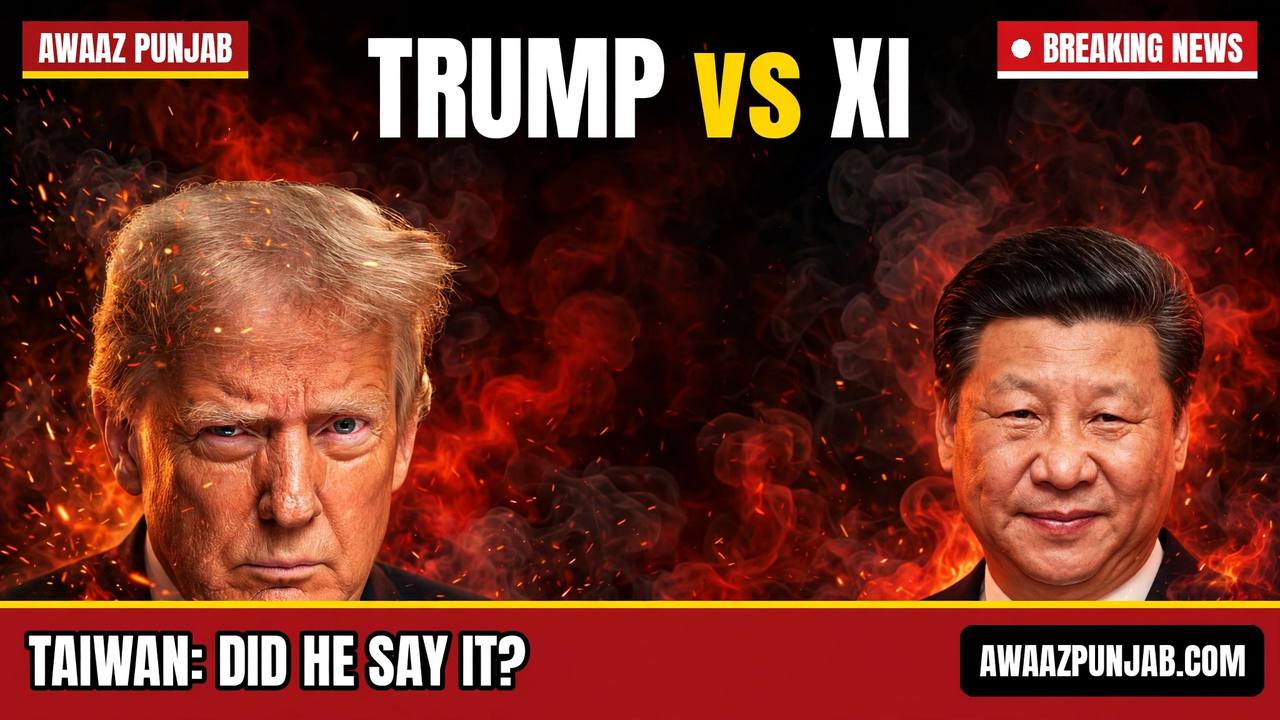
Taipei has publicly rejected Beijing's account of what United States President Donald Trump told Chinese President Xi Jinping about Taiwan during their meeting in Shenzhen, saying the Chinese state media report is not true and calling on Washington to clarify what was actually said.
Source: Taiwan News
China's official Xinhua news agency reported that, in their bilateral meeting on November 19, Xi told Trump that the United States should do the "right thing" on Taiwan, and that Trump replied that the United States "does not support Taiwan independence". Reuters also carried the Xinhua account. As of Friday, the White House had published no formal readout of the meeting, so the Xinhua version remains unconfirmed by any United States source.
Source: The Library Estate
Taiwan's Mainland Affairs Council Minister Chiu Chui-cheng, speaking in Taipei on Friday, said a preliminary check with Taiwan's Foreign Ministry found the report "is not fact". He said Taipei is in close communication with Washington and that the facts are for the United States to explain.
Source: Taiwan News
Why the exact words matter
The phrase "does not support Taiwan independence" has been standard American language across administrations for decades. It is meant as a guardrail, signalling to Taipei that Washington will not back a unilateral declaration of independence that could trigger war. Beijing has long pressed Washington for stronger wording, wanting the United States to say it "opposes" Taiwan independence, and Chinese state media highlighted the reported remark as validation of Beijing's core position. Whether Trump used those words in Shenzhen is now the open question.
Taipei's long-standing position, restated by its foreign ministry, is that neither the Republic of China (Taiwan) nor the People's Republic of China is subordinate to the other, that Taiwan's sovereignty rests with its people, and that Taiwan's future can only be decided by the people of Taiwan democratically.
Source: Taiwan Ministry of Foreign Affairs
What happened in Shenzhen
Trump and Xi met on November 19 on the sidelines of the APEC summit in Shenzhen, in a dense diplomatic sequence that began with a 35- to 40-minute Trump-Putin bilateral, followed by the Trump-Xi bilateral, and then a roughly 90-minute trilateral session with Putin and Xi. The three leaders issued a joint peace declaration covering UN reform, energy supply stability, limits on ICC jurisdiction and nuclear-risk reduction, but it contained no mention of Ukraine or Europe. No joint press statements were delivered.
Source: OSINTRep fact-check
Military pressure around the island has continued alongside the diplomacy. Taiwan News reported that Taiwanese armed forces tracked two Chinese military aircraft, seven ships and four balloons around Taiwan on November 21. Taiwan's Ministry of National Defense said two Russian military aircraft entered Taiwan's air defence identification zone from the northeast on November 17, flew south along the east coast and exited south of Taitung County.
Source: Conflict Tracker
In the wider region, Indonesian President Prabowo Subianto met Xi in Beijing to discuss South China Sea cooperation, including talks on joint development areas, and Taiwan's APEC representative Stan Shih shook hands with Xi at a welcome banquet in Shenzhen on November 18.
Source: Conflict Tracker
What is solid
- Taiwan's Mainland Affairs Council publicly said the Chinese state media account of Trump's remarks is not fact.
- Xinhua reported that Trump told Xi the US does not support Taiwan independence.
- The White House had published no formal readout of the Trump-Xi meeting as of Friday.
What is only claimed
- Whether Donald Trump actually used the words 'does not support Taiwan independence' in his meeting with Xi Jinping — Xinhua says he did, Taipei says the account is untrue, and Washington has not confirmed or denied it.
What happens next
A statement from Washington would probably settle whether the Chinese account stands, and Taipei has asked for exactly that. Until then, diplomatic disputes over Taiwan's standing after the APEC summit, rather than military moves, look likely to drive cross-strait friction in the coming days. Taiwan also heads into local elections on November 28, adding domestic political pressure to the dispute.