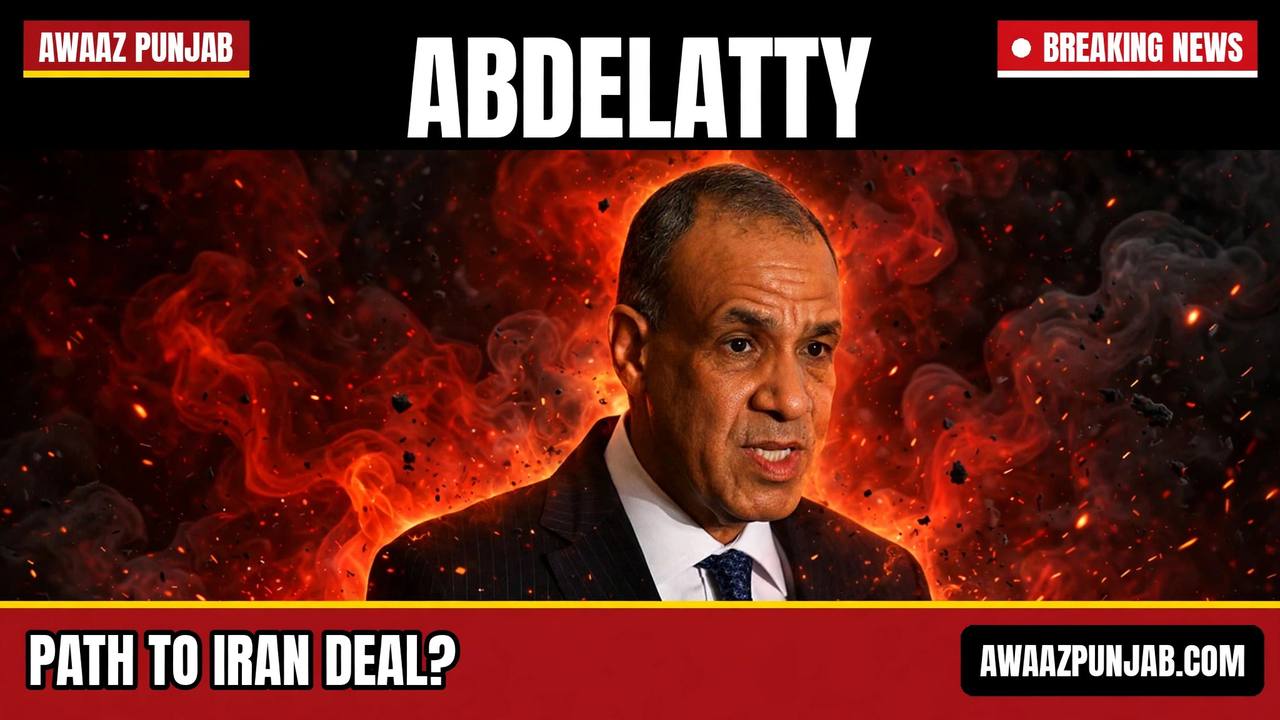
Egypt's Foreign Minister Badr Abdelatty has said he sees a path to an agreement between the United States and Iran, telling CNN on Sunday that Cairo is working with regional partners to rebuild trust between the two sides. "I believe that there is a possibility for dialog, for reaching a deal, for reaching a compromise," he said on CNN's "Fareed Zakaria GPS".
Source: IANS
Asked directly whether he saw a path to a deal, Abdelatty replied: "Yes. And we are hopeful for that." He added that a lack of mutual trust remained the main obstacle, and that the countries involved were working on confidence-building measures to help move negotiations forward.
Abdelatty warned that continued conflict was imposing heavy economic costs across the Middle East. He said regional tensions had cost the Suez Canal $20 billion in revenue — yaani lagbhag ₹1.76 lakh crore — and had driven up the prices of oil, gas and wheat. He has cited the same $20 billion figure before, including in October, and repeated it on CNN.
Daily coordination with Qatar
Abdelatty said Egypt was coordinating daily with Qatar to bring Washington and Tehran back to negotiations. Qatar has been the main channel between the two sides: a Qatari delegation visited Tehran on Friday night and held two hours of talks with Iranian officials, Deputy Foreign Minister Kazem Gharibabadi confirmed.
He argued that both the United States and Iran had an interest in reaching an accommodation, and warned that a military approach could bring further devastation to countries across the region. "Egypt is paying a heavy price," he said, describing consequences that extend beyond the Gulf states to other regional economies.
No deal yet
His comments indicated continued diplomatic efforts, but he did not announce an agreement, a date for renewed talks or any commitments accepted by either side. Mediators have been shuttling proposals between Washington and Tehran, but neither side has confirmed an agreed text.
The wider war
The United States and Iran have been at war since 28 February, and the Strait of Hormuz — the narrow waterway through which a large share of the world's oil moves — has become the centre of the confrontation, with attacks on shipping, a US naval blockade of Iran-related oil exports and Iranian claims of mine strikes on tankers. The disruption has pushed up energy prices and shipping costs, hitting workers and families across the region, including the lakhs of Indians working in the Gulf.
What is solid
- Abdelatty said on CNN on Sunday that he sees a path to a US–Iran deal and that Egypt is hopeful
- He put Suez Canal losses from regional tensions at $20 billion and said oil, gas and wheat prices have risen
- He said Egypt is coordinating daily with Qatar; a Qatari delegation held two hours of talks in Tehran on Friday
- No agreement, date for talks or commitments were announced
What is only claimed
- Whether talks will actually resume — neither Washington nor Tehran has confirmed a date or an agreed text
- The exact terms under discussion — mediators have shuttled proposals, but no draft has been confirmed by either side
A Qatari delegation visited Tehran on Friday night and held two hours of talks with Iranian officials, as mediation efforts to end the war continued. Read the earlier story
Watch whether the daily Egypt–Qatar coordination produces a date for renewed talks, and whether either side signals flexibility on the two core issues — the Strait of Hormuz and sanctions. Until then, Abdelatty's optimism is a signal of intent, not a deal — and shipping, oil prices and Gulf workers remain exposed to the next escalation.