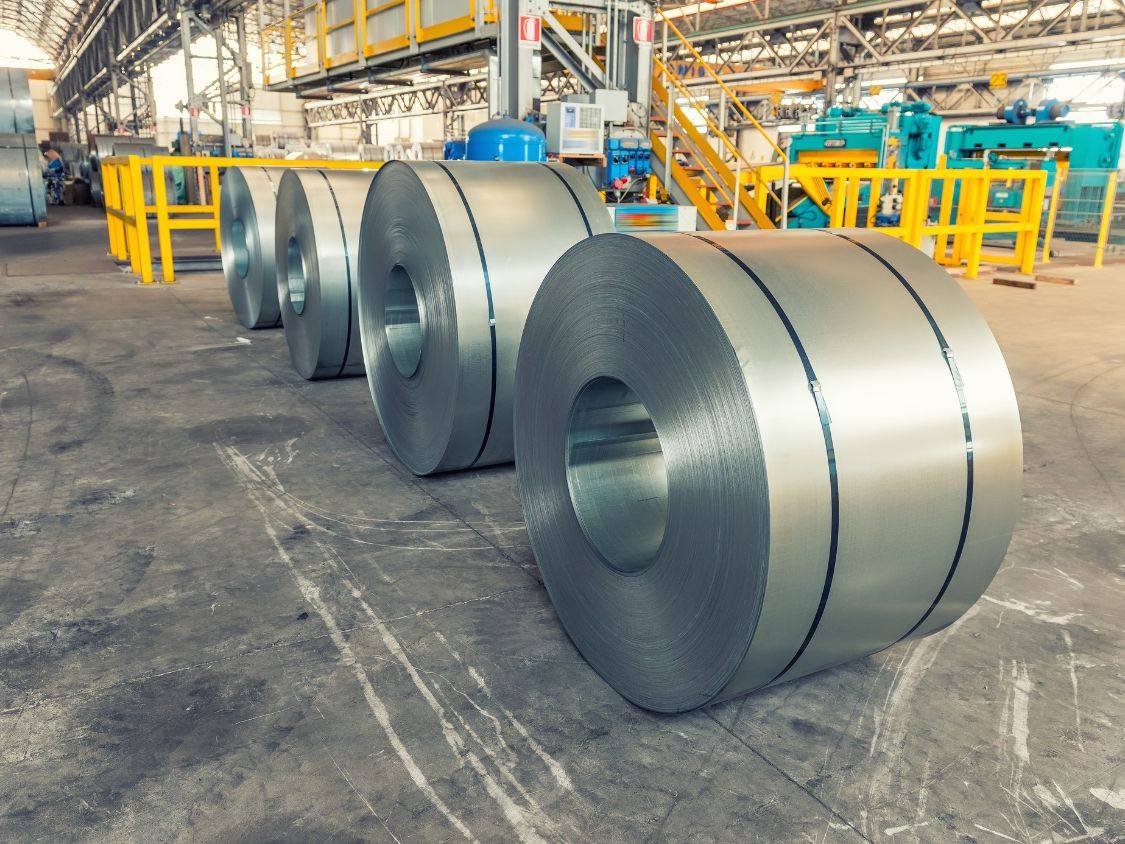
The European Union is imposing definitive anti-dumping duties of up to 27.9% on cold-rolled flat steel products from India, Japan, Taiwan, Türkiye and Vietnam, after an investigation found the steel was being sold in the EU at unfairly low — dumped — prices, the European Commission said on Monday. The duties apply from Tuesday, November 17.
Source: Reuters
The rates are 9.5% for India — covering JSW Steel Ltd, Tata Steel Ltd and other Indian producers — 27.9% for Japanese steelmakers including Nippon Steel and JFE Steel, mostly 20.7% for China Steel Corp and other Taiwanese producers with a 27.0% rate for non-cooperating companies, 16% for Vietnamese producers such as POSCO Vietnam, and between 3.0% and 7.8% for Turkish steelmakers, Reuters reported.
Steel for cars, planes and appliances — and a €23.2 billion market at stake
Cold-rolled flat steel is used widely in cars, planes, home appliances and construction. The EU market for the products is worth some €23.2 billion — yaani about 2,320 crore euro — and EU domestic production, based in 12 member countries, employs over 8,600 people, the Commission said. Imports from the five countries are worth about €1.78 billion, of which €282 million comes from India, €345 million from Taiwan, €240 million from Türkiye, €180 million from Japan and €125 million from Vietnam.
Source: European Commission
The EU steel association Eurofer, which brought the complaint in 2025, said unfairly priced imports were putting European production and jobs at risk and that the duties were a necessary step to restore fair competition, according to Reuters.
A first in EU trade defence: 'particular market situations'
The probe is the first in which the Commission has established what it calls 'particular market situations' — cases where conditions in an exporting country's home market do not allow a proper comparison between domestic and export prices, so the Commission constructs a 'normal value' instead. It found such a situation in India, where government measures affected the domestic price of iron ore, a raw material for the steel, and in Taiwan, where Chinese overcapacity pushed up imports of Chinese cold-rolled steel and depressed local prices. The Commission said the investigation is of systemic importance for trade defence beyond this one product.
Source: European Commission
The regulation was published in the EU's Official Journal on Monday and enters into force on November 17. Although imports were registered during the investigation, the Commission concluded there were no grounds for collecting the duties retroactively.
For Indian exporters the 9.5% duty lands on €282 million worth of shipments to one of the world's largest industrial markets, and it arrives through a new legal route — the 'particular market situation' finding on iron-ore pricing — that the Commission says it can use again in future cases. What happens next turns on how exporters in the five countries price their next shipments into Europe from Tuesday, and whether any of them challenge the measures.