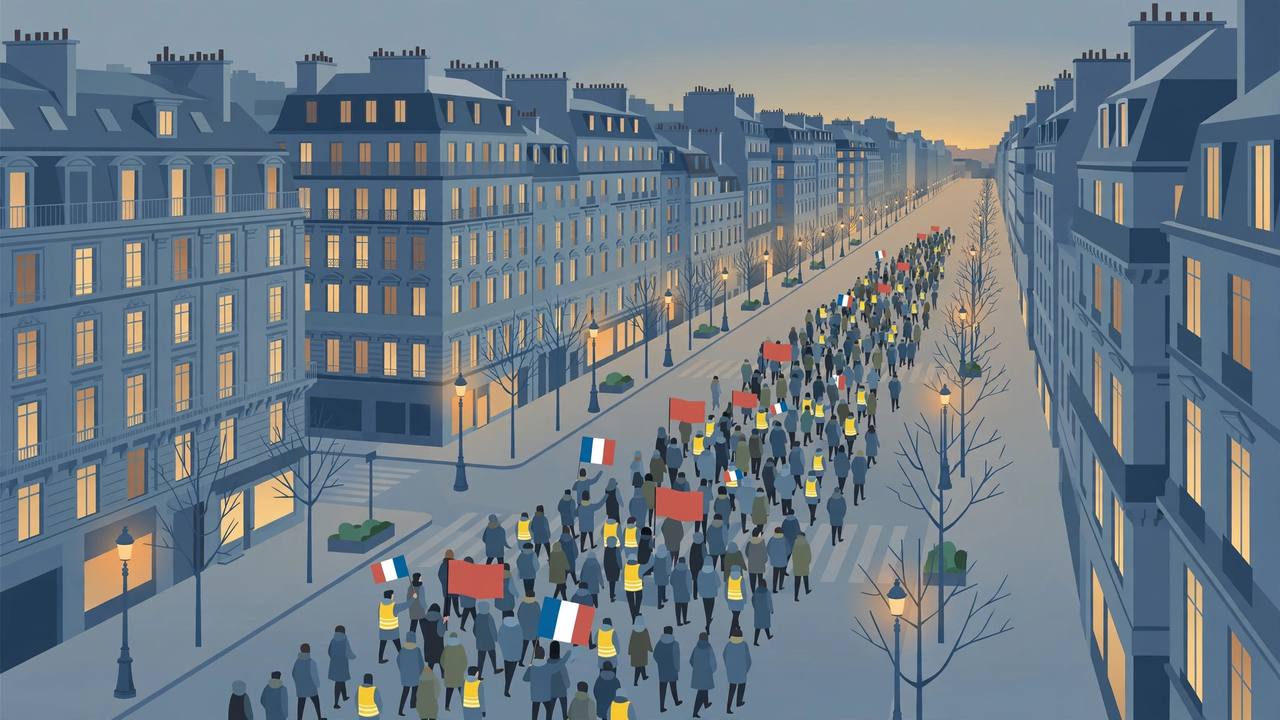
Tens of thousands of people marched across France on Saturday, November 21, for a sixth consecutive weekend of protests over the cost of living, housing and public services — but the crowds were smaller than a week earlier, official figures showed.
Source: Al Jazeera
The Interior Ministry said 82,500 people joined demonstrations nationwide, including 21,500 in Paris. Organisers put the turnout higher, at 150,000 across the country, including 45,000 in the capital.
A movement in decline?
The ministry's count has fallen for three weeks in a row: 106,000 last Saturday, 146,000 on November 7, against a peak of about 565,000 on October 17. The ministry, which speaks of a movement in "sharp decline", recorded 112 protest actions nationwide on Saturday, down from 137 a week earlier. Organisers' estimates have fallen too — from 200,000 last week to 150,000 now.
The marches were largely peaceful, officials said, though there were sporadic incidents, including damage to street furniture, rubbish-bin fires and attempted shop looting in several cities. About 70,000 police officers and gendarmes were deployed nationwide, and police had made 144 arrests by 6pm Paris time.
In Lyon, where demonstrations had been banned across a large area of the city, groups tried to reach the centre in unauthorised marches and police used tear gas to disperse them, according to an AFP journalist at the scene. In Marseille, police estimated 4,600 people joined the demonstration, roughly the same as the previous week; in Lille, about 5,000 gathered.
Source: AFP
In Paris, protesters marched from Place de la Republique to Place de la Nation, carrying trade-union flags and wearing the yellow vests of the gilets jaunes movement. Saturday also marked the eighth anniversary of the Yellow Vests, which began in November 2018 in response to rising fuel taxes.
What the government has offered
The government has moved to answer the demands: workers on the lowest wages are due a 1.6% rise in the SMIC, France's minimum wage, from December 1, taking it to €1,502 a month — a step unions called too little. An education package announced on October 26 promises €4 billion (yaani 400 crore euro) in preferential loans for school renovations by 2030 and €1 billion (yaani 100 crore euro) in state investment for university campuses by 2029, plus 15,000 additional higher-education places in 2027 and 2028, smaller classes and student grants linked to living costs from the 2027 academic year.
Source: Adnkronos
The movement began in September, when students took to the streets demanding better schools, more teachers and university reform. It has since grown into a broader movement about the cost of living that has drawn in trade unions and political activists.
Protests across Europe
The French marches were part of a wider European weekend: thousands also marched in Lisbon and in Barcelona and Madrid over wages, housing and public services, a day after youth-led protests in more than 20 European countries on Friday, November 20. In Portugal, the CGTP-IN union confederation has called another demonstration outside parliament on Tuesday, November 24, timed to coincide with the final vote on the state budget.
A week earlier, the Interior Ministry counted 106,000 demonstrators nationwide as the protests entered their fifth Saturday. Read last week's story
Friday's prelude: youth-led strikes swept more than 20 European countries over the cost of living and rearmament. Read the youth strike story
What is solid
- The Interior Ministry counted 82,500 marchers nationwide, 21,500 of them in Paris; organisers estimated 150,000 and 45,000.
- Police made 144 arrests by 6pm and deployed about 70,000 officers and gendarmes.
- Police used tear gas in Lyon, where marches had been banned across a large area.
What is only claimed
- The true turnout — the ministry's and organisers' counts differ sharply, as they have all autumn.
- Whether the government's wage and education offers caused the fall in numbers, or the movement is simply losing momentum.