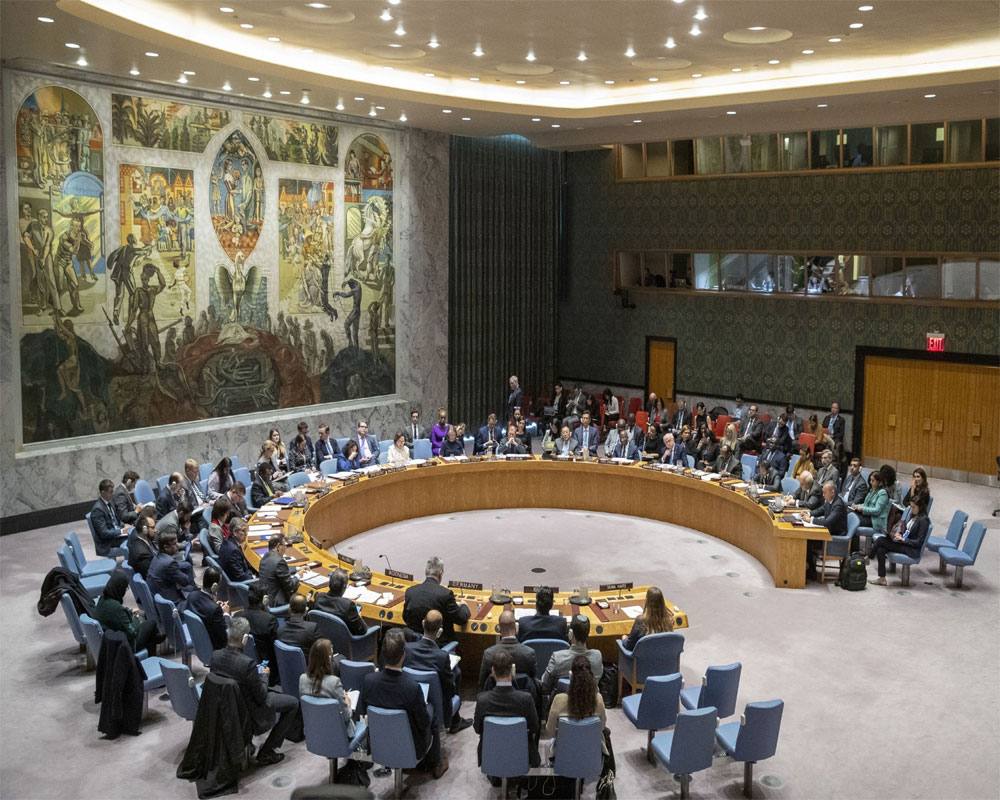
France's foreign ministry said on Saturday it would seek a meeting of the United Nations Security Council after Myanmar rejected an International Court of Justice ruling that its military committed genocide against the Rohingya in 2017.
Source: Reuters
"France recalls that ICJ rulings are final and binding on the parties and must be implemented in full compliance with international law," the ministry said in a statement. It added that under the UN Charter, the Security Council may be called upon to take measures to enforce a court ruling if a party to a dispute fails to comply with it.
The ruling Myanmar rejected
On November 19, the court in The Hague ruled by nine votes to six that Myanmar was responsible for genocide against the Rohingya Muslim minority during military operations in 2017, in a 191-page judgment — the first time in the court's 80-year history that it has found a sovereign state guilty of genocide. The case was brought by The Gambia in November 2019, with the backing of the 57-member Organisation of Islamic Cooperation.
Source: Asia Daily
The court ordered Myanmar to investigate and prosecute those responsible, pay reparations to victims, and take steps to allow the safe, voluntary return of Rohingya refugees who fled the violence.
Myanmar rejected the ruling the next day, calling it "unfair". Presidential spokesperson Khine Khine Soe criticised the fact that the decision was taken by a 9–6 vote rather than unanimously. Myanmar's military has consistently maintained that its 2017 operations were aimed at armed insurgents.
Britain has already acted
Britain moved first after the verdict. Foreign Secretary Ed Miliband summoned Win Zeya Tun, the charge d'affaires of Myanmar's embassy in London, and expelled Myanmar's defence attache. The United Kingdom has requested closed consultations of the Security Council next Wednesday and a private meeting on December 7 to discuss the ruling.
Source: Associated Press
Human rights organisations have called for military and economic sanctions against Myanmar following the ruling. The US-based group Justice for All has urged the Trump administration to support enforcement, while the UN General Assembly president, Khalilur Rahman, is planning an informal discussion with member countries on the judgment.
The veto problem
Any substantive enforcement resolution would need at least nine votes in favour and no veto from any of the five permanent members. China and Russia, both permanent members with close ties to Myanmar's military leadership, could block proposed action, analysts say. Daniel Forti, head of UN affairs at the International Crisis Group, told the Associated Press that immediate action by the 15-member Council was unlikely, noting that China has consistently discouraged Security Council intervention in Myanmar since 2021.
The Gambia, which brought the case, could also pursue a resolution at the 193-member UN General Assembly urging Myanmar to comply — a route that carries moral weight but, unlike the Council, cannot impose binding enforcement.
What happens next
France is expected to formally request the Council meeting in the coming days, with Britain's requested closed consultations due next Wednesday. Whether the Council can move beyond discussion to measures will depend on whether Beijing and Moscow allow it — and, failing that, on whether the General Assembly route gathers momentum.
Myanmar called the November 19 genocide ruling 'unfair' a day after it was delivered. Read the earlier story
The full judgment: how the world court reached its verdict on the 2017 crackdown. Read the judgment story
What is solid
- The ICJ ruled 9–6 on November 19 that Myanmar was responsible for genocide against the Rohingya in 2017.
- Myanmar rejected the ruling on November 20, calling it 'unfair'.
- France said on November 21 it would seek a UN Security Council meeting on the ruling.
What is only claimed
- Whether the Security Council will take enforcement action — China and Russia hold vetoes and have close ties to Myanmar's military.
- The exact death toll from the 2017 crackdown — reports cite figures from around 10,000 documented killings to higher estimates.