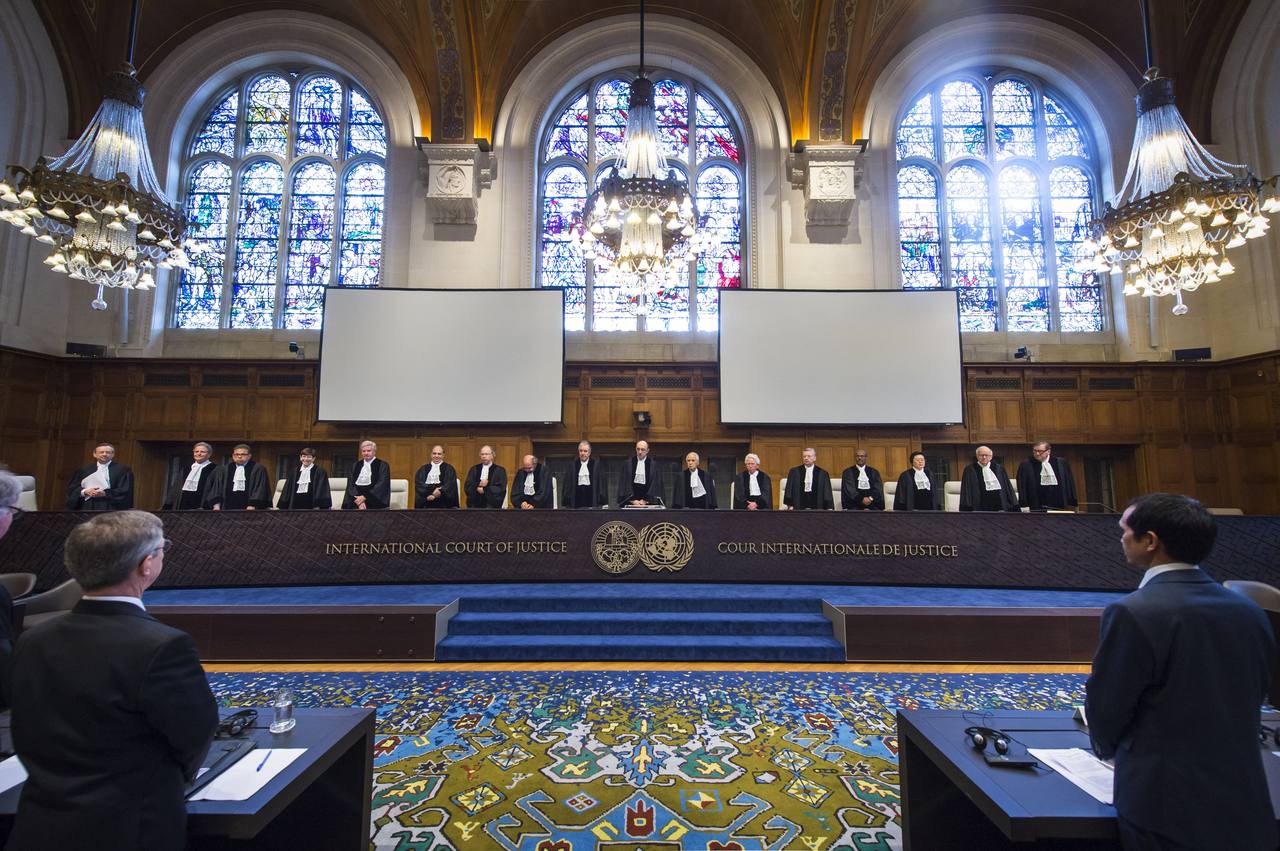
Myanmar's government has rejected the International Court of Justice ruling that found it responsible for genocide against the Rohingya, calling the historic judgment "unfair" a day after it was delivered. Presidential spokesperson Khaing Khaing Soe told a press conference in the capital, Naypyidaw, on Friday that Myanmar had been "unjustly accused", pointing out that the decision was not unanimous. "When we look at the result, not all 15 judges agreed with the decision," she said, noting the 9-6 vote. "So this was not a unanimous decision. I would say it is not fair."
Source: Reuters
On Thursday, the World Court ruled 9-6 that Myanmar committed genocide against the Rohingya in northern Rakhine State during the 2017 military crackdown — the first time in the court's 80-year history that a state has been found responsible for genocide. Read the ruling story
The court, in a 191-page judgment read out over three hours by its president, Judge Yuji Iwasawa, found that Myanmar's security forces and other state organs intentionally committed acts covered by the Genocide Convention. It estimated that around 10,000 Rohingya were killed in the so-called "clearance operations", that villages were systematically destroyed and replaced with non-Rohingya inhabitants, and that the "only reasonable inference" was that Myanmar intended to destroy the population — the key test for genocide.
Source: Reuters
The court ordered Myanmar to investigate and, if warranted, prosecute and punish those suspected of involvement, to guarantee that such violence is not repeated, and to allow and facilitate the safe, voluntary and dignified return of those who fled. It also ordered restitution and compensation, with the amount to be determined later, and said Myanmar must report to the court within two years on the measures it has taken. The judgment is binding and cannot be appealed — but the court has no way of enforcing its verdicts, and it remains to be seen whether Myanmar's rulers will adhere to the orders.
Source: AFP
Myanmar has always denied genocide, arguing that its 2017 operations targeted an armed uprising after attacks by insurgents left a dozen security personnel dead. The court rejected that defence, finding there was no evidence that, in the conduct of the clearance operations, Myanmar's forces distinguished between civilians and alleged Rohingya fighters. China, a rare enduring partner for Myanmar since the 2021 coup, raised concerns of judicial overreach after the ruling, and one of the court's judges from China voted in Myanmar's favour on all but one count.
Source: AFP
The president of the UN General Assembly, Khalilur Rahman — who is also Bangladesh's foreign minister — urged Myanmar on Friday to take back the hundreds of thousands of Rohingya refugees sheltering in Bangladesh. "Myanmar must take back the Rohingya refugees. A verdict on paper is not justice in reality — now it must be implemented," he said. More than 700,000 Rohingya fled to Bangladesh in 2017, and the camps at Cox's Bazar are now the world's biggest refugee settlement.
Source: AFP
World reaction: welcome, caution — and a warning about enforcement
UN Secretary-General António Guterres welcomed the ruling as a powerful recognition of the victims and a reaffirmation that impunity for such horrific acts must not stand. UN human rights chief Volker Türk called it a turning point for justice for the Rohingya and all people of Myanmar, and urged states to stop transferring military equipment and jet fuel used to commit the crimes. Türkiye welcomed the judgment and demanded Myanmar comply, while Myanmar's opposition National Unity Government and the Karen National Union both welcomed the ruling and called for full implementation, including safe return with full rights.
Source: Reuters
The United States reacted to the ruling with caution, stressing the need to avoid what it called judicial overreach — a notable shift, given that Washington itself determined in 2022 that Myanmar committed genocide against the Rohingya. Human Rights Watch called the judgment a significant precedent for victims of genocide worldwide, and legal experts said it will be closely watched for clues in the other high-profile case before the court, in which South Africa accuses Israel of genocide in Gaza.
Source: AFP
The case, and the man at its centre
The case was brought by The Gambia in November 2019 under the 1948 Genocide Convention, which allows any state to bring a case against another it suspects of breaching the treaty. The court's 191-page judgment drew on graphic evidence and survivor testimony, and even referenced a Reuters investigation into the killing of 10 Rohingya in Inn Din in September 2017 — an investigation that led to two Reuters reporters being jailed for more than 500 days. Judges found that nearly 400 villages — about 40 per cent of the almost 1,000 villages in the three townships of northern Rakhine State — were partially or totally destroyed.
Source: Reuters
The ruling also heaps pressure on Myanmar's leader, Min Aung Hlaing, who commanded the military during the 2017 crackdown before ousting the elected government of Aung San Suu Kyi in a 2021 coup. This year he was installed as civilian president following deeply restricted elections, and he is waging a diplomatic campaign for legitimacy. Whether the court's orders translate into the safe return of refugees, prosecutions or compensation will now depend on international pressure — and on a government that, on its first day after the verdict, has already said the verdict was not fair.
What is solid
- The ICJ ruled 9-6 on November 19 that Myanmar committed genocide against the Rohingya in northern Rakhine State in 2017.
- Myanmar's spokesperson Khaing Khaing Soe called the ruling "not fair" at a Naypyidaw press conference on November 20.
- The court ordered safe, voluntary and dignified return, investigations and prosecutions, and restitution and compensation to be determined later.
What is only claimed
- Whether Myanmar will comply with the orders on return, prosecutions and compensation — it has rejected the verdict outright.
- Whether the ruling will influence the South Africa v. Israel genocide case — legal experts say it is being watched for clues, but the cases are separate.