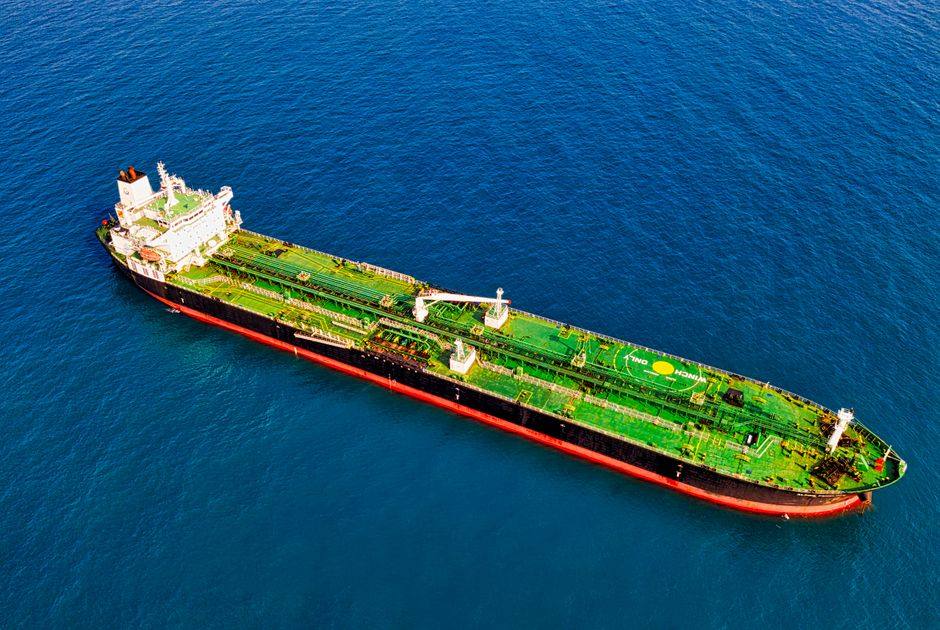
Insuring a single commercial ship for one crossing of the Strait of Hormuz now costs $64 million (yaani 6.4 crore dollar), the acting United States Navy secretary told senators on Tuesday — a figure that drew immediate scepticism from shipping analysts and underlined how far the world's most important oil waterway remains from normal, even as President Donald Trump insists the campaign against Iran is effectively over.
Source: Al Jazeera
Hung Cao, appearing before the Senate Armed Services Committee at his confirmation hearing to become Navy secretary permanently, first put the cost of a crossing at $54,000 before clarifying that this had been the pre-war figure. In an exchange with Democratic Senator Elissa Slotkin, who questioned him on the cost of the war and on freedom of navigation, Cao said the price had since risen to $64 million for a single transit. "This war, again, I know it's a strain on our navy," he said.
Source: US Transport News
Analysts push back on the number
Cao's figure has not been independently verified, and Al Jazeera reported that it appears unusually high even by wartime standards. Michelle Bockmann of the maritime intelligence firm Windward said Cao "gave no context" and asked whether he meant war-risk premiums, which are set as a share of a ship's hull value. S&P Global estimated in July that a laden supertanker might pay about $21 million, with war-risk premiums having climbed to between 7.5 and 10 percent of hull value, compared with 1 to 3 percent before the war.
What is not in dispute is that the strait is still not operating normally. The United Kingdom Maritime Trade Operations centre (UKMTO) recorded 308 vessel crossings in the seven days ending November 11 — 139 outbound and 169 inbound — with traffic running about 65 percent below pre-war levels. Before the war began on February 28, the strait carried about one-fifth of the world's oil supplies; Iran has in effect kept it closed since then, allowing only some ships to pass while targeting those it says are unauthorised.
A violent week in the strait
The hearing came in a violent week. UKMTO reported two tanker attacks on Monday, one leaving a vessel near Oman disabled with its engine room ablaze. Iranian forces said on Tuesday that three more tankers had struck naval mines — a claim reported by US Transport News and not independently confirmed — and US forces struck targets on Iran's Qeshm Island after what Washington described as an Iranian drone attack on American installations in Bahrain. "It is only open for business if mariners are prepared to take these risks," said Chris Beauchamp of IG.
Tanker rates tell a second story
For tanker owners, the risk premium is nonetheless draining away. Very large crude carrier rates from the Gulf of Oman to China fell to about 308 on the Worldscale index on November 13, down 64 percent from a record 841 on October 8, according to Baltic Exchange data. Gulf exporters have pushed flows back toward pre-war volumes, partly through ship-to-ship transfers and tankers sailing with their transponders off, and Asian refiners are turning back to Middle East barrels and away from long-haul American and North Sea crude, said Arrow Shipbroking analyst Delia He, who called the rate slide "only partly driven by market fundamentals." Oil prices have fallen about 20 percent this month.
For the lakhs of Punjabi and Indian workers who live and work across the Gulf, the state of the strait is not an abstract shipping question: it feeds directly into oil and fuel prices, the health of Gulf economies that employ them, and the safety of the sea lanes their remittances and homeward flights depend on. What happens next turns on whether attacks on shipping stop — and on whether Cao, if confirmed, can substantiate the $64 million figure that has now become the hearing's headline number.
The $64 million insurance figure is Acting Navy Secretary Hung Cao's statement to a Senate committee. It has not been independently verified, and the closest market estimate reported so far — S&P Global's July figure of about $21 million for a laden supertanker — is far lower. Awaaz Punjab reports it as an official's claim, attributed as such.