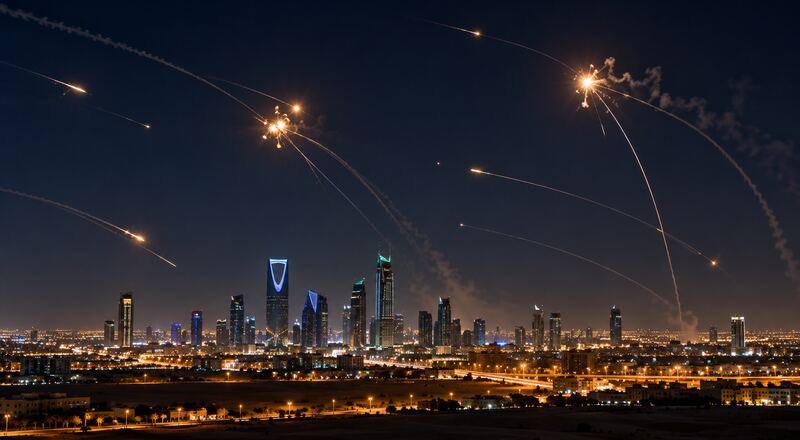
Houthi attacks on Saudi infrastructure are adding to concerns in Washington about President Donald Trump's proposed nuclear power pact with Saudi Arabia, weeks before US senators are due to vote on whether to block the agreement, Reuters reported on Friday.
Source: Reuters
Yemen's Iran-aligned Houthis have intensified drone and missile strikes on Saudi airports, oil facilities and office buildings, raising questions about Riyadh's ability to secure the nuclear plants that would be built under the pact.
The Houthis escalated their threats on Friday, saying they would attack Saudi Arabia's Red Sea ports and warning everyone nearby to stay away.
Source: Reuters
Senate vote due in week of November 30
The US Senate will vote as soon as the week of November 30 on a resolution of disapproval of the proposal, known as a 123 Agreement, Republican and Democratic Senate aides familiar with the timing said. It is not clear whether the resolution would win the simple majority it needs in a chamber where Trump's Republicans hold a 53-47 majority.
Source: Reuters
Senators Jeff Merkley and Edward Markey introduced the joint resolution of disapproval in October, setting up a vote after November 29. Under federal law the agreement can enter into force after a 90-day congressional review period unless Congress passes a resolution blocking it.
Source: US Senate — Merkley office
"Giving Saudi Arabia access to US civilian nuclear energy technology without ironclad protections to make sure it doesn't provide a foundation for a nuclear bomb is unacceptable," Senator Jeff Merkley said. Senator Edward Markey called the deal "about megatons, not megawatts" and "the starting gun for a Middle East nuclear arms race."
What the deal would allow
Under the agreement, Saudi Arabia would be able to enrich uranium and build nuclear reactors using US technology. It does not include the so-called Additional Protocol, which gives the UN's International Atomic Energy Agency intrusive inspection powers such as snap inspections — powers Washington had previously demanded from Iran. Concerns also rose because the agreement did not address whether Saudi Arabia would join the Abraham Accords to normalise ties with Israel.
Source: Reuters
The main worry until now had been that Saudi Arabia could one day build a nuclear weapon. The Houthi campaign has added a new one: that militants could strike or seize nuclear facilities. The UN nuclear watchdog's chief, Rafael Grossi, has by contrast publicly called the deal's inspection arrangements "very satisfactory" — a view the Senate's critics reject.
Even if the resolution passes, Trump is expected to veto it. Backers of the resolution say even a close vote could force more transparency from the administration and help efforts to restrict any Saudi nuclear pact in future.
Source: Reuters
Why it matters for Gulf workers and oil
Lakhs of Indian and Punjabi workers live and work in Saudi Arabia and across the Gulf, and Houthi strikes on airports and oil facilities put their safety — and the region's energy supplies — directly in question. Any escalation also feeds into global oil prices, which shape fuel costs and the remittance flows families back home depend on.
What happens next: the Senate vote in the week of November 30 is the next marker. If the resolution fails or is vetoed, the agreement moves toward entering into force after the review period. If it passes with a veto-proof margin — which aides say is far from certain — the pact would be blocked.