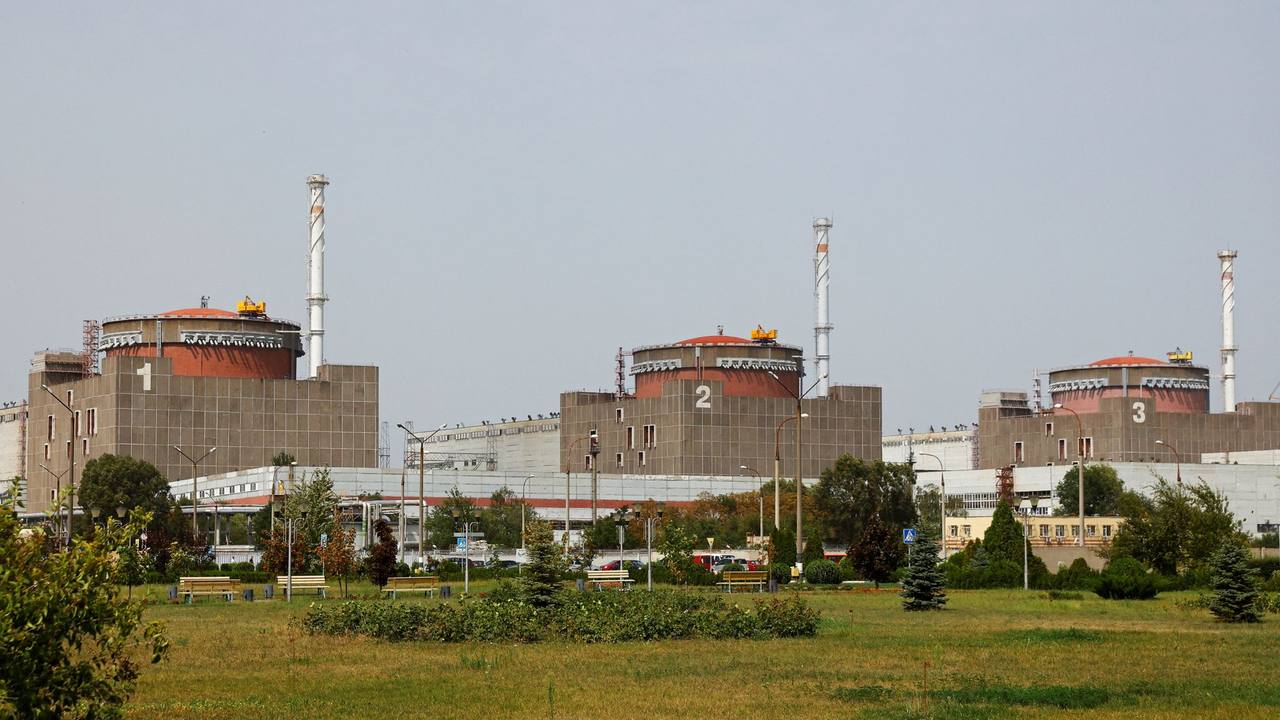
The UN nuclear watchdog said on Thursday it is working with Russia and Ukraine to arrange a new local ceasefire at the Zaporizhzhia nuclear power plant, so engineers can safely repair the facility's last remaining external power line after it was cut again this week.
Source: Reuters
The plant lost its last external power line on November 25 and has been running on emergency diesel generators since. Read the earlier report
The plant lost its connection to the 330 kV Ferosplavna-1 line at 05:28 local time on November 25, reportedly due to military activity, the International Atomic Energy Agency (IAEA) said in its Update 377 on November 26. It is the 28th time the plant has had to rely on emergency diesel generators since the conflict began.
The Zaporizhzhia plant generates no electricity itself. It needs a constant external supply to keep nuclear fuel cool in its six reactors and to run safety systems. Europe's largest nuclear power plant, it has been under Russian occupation since the early weeks of the full-scale invasion in 2022.
Grossi: power link 'extremely precarious'
"Once again we are faced with a loss of offsite power at the ZNPP. Its continued reliance on a single power line, together with the plant's location on the front line of an active warzone, results in an extremely precarious offsite power connection," IAEA Director General Rafael Mariano Grossi said.
Source: IAEA Update 377
Grossi called on both sides "to work constructively with the IAEA to cease military activity against electrical infrastructure, facilitate repair of the Ferosplavna-1 line and re-establish an offsite power connection to the ZNPP."
The plant's Russian operators said the disconnection happened "after protection devices switched on" and that the diesel generators were working properly. The IAEA said its team at the site had heard military activity every day through the week, while the plant alleged attacks on civilian vehicles on site.
Diesel for more than 10 days — but heating switched off
Four emergency diesel generators in automatic standby started when power was lost; two have since been shut down to save fuel. The IAEA estimates the plant has enough diesel to keep two generators running for more than ten days at the current configuration.
To save fuel further, the plant has suspended on-site heating even as temperatures at the site fell to as low as 0°C this week, and has shut down all reactor heat-removal pumps. Only the spent-fuel pool cooling pumps on Units 1 and 6 are currently running, the IAEA said.
The IAEA is now seeking a ninth localised ceasefire around the plant — the same arrangement it has used eight times before to let repair crews reach damaged power lines safely. No date for the repair work has been announced, and the ceasefire still needs agreement from both sides.
What happens next depends on whether the fighting around the plant pauses long enough for engineers to reach the damaged line. Until the Ferosplavna-1 line is restored, Europe's largest nuclear plant will keep running on diesel, one generator at a time.
What is solid
- The plant lost its sole remaining external power line, Ferosplavna-1, on 25 November at 05:28 local time.
- It is the 28th time during the conflict that the plant has relied on emergency diesel generators.
- The IAEA is engaging Russia and Ukraine on arrangements for a ninth localised ceasefire.
What is only claimed
- The cause of the outage — the IAEA says it was reportedly due to military activity; the plant's Russian operators said protection devices switched on.
- Claims of attacks on civilian vehicles at the site, alleged by the plant and not independently verified.