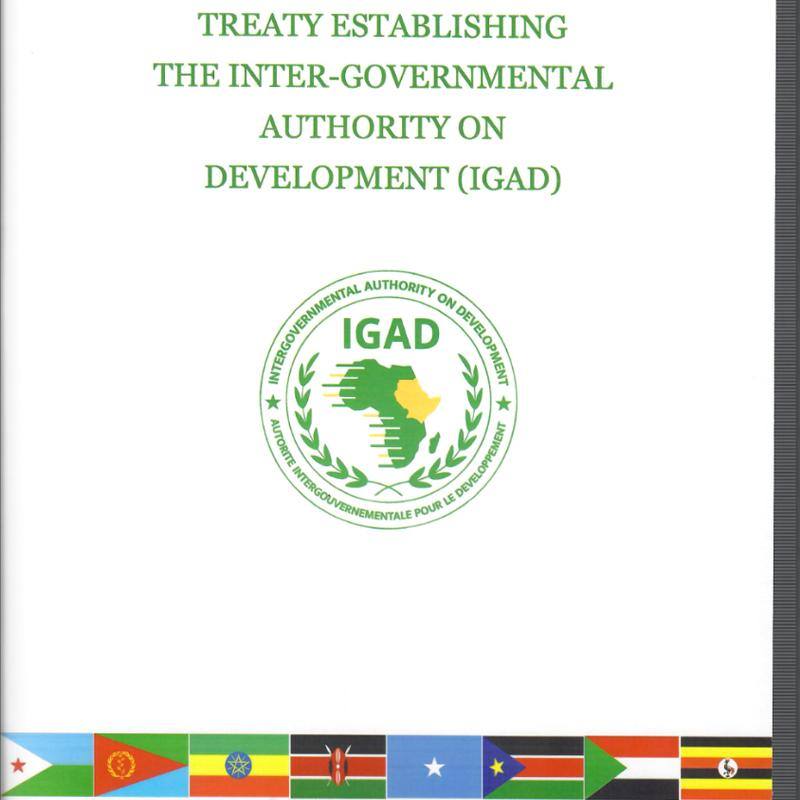
The Intergovernmental Authority on Development (IGAD) announced on Monday, November 16, that its new founding treaty has entered into force, replacing the 1996 agreement that governed the Horn of Africa regional bloc for three decades and opening what the organisation calls a new implementation phase.
Source: Okay News (IGAD announcement, Nov 16, 2026)
The Treaty Establishing IGAD was adopted on June 12, 2023, in Djibouti, at the 14th Ordinary Session of the IGAD Assembly of Heads of State and Government, according to IGAD's official treaty page. It gives the bloc a strengthened legal, institutional and operational foundation for deeper regional cooperation and integration, and on entry into force the 1996 Agreement ceases to have legal force, while existing IGAD institutions and decisions continue subject to alignment with the new treaty.
Source: IGAD — The 2023 IGAD Treaty (official)
How the treaty came into force
Under Article 59, the treaty enters into force 60 days after two-thirds of IGAD member states deposit their instruments of ratification with the Executive Secretary, who is the designated depositary. At its 74th Extraordinary Session in Djibouti on September 15, 2026, the IGAD Council of Ministers confirmed the threshold had been met, endorsed the formal entry into force, and directed the Executive Secretary to notify member states of the effective date, transmit certified copies and register the treaty with the African Union and the United Nations, IGAD said.
The five states that have ratified and deposited their instruments are Djibouti, Ethiopia, Kenya, Somalia and South Sudan, IGAD said. Executive Secretary Workneh Gebeyehu urged the countries yet to ratify to complete their processes. Uganda is one of them: a Ugandan Ministry of Foreign Affairs official told Uganda Radio Network that Uganda has yet to complete the internal processes required to ratify the treaty as it takes effect. Kenya Today reported that Uganda and Sudan were the two members yet to ratify.
Source: Uganda Radio Network via Plus News (Nov 16, 2026)
What the treaty covers
Article 24 sets out 18 areas of cooperation, IGAD said, including trade liberalisation, economic integration and investment; free movement of persons, labour, goods, services and capital; renewable energy, transport, communications and tourism; agriculture, food security, environmental protection and natural resource management; gender equality; private-sector and civil-society participation; good governance, democracy, human rights, peace and security; education, science and technology; and health and social welfare. The treaty also strengthens IGAD's institutional governance, clarifies the responsibilities of its organs and provides for more structured dispute resolution.
IGAD itself cautions that the treaty's objectives — easier regional movement, food and livelihood security, better health and education — are to be realised through coordinated regional action and national implementation. They do not automatically create new travel or work entitlements from the effective date.
IGAD was established in 1986, initially to coordinate regional efforts against drought, desertification and food insecurity; the 1996 agreement expanded its mandate to peace, security, development and regional cooperation. The bloc's members sit across one of the world's most fragile neighbourhoods, where Sudan's civil war, Somalia's long conflict and recurring drought and food crises have repeatedly tested regional diplomacy.
What happens next: IGAD says entry into force marks the beginning of implementation, not the end of the process. The secretariat will set out each area of cooperation under Article 24 in the coming weeks, and the organisation, working with member states and partners, will advance the institutional, legal and administrative measures needed to operationalise the treaty — while the remaining ratifications, including Uganda's, are still pending.