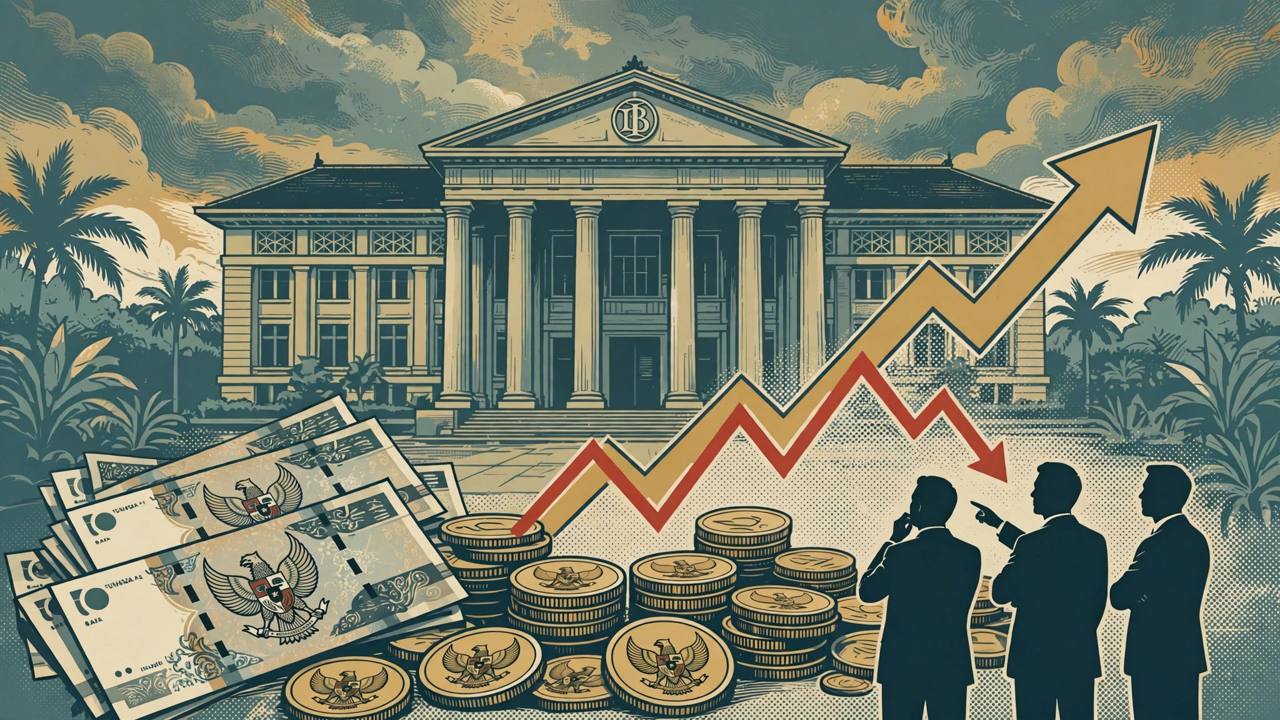
Indonesia's central bank unexpectedly raised its policy interest rate on Wednesday, resuming a tightening cycle to put a floor under the rupiah after the currency hit a record low, as domestic political turmoil, global monetary tightening and market uncertainty weighed on Southeast Asia's largest economy.
Source: Reuters
Bank Indonesia raised the benchmark seven-day reverse repurchase rate by 25 basis points to 6.00%, its highest level since January 2025. The decision, taken at the Board of Governors' meeting on November 17-18, matched the prediction of only 10 of 27 economists polled by Reuters; the rest had expected the bank to hold. The overnight deposit facility rate was also raised by 25 basis points to 5.25% and the lending facility rate to 6.75%.
The latest increase takes Bank Indonesia's total tightening since May to 125 basis points, all of it aimed at defending the rupiah, currently the worst-performing currency among emerging Asian markets. The rupiah touched an all-time low of 18,285 per US dollar on Tuesday and has traded near that level since; the bank said it stood at 18,245 per dollar on November 17, down 0.66% from the end of October.
Governor Destry Damayanti said the hike was a “pre-emptive” move to ensure inflation stays within the bank's target range and to maintain the attractiveness of rupiah assets in anticipation of a possible US rate hike in December. “Going forward, BI will continue to consistently direct its monetary policy to strengthen the stability of the rupiah exchange rate in order to keep inflation within target,” she said. The bank's own statement said the increase was intended to reinforce stabilisation of the rupiah against rising global uncertainty and to act pre-emptively to keep inflation in 2026 and 2027 within its target.
Why the rupiah keeps sliding
The rupiah has been under pressure for most of 2026 amid concerns over fiscal discipline and political interference in the central bank. It weakened further last week after the vice president resigned and four senior police officers were implicated in an illegal wiretapping case involving the president's phone — two political shocks that have kept investors on edge.
The currency's slide deepened after the vice-presidential resignation and the wiretap scandal shook investor confidence in Jakarta. Read: Indonesia's vice president resigns
So far the weaker currency has had only a limited impact on prices at home. Inflation eased slightly to 3.23% in October, and the government caps fuel prices through subsidies to keep inflation under control. Senior Deputy Governor Aida Budiman said the rate decision would help ensure inflation stays within target over the next two years. The rupiah itself barely moved after Wednesday's decision.
Indonesia's economic growth accelerated to 5.47% in the third quarter, from 5.29% in the previous three months — still far slower than President Prabowo Subianto's target of 8% growth by 2029. Destry said the bank's other measures, including a 200-basis-point cut in reserve requirements announced last month, would help offset the impact of higher rates on liquidity, bank lending and growth, describing the bank's policy mix as innovative and designed to address “problems that are increasingly complex”.
Analysts expect more hikes into 2027
Analysts said Wednesday's move is unlikely to be the last. Persistent external pressures, concerns about a potential MSCI downgrade for Indonesia's stock market and political uncertainty may extend the tightening cycle into 2027. Barclays expects Bank Indonesia to keep raising rates to a terminal benchmark of 6.75% by the middle of 2027, while Jakarta-based Bank Permata expects 6.50% by the end of next year and Capital Economics also sees 6.50% by the end of 2027.
“Investors will be watching closely for any comments from government officials regarding today's decision by the central bank given their push for faster economic growth,” said Capital Economics economist Jason Tuvey. “The acid test for Bank Indonesia will be how it responds if the rupiah were to come under fresh downward pressure in the coming months.” For emerging markets, the stakes are wider than Jakarta: with the US dollar near a 19-month high and markets pricing in another possible Federal Reserve hike in December, central banks across Asia are being forced to choose between defending their currencies and supporting growth.