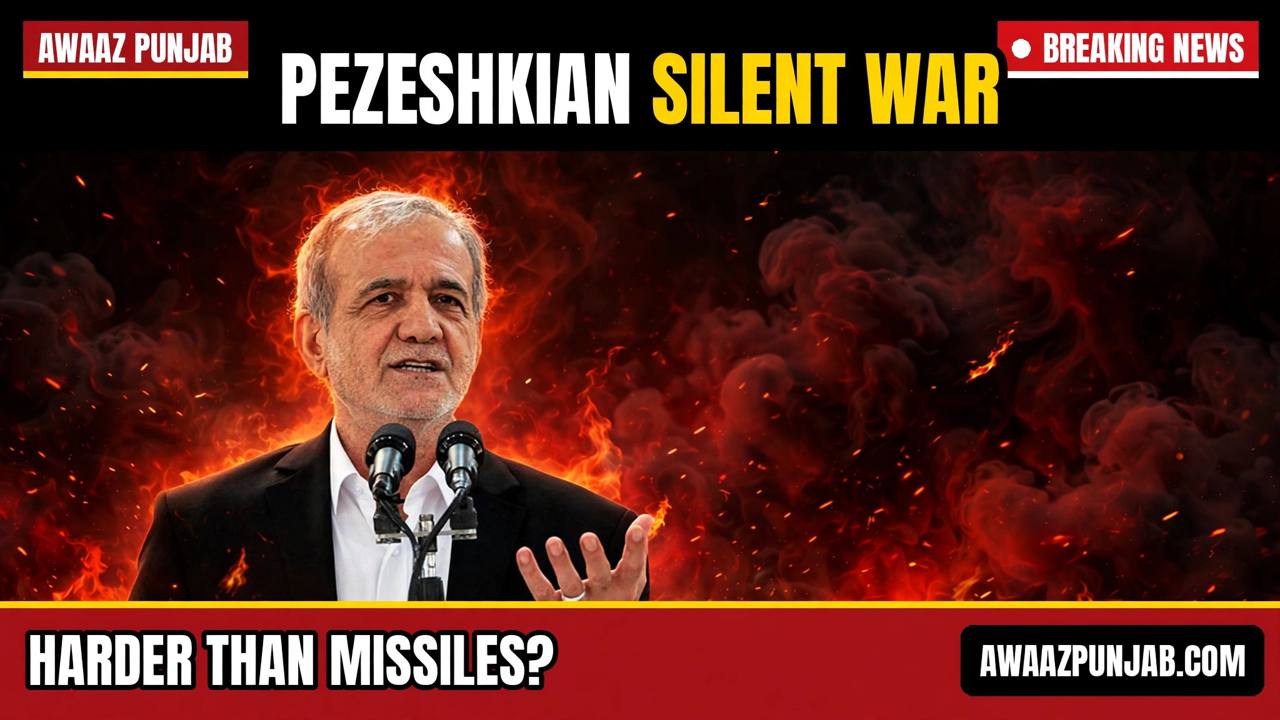
Iran's President Masoud Pezeshkian has admitted that the economic war being waged against his country is harder than open combat, telling business leaders in Tehran that Iran is fighting a "silent war" that is "far more difficult than a war in which missiles are launched and destruction is carried out."
Source: IRNA via Xinhua / TBS News
Speaking on Saturday at the annual Capital Market conference in Tehran, Pezeshkian told investors and producers: "We are in a silent war, which is much more difficult than a war in which missiles are launched and destruction is caused. It is an economic war, one that you, as economic actors, are dealing with, and it is no easy battle."
He said the "enemy" had expected the pressure to cause famine and shortages of goods in the domestic market but had failed, insisting that Iran's "wheels of production continue to turn" — while stressing that the economic war waged by the United States was "certainly not simple."
A rare admission from the top
The remarks are a striking public admission from inside Tehran that the months of US pressure — a naval blockade of Iranian ports, sweeping sanctions and a campaign to cut off seaborne oil revenue — are biting harder than the missile exchanges of the war that began on February 28.
On the same day, Iranian Interior Ministry spokesman Ali Zeinivand said the US naval blockade and land and aerial restrictions had failed to stop the country's trade transactions — a claim Washington disputes. US Treasury Secretary Scott Bessent has said the campaign is working, describing Iran's oil revenues as a "ship" that is "sinking."
Tehran has called the US naval blockade an act of military aggression and vowed to counter it "by all available means", while President Trump has said he is inclined to resume strikes after the New Year if no deal is reached. Read the earlier story
The pressure has been building for weeks. On November 23, the US Treasury sanctioned 30 targets in Iran's shadow banking network under what Washington calls Operation Economic Outcast, accusing them of diverting proceeds from petroleum sales. Iran's Foreign Ministry answered the same day by vowing to counter the blockade.
Oil markets have felt the strain in the other direction. Brent crude fell to about $88.71 a barrel on November 24, its lowest in about three months, as traders bet that diplomacy might yet hold — a move that cuts the value of the oil Iran can still sell.
Inside Iran, the squeeze is showing up in daily life. Reports of Pezeshkian's remarks said he warned that worsening natural gas and electricity shortages threaten factory production and jobs as winter approaches, with projections putting the domestic gas shortfall at roughly 430 million cubic metres, up from about 300 million previously.
Iranian truck drivers stopped work across several cities on Sunday, saying freight rates no longer cover fuel, tyres and repairs — the latest sign of economic distress inside the country. Truck drivers strike as blockade bites
For the lakhs of Punjabi and Indian workers living and working in the Gulf, the standoff matters directly: oil prices, shipping through the Strait of Hormuz, flights and remittances all move with the crisis, and any new round of strikes would put the region's workers and their families on edge again.
What happens next
Indirect talks continue through Qatari mediation, and Iran's two-day proposal — reopening the Strait of Hormuz if Washington halts hostilities and lifts the blockade and sanctions — remains on the table, according to Iranian officials. President Trump has signalled he is in no hurry to decide and could wait until next year, leaving the economic war — and the silent strain inside Iran — to grind on.
What is solid
- Pezeshkian called the economic pressure a "silent war" harder than a missile war, at the Tehran Capital Market conference on Saturday, November 21, as reported by Iran's official IRNA news agency.
- The US naval blockade of Iranian ports has been in force since April 13, and the US Treasury sanctioned 30 shadow-banking targets on November 23.
- Brent crude fell to about $88.71 on November 24, its lowest close in about three months.
What is only claimed
- Whether the blockade has stopped Iran's trade: Tehran says transactions continue; Washington says the campaign is starving the regime of cash.
- How far the economic pain will translate into political pressure inside Iran: Iranian officials have voiced concern about renewed unrest, while the government insists production continues.