This report follows Awaaz Punjab's Saturday-night report in which the IRGC Navy claimed two oil tankers had struck naval mines and caught fire in the Strait of Hormuz. On Sunday the IRGC issued a new statement raising its reported tally to three tankers. That earlier development is named here as background; the Sunday claim itself has not been independently verified. Read the earlier report: two tankers hit mines, IRGC claimed on Saturday
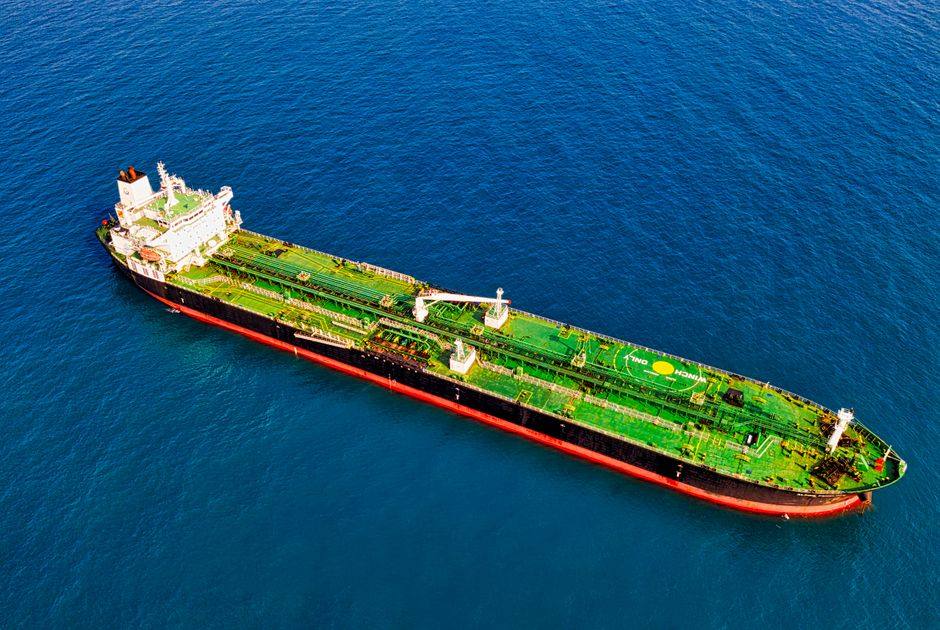
Iran's Islamic Revolutionary Guard Corps (IRGC) Navy said on Sunday, November 8, that three oil tankers travelling along a shipping route it describes as unauthorised in the Strait of Hormuz have been hit by explosions and severe fires since the early hours of the day, with thick smoke spreading across the strategic waterway. Al Jazeera's live coverage, updated on Sunday, headlined the development as a third tanker ablaze and said the attacks in the strait were intensifying.
Source: Al Jazeera (live blog, updated Nov 8)
In its statement, carried on Telegram and reported by Al Jazeera, the IRGC Navy said: “These tankers are burning because they turned off their navigation and identification systems and because of the aggression of the American invading military.” Press TV, reporting the same Sunday statement at 11:04 GMT, said the force blamed the fires on the “mischief” of the US “smuggling and aggressor army” and warned that vessels defying Iranian regulations for the strait would face similar consequences.
Source: Press TV (Nov 8, 11:04 GMT)
The Sunday statement came less than a day after the IRGC Navy's late-Saturday statement claiming that two oil tankers — one east of the strait and one inside it — had struck naval mines and caught fire after switching off their navigation and positioning systems to use an unauthorised southern corridor. The Levant Files' breaking summary, citing Al Jazeera and Iraq's National News Agency (NINA), described Sunday's announcement as raising the IRGC's earlier tally from two tankers to three. The IRGC has not clarified whether all three tankers in Sunday's statement are new incidents from Sunday morning or a cumulative count that includes Saturday's two.
Source: The Levant Files (Nov 8, citing Al Jazeera and NINA)
Saturday's two-tanker claim, and the explosions reported the same night on Iran's Hormuz coast including Qeshm Island, Jask, Sirik and Bandar Abbas, were covered in full in Awaaz Punjab's earlier report. Earlier: explosions on Iran's Hormuz coast as IRGC claimed two tankers hit mines
What has not been verified
The IRGC statement does not name any of the three tankers, give their flags, owners or nationalities, or say anything about the condition of their crews. It does not establish the cause of the third fire: the first two incidents on Saturday were attributed by the IRGC to naval mines, but no authority outside Iran has confirmed that mines caused any of this weekend's fires. Al Jazeera and other outlets reporting the statement note that the ships' identities, their crews' status and the cause of the third fire remain independently unverified, and no maritime authority had confirmed three burning tankers at the time of publication. The claims in this report are therefore presented as the IRGC's claims, not as confirmed events.
Two nearby maritime reports from the same weekend have NOT been linked to the IRGC's tally. The UK Maritime Trade Operations (UKMTO) agency received a delayed report of a tanker on fire about eight nautical miles northwest of Khasab, Oman, at 19:20 UTC on Saturday, November 7, whose crew abandoned the vessel, Seatrade Maritime reported on Sunday. Separately, the UAE National Guard rescued all 22 crew members from a burning cargo ship in the Gulf of Oman; the vessel and the cause of that fire were not identified. Neither report has been connected to the tankers named in the IRGC's count.
Source: Seatrade Maritime (Nov 8, on UKMTO)
The UAE's rescue of 22 crew members from the burning cargo ship in the Gulf of Oman was reported separately by Awaaz Punjab earlier on Sunday. UAE rescues 22 crew from burning cargo ship in the Sea of Oman
Background: a strait under blockade since February
Iran tightened its control of the Strait of Hormuz on February 28, when the current war began with US-Israeli strikes on Iran, barring safe passage to vessels belonging to or affiliated with Israel and the United States and requiring other ships to use routes authorised by Tehran — in practice, northern corridors — while declaring southern routes near Omani waters unauthorised and mined. The United States first imposed a naval blockade of Iranian ports on April 13, suspended it on June 18 and resumed it on July 14, according to US Central Command (CENTCOM), which says the blockade has bottled up more than $25 billion worth of Iranian crude oil. On Friday, November 6, President Donald Trump confirmed that US forces had struck an Iranian air-defence system on Qeshm Island, at the mouth of the strait, describing the strike as limited and defensive, while negotiations between Washington and Tehran — mediated by Qatar — continued.
Source: Radio Free Europe / Radio Liberty live blog (Nov 8)
Trump's confirmation of the November 6 strike on the Qeshm Island air-defence site, the first such attack since Tuesday's US midterm elections, was covered by Awaaz Punjab here. Trump confirms US strike on Iran's Qeshm Island air defences
Oil markets were already on edge before the weekend: Brent crude settled at $98.32 a barrel on Friday, November 6, after a week in which it had swung sharply on strike headlines and on hopes — raised by the US midterm results — that President Trump would push harder for a deal with Iran. Sunday's IRGC claim came while most markets were closed, so the first full market reaction will come when trading reopens. No verified oil-price move caused by the Sunday tanker claim itself had been reported at the time of publication, and Awaaz Punjab does not treat the claim alone as a confirmed disruption to oil flows.
For readers in Punjab and the diaspora, the stakes are direct even though nothing in Sunday's claim identifies any vessel or crew: India imports the bulk of its crude through Gulf routes, and tens of thousands of Punjabi and Indian workers live and work in the Gulf states around the strait. No Indian crew involvement, and no casualty of any nationality, has been reported in connection with the IRGC's Sunday claim — because the IRGC has identified none of the ships. Any identification by UKMTO, CENTCOM or the vessels' owners would materially change this picture and will be reported as a separate update.
Watch for three things: (1) whether UKMTO, CENTCOM or any shipowner identifies the tankers or confirms fires beyond the IRGC's own statement; (2) any US or Iranian military response after the Qeshm strike and the weekend's shipping incidents; and (3) the oil market's reaction when trading reopens, alongside Qatar's continuing mediation between Washington and Tehran. Until independent confirmation arrives, the three burning tankers remain an IRGC claim — reported here in full because the strait carries a fifth of the world's oil, and labelled unverified because no one outside Iran has confirmed it.