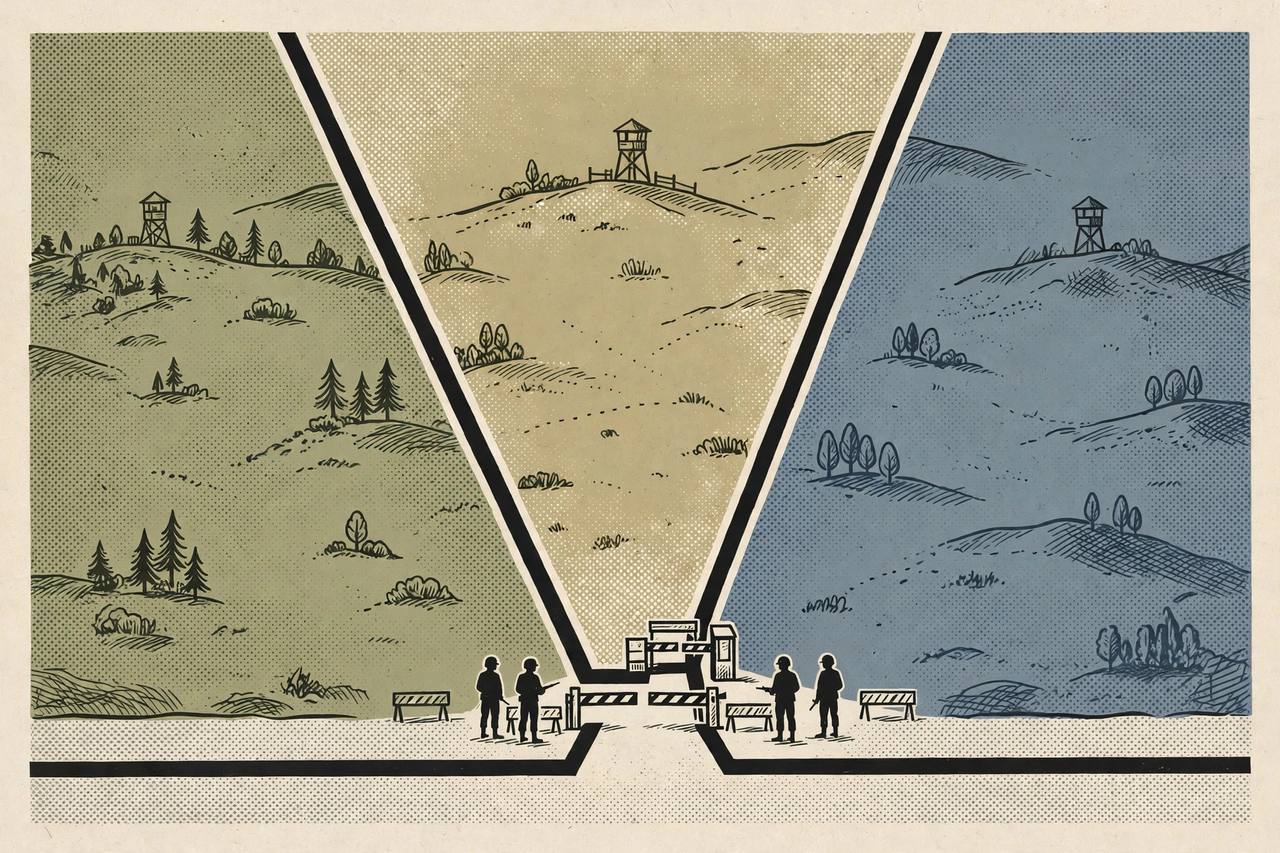
JERUSALEM, Nov 18 — Israel will not withdraw from the security zones its army holds in the Gaza Strip, Lebanon and Syria, and it is prepared to seize still more territory if fighting escalates, Defence Minister Israel Katz said in a statement on Wednesday, November 18, Anadolu Agency reported.
Source: Anadolu Agency via Hatha Alyoum
"As we have made clear: Israel will not withdraw from the current lines of these security zones, nor will it redeploy its forces," Katz said, according to Anadolu. He linked any future withdrawal to the dismantling of the Palestinian group Hamas, the full disarmament of Hezbollah in Lebanon, and the removal of jihadist threats from Syria — conditions none of the three sides has met.
A threat to take more land
Katz threatened to seize more territory in the Gaza Strip, Lebanon and Syria if tensions escalate on those fronts, including in the event of a renewed war against Iran, Anadolu reported. In Lebanon, he warned that Israel could take over Nabatieh as a new northernmost point of control, and he warned of massive destruction and population displacement as a deterrent against any attempt to penetrate into Israel, according to reporting summarising the statement.
The zones are extensive. Israel occupies around 70 percent of the Gaza Strip, in addition to territories it holds in Lebanon and Syria, some of which it has held for decades, Anadolu's report said. In Gaza, the October 2025 ceasefire left roughly two-thirds of the enclave under Israeli control, behind the boundary known as the Yellow Line.
A ceasefire already under strain
Katz's statement landed on the same day Israeli tanks advanced onto the main Salahudeen road in central Gaza — the first ground raid of its kind since the 2025 ceasefire, residents said — in an operation the Israeli military said targeted Hamas infrastructure west of the Yellow Line. Palestinian medics said three people were killed in Israeli strikes across Gaza on Wednesday, Reuters reported.
Source: Reuters via Jack FM
Awaaz Punjab reported the Gaza tank advance and the three deaths earlier on Wednesday. Read: Israeli tanks advance in central Gaza, three killed
The body overseeing US President Donald Trump's plan to end the Gaza war has accused both Israel and Hamas of failing to meet their commitments, in a 12-page Board of Peace report to the UN Security Council seen by Reuters, warning that the population of Gaza remains in dire conditions and the ceasefire is in danger of collapse. Gaza health authorities say at least 1,600 Palestinians have been killed since the ceasefire took effect, while the Israeli military says five Israeli soldiers have been killed in the same period, Reuters reported.
What is solid
- Defence Minister Israel Katz said on Wednesday, November 18, that Israel will not withdraw from the current lines of its security zones in Gaza, Lebanon and Syria (Anadolu Agency, reported by multiple outlets)
- Katz tied any withdrawal to dismantling Hamas, fully disarming Hezbollah and removing jihadist threats from Syria
- The Board of Peace report to the UN Security Council accused both Israel and Hamas of failing to meet ceasefire commitments (Reuters)
What is only claimed
- The exact share of Gaza under Israeli control is reported differently by different outlets — around 70 percent in Anadolu's reporting and more than 60 percent in other regional reporting; these are reported estimates, not figures Awaaz Punjab can independently verify
- Whether the zones amount to permanent occupation or a conditional security posture is Israel's stated position; critics at the UN Security Council argue indefinite holding undercuts the ceasefire terms, according to reporting on the statement
Why it matters beyond the region: the Gaza, Lebanon and Syria fronts are all tied to the wider confrontation with Iran, which has already widened this month to US strikes on Iran's Qeshm Island and Iranian attacks on US-allied Gulf states. Any expansion of Israeli-held territory raises the risk of a broader regional escalation that would again threaten energy routes through the Strait of Hormuz and the safety of the lakhs of Punjabi and Indian workers based across the Gulf states.
What happens next: watch for formal responses from Lebanon, Syria and Hamas, and for whether the UN Security Council acts on the Board of Peace warning. Katz did not name a specific incident that prompted the statement, and he set no date for reviewing the conditions he listed — which means, on his own terms, the current lines stay where they are for now.