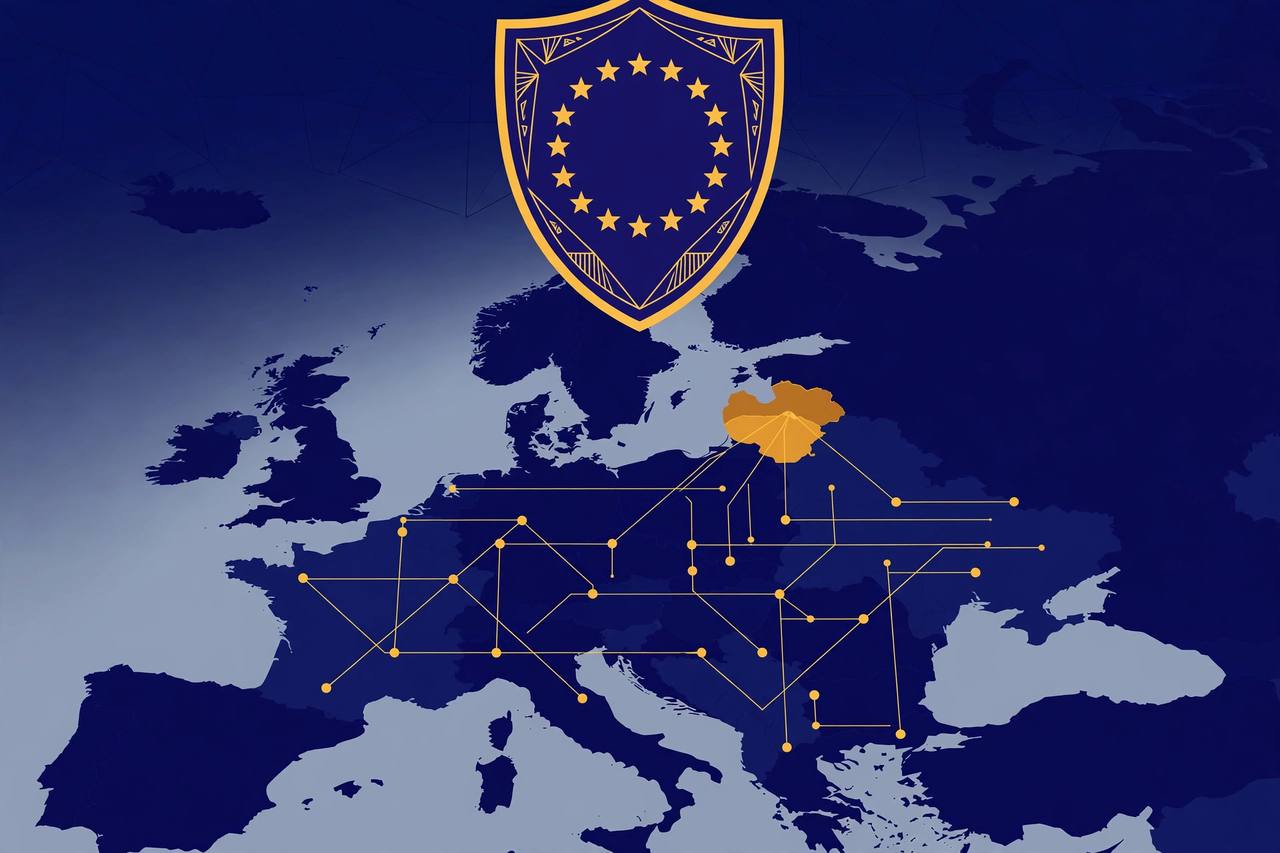
Lithuania has urged the European Union to designate Russia's military intelligence agency, the GRU, as a terrorist organisation, saying the agency is behind a growing wave of sabotage and attacks across Europe.
Foreign Minister Kęstutis Budrys made the call in an interview with the German newspaper Welt, in remarks published on Wednesday, 25 November. "The GRU was terrorizing European societies, decision-makers and individuals," he said, according to the German news agency dpa, which reported his remarks on Thursday.
Why Vilnius is pushing now
The call comes as Baltic and Central European governments report a steady drumbeat of arson, sabotage and airspace violations blamed on Moscow. Estonia has said it will close all of its border crossings with Russia from 1 December after an arson attempt on a drone manufacturer that it blamed on the GRU, and European defence-company executives warned this week that Russia is expanding hybrid threats against the sector, including sabotage and attacks on employees.
Budrys first raised the designation publicly on 15 November, writing on X that "Russia is no longer hiding behind proxies. Fingerprints lead directly to the GRU" and that organising arson attacks in Europe was "not 'hybrid activity.' It is state-sponsored terrorism."
"The GRU was terrorizing European societies, decision-makers and individuals."
What is solid
- Lithuania's foreign minister has called on the EU to designate the GRU as a terrorist organisation.
- He cited a growing number of attacks and acts of sabotage across Europe.
- Estonia has blamed the GRU for an arson attempt and is closing its Russia border crossings from 1 December.
What is only claimed
- Whether the GRU is behind the wider sabotage wave — Moscow denies involvement in sabotage in Europe.
- Whether all 27 EU member states will agree to a designation.
A designation would place the GRU on the EU's terrorist list, a step that normally brings asset freezes and travel bans for people linked to the listed entity. Any such decision would need agreement across the EU's member states, and no decision has been taken.
Estonia's move to shut its entire border with Russia from 1 December followed an arson attempt on a drone maker that Tallinn blamed on the GRU — the same agency Budrys now wants listed. Read: Estonia to close Russia border after GRU arson claim
The Kremlin has denied involvement in sabotage in Europe, including in the Estonia case. Russia's GRU — the Main Intelligence Directorate of the General Staff — is Moscow's military intelligence service, and its chief sits on Russia's delegation to the Ukraine peace talks in Abu Dhabi.
The call also follows a joint warning from US President Donald Trump and NATO chief Mark Rutte, after their Mar-a-Lago meeting on 25 November, for Russia not to expand its war in Ukraine. Read: Trump and Rutte warn Russia not to expand war
Budrys has pressed the case with fellow EU foreign ministers as well, and Lithuania — a frontline Baltic state bordering Russia's Kaliningrad exclave and Belarus — has been among the loudest voices in Europe for a harder line on Moscow since the full-scale invasion of Ukraine. What happens next depends on whether other capitals, including Berlin and Paris, back the designation.
Sources: dpa (via Agerpres); Welt; Europe Says; Hromadske (h.ua).