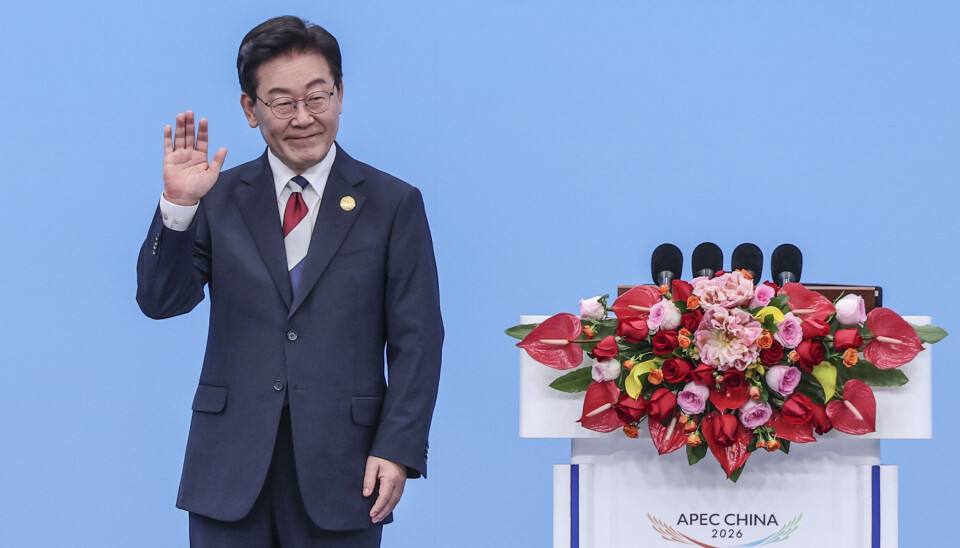
South Korea and China have reached a substantive conclusion to eight years of follow-up negotiations expanding their free trade agreement to services and investment, in the headline outcome of a summit between President Lee Jae Myung and President Xi Jinping on the sidelines of the APEC gathering in Shenzhen on Wednesday.
Source: Korea JoongAng Daily
The two leaders held their third summit at Qilin Mountain Villa in Shenzhen's Nanshan District, a venue that will also host Thursday's first-ever trilateral meeting between Xi, US President Donald Trump and Russian President Vladimir Putin. Lee and Xi discussed going beyond fully restoring bilateral relations to build what they called a more “mature strategic cooperative partnership”, and both sides confirmed that the second phase of the Korea-China FTA — covering services, investment and financial market liberalisation — had been substantively concluded.
What the deal opens
Under the agreement, China has pledged most-favoured-nation treatment for Korean content, including films and games, and agreed to apply nondiscrimination principles in its prescreening of such content. South Korea's Ministry of Trade, Industry and Energy said it is the first time China has included such provisions in a trade agreement, and that it is “expected to create a more stable environment for Korean content to enter the Chinese market”. Korean travel agencies established across 23 regions, including Beijing, Shanghai, Chongqing and Hainan, will be able to organise outbound travel for Chinese citizens and foreign residents. Korean law firms gain wider scope to open offices and jointly represent clients with Chinese firms, Korean retailers may independently operate more than 30 stores in China without a local joint-venture partner, restrictions on construction projects open to Korean firms have been lifted, and in finance Korean firms will receive the same benefits if China opens its markets further to third countries.
The deal is widely seen in Seoul as the beginning of the end of China's unofficial ban on Korean cultural and tourism industries, imposed after South Korea decided in 2016 to deploy the US-led THAAD antimissile system. The so-called Hallyu ban was not mentioned by name in the talks, but the agreement lays the groundwork for the full restoration of ties the two leaders promised at their first summit a year ago. Lee proposed expanding cultural and content exchanges in phases, the two sides discussed bringing a pair of giant pandas to Korea, and they reached an understanding on joint film productions. Xi also signalled that China's visa-free entry policy for Korean tourists, due to expire at the end of this year, will likely be extended, ahead of the 35th anniversary of diplomatic ties next year.
Trade is already surging: bilateral trade rose by nearly 50% in the first half of this year compared with a year earlier, according to figures cited at the summit. Lee called for people-to-people exchanges — expected to surpass 10 million this year for the first time since 2019 — to be restored to the 13 million level reached in 2016. Xi said both countries are beneficiaries of multilateralism and free trade: “China is committed to strengthening communication and coordination with Korea to safeguard the stability and smooth operation of global industrial and supply chains,” he said, adding that the two should promote the proposed Free Trade Area of the Asia-Pacific.
Korean Peninsula peace on the table
Security shared the agenda with trade. “For the strategic cooperative partnership between South Korea and China to mature and flourish, peace and stability on the Korean Peninsula must be ensured,” Lee told Xi, stressing that peninsula peace serves both nations' common interests. Lee said his administration is working toward peaceful coexistence and asked China to “play a constructive role”, according to National Security Adviser Wi Sung-lac. Xi acknowledged Seoul's efforts, briefed Lee on recent North Korea-China developments and said China would continue to play a constructive role, including supporting dialogue between Pyongyang and Washington. Lee also raised the Yellow Sea, calling for a fundamental resolution of tensions over structures in the Provisional Measures Zone, and sought Beijing's cooperation on the rights of Korean nationals in China and on preserving Korean independence-movement historical sites.
The Lee-Xi summit came a day before Xi hosts Trump and Putin in Shenzhen for the first US-China-Russia trilateral, where the North Korean nuclear issue is also expected to be discussed. Read: Trump lands in Shenzhen for trilateral with Xi and Putin
Business groups welcomed the breakthrough. The Korea International Trade Association said the substantive conclusion of the services and investment negotiations establishes an institutional foundation that raises openness and standards under the existing agreement. What happens next is implementation: the two governments must turn the substantive conclusion into signed legal text, and Korean content, tourism and services firms will be watching how quickly the new market access appears on the ground in China.