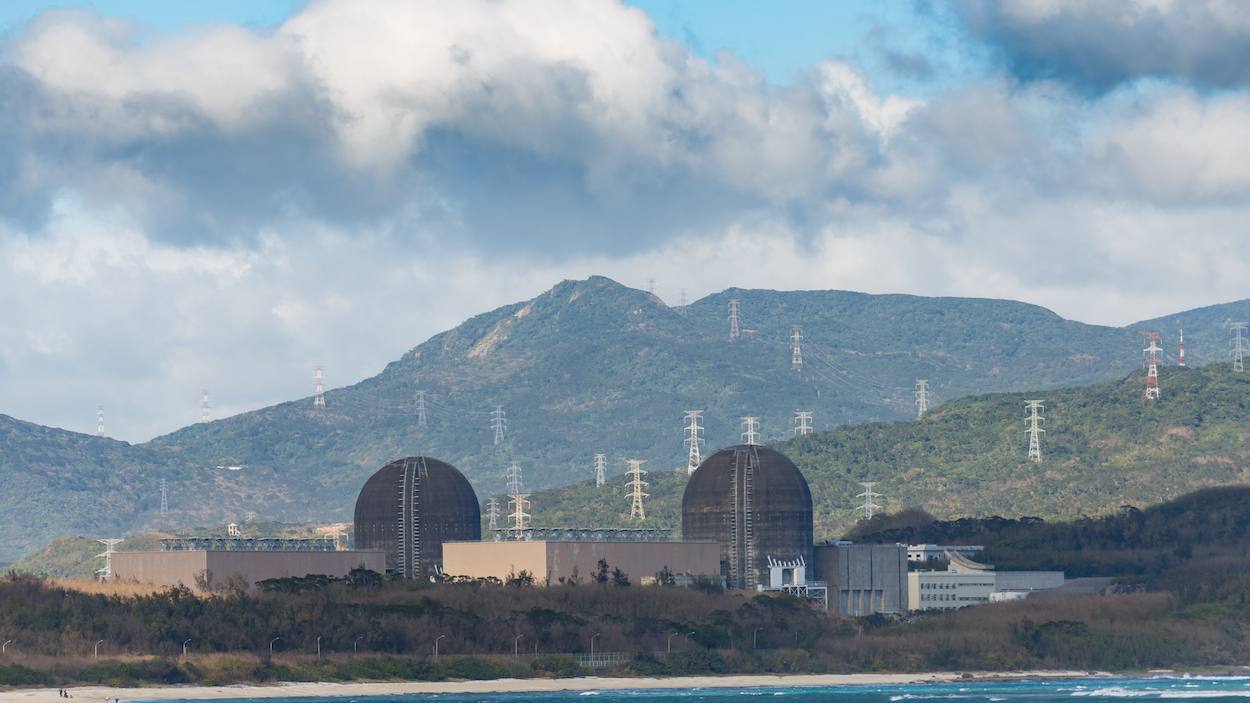
Taiwan's voters on Saturday backed a referendum to scrap the island's "nuclear-free homeland" energy policy, voting to bring nuclear power back into the energy mix about 18 months after the island shut its last reactor.
Source: Okay News
The Central Election Commission's complete provisional count, with all 18,248 polling stations reporting, showed 7,434,677 votes in favour and 4,557,768 against — about 62 percent of valid ballots. A further 567,352 ballots were invalid.
The result clears both legal tests for passage: yes votes outnumbered no votes, and the yes total passed the threshold of one quarter of all eligible voters — about 5,000,959 of the 20,003,835 people eligible to vote in the referendum. Turnout was 62.79 percent.
What the vote does — and does not — do
The ballot, Referendum Case 22, asked whether voters supported the government "using nuclear power to revitalise the economy" and abolishing the nuclear-free homeland policy. Under Taiwan's Referendum Act the result is binding, so the government must take steps to carry it out, and the policy cannot be reversed for two years.
But the vote does not itself restart any power plant or repeal any law. Taiwan's Climate Change Response Act still states that the government should phase out nuclear power, and any restart would still need safety approval and a solution for nuclear waste.
The Cabinet said it respected the outcome and would proceed cautiously, based on three conditions: nuclear safety, a solution for nuclear waste, and social consensus. The commission is due to formally confirm the result on December 4.
Source: Razon y Saber
Why the vote happened now
The referendum was proposed by the opposition Kuomintang (KMT) caucus and cleared by the legislature on August 14, with support from the Taiwan People's Party. It was the fourth national referendum on nuclear energy since 2018.
Taiwan completed its nuclear phaseout in May 2025, when its final operating reactor, at the Maanshan plant in the south, was shut down on May 17. A referendum that August on restarting that plant won more yes votes than no votes, but failed because the yes total fell short of the one-quarter-of-voters threshold.
The pressure behind the vote is electricity demand. In March 2026, President Lai Ching-te said work had begun to seek approval for restarting the Kuosheng and Maanshan plants, citing rising demand from artificial intelligence and data centres. Taiwan still depends heavily on imported gas for power.
Same day, two votes
The referendum was held on the same day as Taiwan's local elections, in which the KMT kept control of Taipei and most local governments, while the governing Democratic Progressive Party (DPP) of President Lai held its southern strongholds and took the central city of Taichung. Counting ended with 11 city and county leaderships for the KMT, 10 for the DPP and one for an independent.
China kept up military pressure on voting day: Taiwan's Defence Ministry said it detected 33 Chinese military aircraft and eight naval vessels around the island over 24 hours, with 27 aircraft crossing the median line of the Taiwan Strait.
The election commission formally confirms the result on December 4. The government must then set out how it will bring nuclear power back into the energy mix — while any actual reactor restart still faces safety reviews, a waste-storage decision and public debate.
What is solid
- The referendum passed both legal tests, with 7,434,677 yes votes against 4,557,768 no votes, all 18,248 polling stations reporting.
- The vote is binding under the Referendum Act, but it does not itself restart any reactor.
- Taiwan shut its last reactor, at Maanshan, in May 2025.
What is only claimed
- Whether, and when, any reactor can actually restart — that depends on safety reviews, nuclear waste storage and political consensus, none of which the referendum settles.