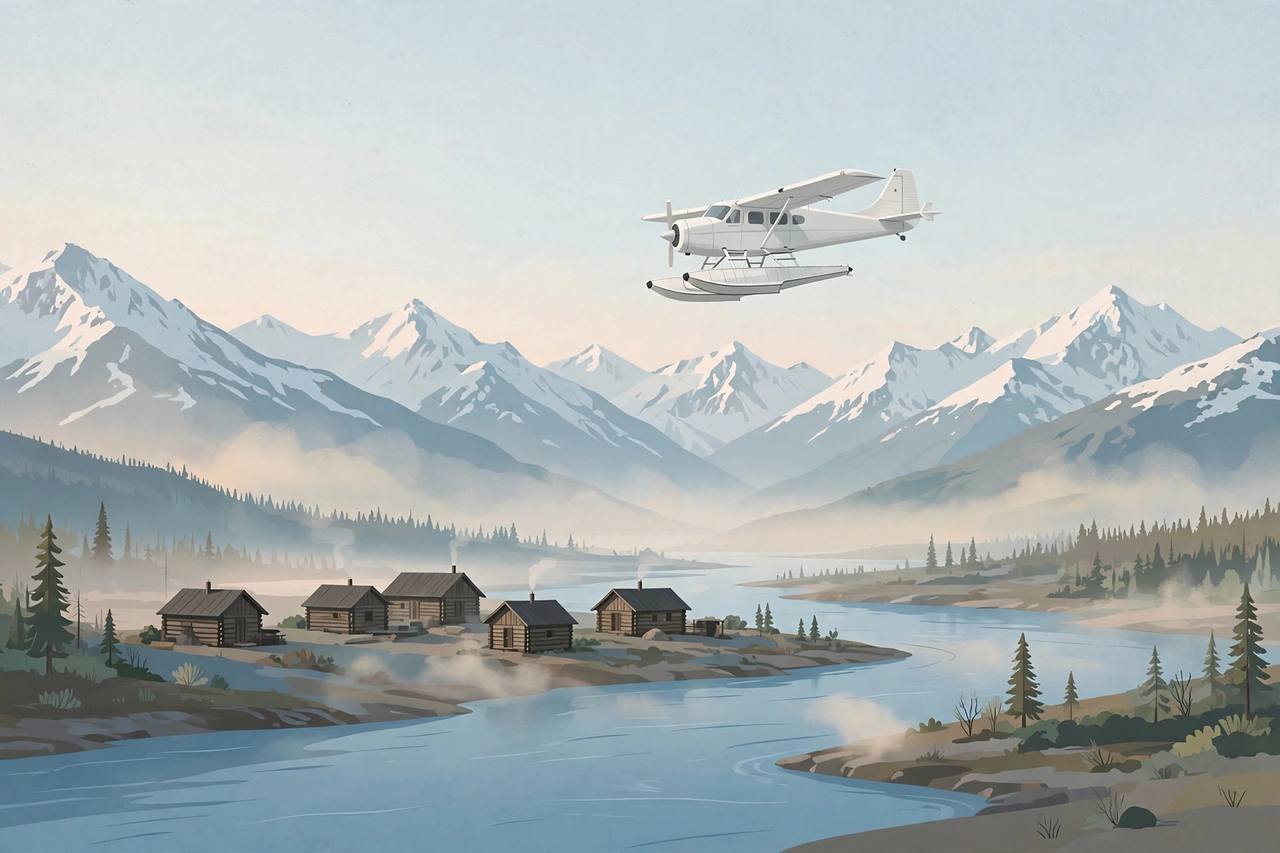
The U.S. Supreme Court will hear arguments on Tuesday, December 1, in the case of an 83-year-old retired Alaska bush pilot who is asking the justices to overturn the seizure of his seaplane — taken by the state after troopers found a passenger's beer aboard, bound for a village that bans alcohol.
Source: Reuters
Ken Jouppi's long legal fight over his 1969 Cessna U206D is now at the Supreme Court in a case that could alter the asset-forfeiture system that lets states and federal agencies confiscate billions of dollars in property each year, Reuters reported. The question before the nine justices is whether taking a plane worth $95,000 for a $1,500-fine offence violates the Constitution's ban on excessive fines.
The case began in April 2012, when Alaska state troopers executed a warrant to search Jouppi's plane as he was about to take off from Fairbanks with a customer heading to Beaver, a remote village of about 50 people that prohibits the sale, importation and possession of alcohol. Inside the passenger's luggage, officers found three cases of beer — 72 cans, containing about nine gallons in total.
The passenger pleaded guilty. Jouppi went to trial, where he was found guilty of knowingly bringing alcohol to a dry village. The trial judge sentenced him to three days in prison and ordered him to pay a fine of $1,500. Alaska also seized his Cessna through a state statute that mandates forfeiture of airplanes used to commit certain alcohol-related offences.
Two very different accounts of the same flight
Jouppi, represented by the libertarian nonprofit Institute for Justice, has argued that forfeiture of his airplane was a grossly disproportionate punishment. His case, as he tells it, hinged on a single six-pack of beer — the one troopers testified was visible in a plastic grocery bag. He says he did not know about the rest of the beer on the plane.
Alaska paints a very different picture. The state says Jouppi loaded two cases of beer and four six-packs of 16-ounce beers onto his plane, destined for a village of a mere 48 people with no roads in or out and no emergency medical services. In the state's telling, his crime was not flying in a six-pack — it was nine gallons of beer bound for an isolated dry village.
The value of the plane is itself disputed. A lower court previously valued it at $95,000, but Jouppi put its current value at about $150,000. Either figure dwarfs the $1,500 fine the trial judge imposed for the underlying offence.
The constitutional question
The case turns on the Excessive Fines Clause, a provision in the U.S. Constitution's Eighth Amendment that prohibits unduly harsh financial penalties as punishment. The Alaska Supreme Court ruled in 2025 that the forfeiture was constitutional and did not violate the clause, even if Jouppi had seen only the one six-pack. The U.S. Supreme Court agreed in July to hear his appeal.
The justices took the case to decide whether courts assessing an Excessive Fines Clause claim must focus on the gravity of the specific defendant's own conduct. Jouppi wants the court to reverse the Alaska Supreme Court's ruling and send the case back for reconsideration under a sharper, individualized test. Alaska wants the forfeiture left in place as a measured answer to alcohol flowing into isolated dry villages.
The clause was applied to the states only in 2019, in Timbs v. Indiana, when the Supreme Court held that the Eighth Amendment's ban on excessive fines limits state governments as well as the federal government. Jouppi's case is now the court's next major test of how far that protection reaches when the government seizes expensive property for a low-level offence.
Who is Ken Jouppi
Jouppi, 83, is now retired and living in Idaho. He earned his pilot's licence in the 1960s after serving four years in the U.S. Air Force as a mechanic for B-52 bombers. He moved to Alaska in the late 1970s to fly as a bush pilot and eventually settled in Fairbanks, where he operated a one-man air taxi service called KenAir that helped people transport groceries and other cargo to remote villages.
What happens next
The justices will hear argument on Tuesday, December 1. A ruling is expected later in the court's term, in the coming months. If Jouppi wins, the case returns to the lower courts for a fresh look under the test the Supreme Court sets. If Alaska wins, the forfeiture of the Cessna stands — and the ruling will shape how far governments can go in seizing property for low-level offences across the country.
The ruling could set the test courts use whenever the government seizes expensive property for a low-level offence — from cars and cash to aircraft — and could reach far beyond Alaska's dry villages.