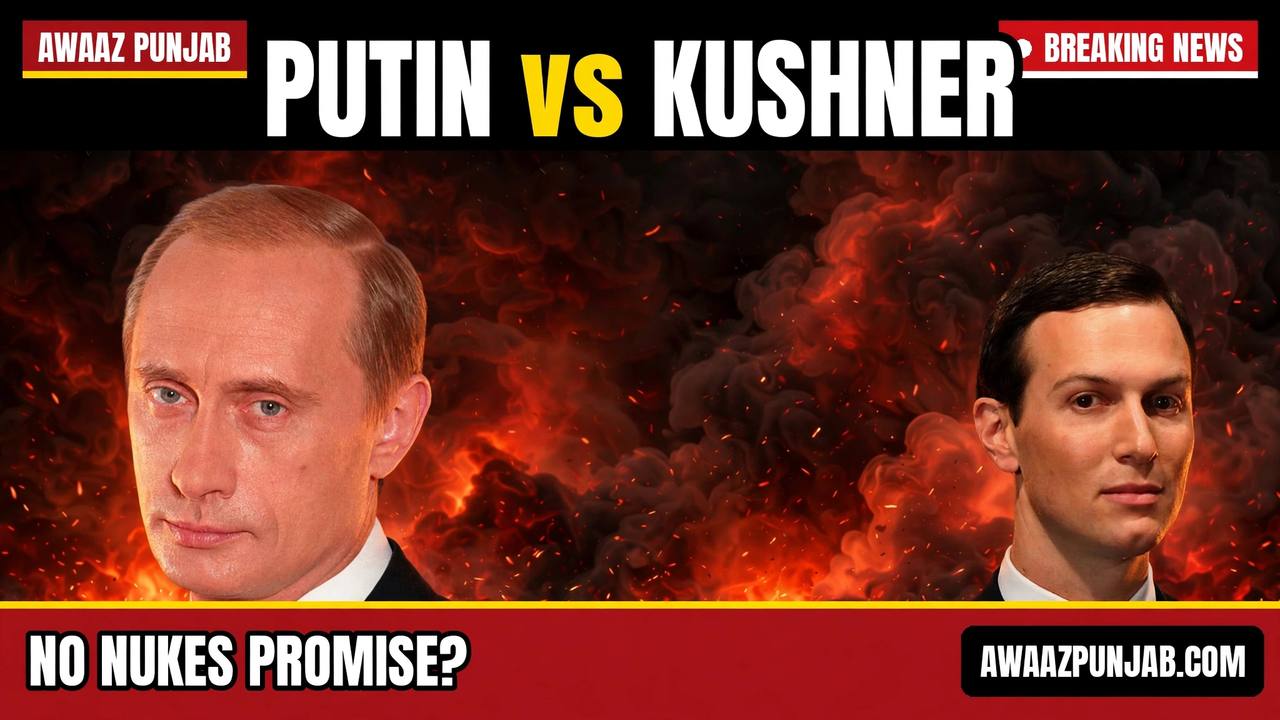
US envoys Jared Kushner and Steve Witkoff met Russian President Vladimir Putin in Moscow after two days of US-mediated talks in Abu Dhabi concluded with agreement on a large prisoner-of-war exchange but no major breakthrough on ending the war in Ukraine, which began with Moscow's full-scale invasion nearly five years ago.
The envoys had landed in Moscow on November 12 after the first Abu Dhabi round — this week's trip follows a second round of trilateral talks. Read the earlier round
"One of the positives is we agreed that we're going to have the biggest humanitarian release of prisoners, which we're going to finalize the numbers tomorrow," Kushner, US President Donald Trump's son-in-law, said after the Abu Dhabi talks ended. The exchange was the main concrete outcome of the two-day round; no deal was announced on a ceasefire or a wider settlement.
Kushner and Witkoff then travelled to Moscow, where they were greeted at Vnukovo airport by Russian special envoy Kirill Dmitriev before heading to the Kremlin. The meeting with Putin lasted about two hours, according to reports from the talks.
After the meeting, Kushner said Putin had assured the US delegation that Russia would not deploy nuclear weapons in the conflict — an assurance the American side highlighted as it briefed reporters on the Moscow talks.
The envoys were then scheduled to fly to Dublin to brief Ukrainian President Volodymyr Zelenskyy, who is attending an informal European summit there. Zelenskyy described the preliminary discussions as challenging but productive and has pointed to a possible diplomatic window before the end of the year.
The White House is using this week's talks in part to press Moscow to agree to broader negotiations that would include key European officials, US officials said. European negotiators have stressed to the American delegation that any peace agreement must preserve Europe's broader security interests, while Russian Foreign Minister Sergei Lavrov has reiterated Moscow's refusal to accept European calls for an immediate ceasefire.
The diplomacy is taking place alongside continued fighting. Both sides carried out reciprocal drone strikes on each other's capitals during the talks, and Ukrainian officials said Russia launched 155 drones against Ukraine in one overnight barrage, with air defences destroying or suppressing 110 of them.
What happens next
After the Dublin briefing, the envoys are expected to report back to Washington on whether a further round of talks can be arranged before the year ends. No date for a next meeting has been announced, and Kyiv has repeatedly said Russia has rejected every incremental ceasefire proposal put forward during 2026, including a mutual halt to strikes on energy infrastructure and a maritime ceasefire in the Black Sea.
For now, the prisoner exchange agreed in Abu Dhabi is the one firm deliverable from the latest round — a humanitarian step, but not the breakthrough that would end a war now approaching its fifth year.