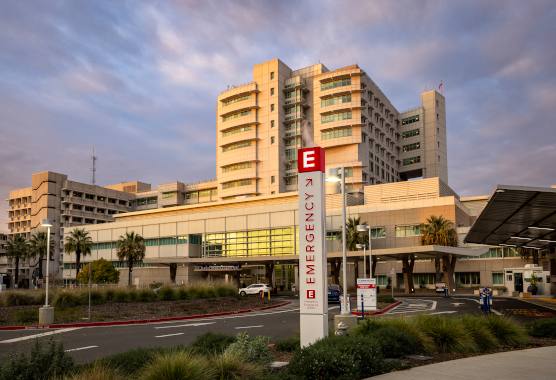
SACRAMENTO, California — A group of 130 doctors and faculty members at UC Davis Medical Center has warned hospital leadership that patients who need to be admitted are spending hours, and sometimes days, waiting in the emergency department — a practice known as inpatient boarding that the doctors say has reached unsafe levels. The warning came in a letter dated October 19, obtained by Abridged, the PBS KVIE news service in Sacramento, and reported on November 25.
Source: Abridged by PBS KVIE
"We are writing jointly, as faculty and staff physicians … because inpatient boarding at UC Davis has reached unsafe levels, and the conditions for admitted patients in the waiting room are putting our patients, physicians, and staff at risk," the doctors wrote in the letter, according to Abridged.
What the doctors asked for
The doctors, who work in the departments of Emergency Medicine, Internal Medicine and Family and Community Medicine, called on UC Davis Health leadership to either make changes to prevent the long waits or "declare a disaster" over the patient boarding problem. They also asked for a maximum one-hour wait before the hospital activates surge procedures when admitted patients are stuck in the emergency department.
The letter was addressed to UC Davis Health's top leadership, including interim chief executive Michael Condrin, chief medical officer Dr. Joseph Galante and health sciences vice chancellor Dr. Mark Rosenblatt. The doctors said they had raised their concerns "repeatedly" and had "not seen the response or support we were promised."
The hospital's response — and a dispute over the letter
UC Davis Health responded on November 25 with a statement on its own website, and the two sides disagree about the letter itself. The health system said that "dozens of physicians" had told it their names were included in the letter without their permission, and it said it could not verify or respond to allegations that Abridged had not fully shared with it.
Source: UC Davis Health
UC Davis Health also disputed Abridged's statement that it did not respond to questions about the letter. It said it provided a statement before the reporter's deadline, but that the reporter had emailed a list of questions requiring complex answers based on allegations it declined to fully disclose, and had asked for a response within roughly three hours, the day before a long holiday weekend — making it impossible, in the hospital's words, to determine whether the factual premises of the questions were accurate before responding.
Abridged reported that hospital leadership met with emergency medicine faculty last month to discuss patient capacity, and said UC Davis Health representatives did not respond to questions sent on Wednesday morning about the letter and reports of an "inpatient boarding crisis."
A hospital running at full capacity
UC Davis Health said the medical centre is consistently running at capacity, with every one of its 623 beds in use, as it meets growing demand for high-level care across Northern California — especially when seasonal illnesses bring more people to the emergency department.
The medical centre is the largest hospital in the Sacramento area and California's only Level 1 trauma centre north of San Francisco. It draws patients from the Central Valley to southern Oregon, serves 33 counties, and has acted for decades as the region's de-facto safety-net hospital, caring for patients with complex medical, behavioural health and social needs. Demand for trauma, burn, cancer, transplant, high-risk delivery, neonatal intensive care and cell and gene therapy services keeps the hospital nearly full, the health system said.
What the hospital says it is doing
UC Davis Health said it has taken steps in the last few months to manage the flow into the emergency department, including opening a temporary overflow area next to the emergency department for the busy cold and flu season and opening a new Immediate Advanced Care clinic on October 27. A major expansion, the California Tower, is scheduled to open in 2030 and will include an expanded emergency department.
What happens next
Neither side has said what happens next. The doctors' letter asks for concrete changes or a disaster declaration, while the hospital says it cannot judge allegations it has not been fully shown. What is not in dispute is the pressure on the region's only Level 1 trauma centre: a facility built for the most serious cases in Northern California is full, and the patients waiting longest are the ones already admitted but with nowhere to go.
Inpatient boarding — keeping admitted patients in the emergency department because no inpatient bed is free — is a national problem, but at UC Davis it hits the hospital that Northern California relies on for its most serious trauma, burn and transplant cases. For Sacramento-area families, and for Punjabi truckers and workers passing through the Central Valley corridor, it is the hospital the region turns to when the worst happens.