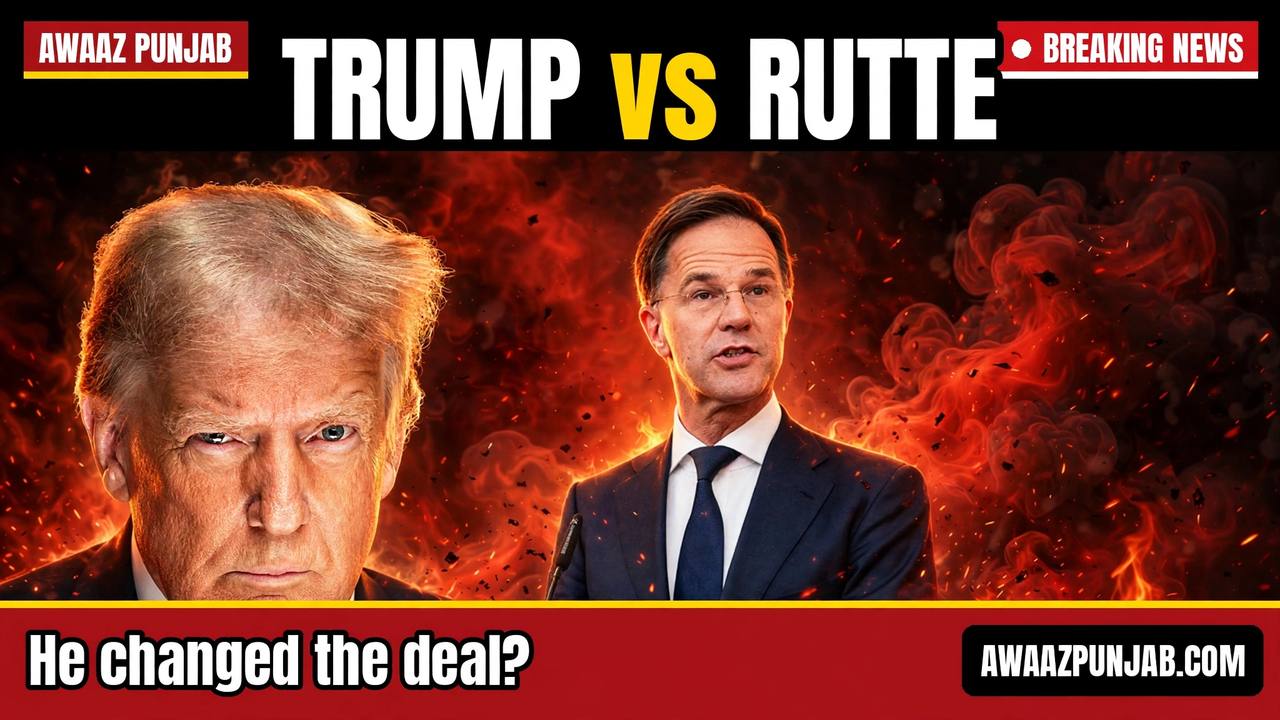
Trump and NATO chief Mark Rutte issued their joint warning to Russia on November 25, after closed-door talks at Mar-a-Lago in Florida. This story covers what the US president changed hours later. Read the earlier story
US President Donald Trump has departed from a published joint statement with NATO Secretary General Mark Rutte, adding Ukraine to a warning against expanding the war that was originally directed solely at Russia.
Source: Europe Says, reporting Politico
In the joint statement released after the two leaders met at Trump's Mar-a-Lago resort in Florida on November 25, they stressed "the importance of Russia avoiding any actions that intentionally, or unintentionally, expand the war." Hours later, Trump published his own version of the statement on Truth Social, referring to "the importance of Russia and Ukraine avoiding any actions that intentionally, or unintentionally, expand the War."
Source: NATO
A NATO official, speaking on condition of anonymity, told Politico that both sides had agreed to the original statement, indicating that Trump had subsequently changed the wording unilaterally. The White House did not respond to Politico's request for comment.
Why the wording matters
The change comes amid growing concern among European allies about the geographical expansion of Russia's war against Ukraine, following repeated Russian airspace violations in Poland and a Ukrainian strike on a Russian warship in the Mediterranean Sea.
President Volodymyr Zelenskyy confirmed on November 23 that Ukrainian forces had sunk the Russian corvette Merkury off the coast of Benghazi, Libya — a strike Moscow has cited as evidence that Kyiv is widening the war. Zelenskyy confirms the Merkury strike
Italian Prime Minister Giorgia Meloni and German Foreign Minister Johann Wadephul separately warned against the geographical expansion of the war on November 26, while reaffirming their countries' support for Ukraine.
Kremlin spokesman Dmitry Peskov responded to the original joint warning by accusing Ukraine of trying to expand the geographical scope of the conflict — the same argument Trump's revised wording now appears to echo, by placing Kyiv under the same warning as Moscow.
Peace talks in the background
The Mar-a-Lago meeting came as US-led peace efforts have stalled. Trump's envoy Jared Kushner said this week that the negotiations are effectively stuck, with the territorial question in eastern Ukraine the main obstacle. Zelenskyy, in a BBC interview published on November 27, accused Washington of focusing too heavily on the Middle East at Ukraine's expense and said delays in delivering Patriot anti-ballistic missiles are costing Ukrainian lives.
In a separate social media post on November 26, Trump said he had urged Russian President Vladimir Putin to end military aggression across Europe during their meeting in Shenzhen, China, on November 19, and expressed optimism about the possibility of reaching a peace agreement between Ukraine and Russia.
What happens next
NATO foreign ministers are scheduled to meet in Brussels on December 2, where the widening-war question is expected to dominate. Allies will be watching whether Rutte or the White House publicly addresses the changed wording — and whether the revised warning, which now names Ukraine alongside Russia, becomes the Trump administration's settled position or a one-off edit.
For now, the episode leaves the alliance's public message split: the joint statement NATO published warns Russia alone, while the version the US president posted warns Russia and Ukraine together.