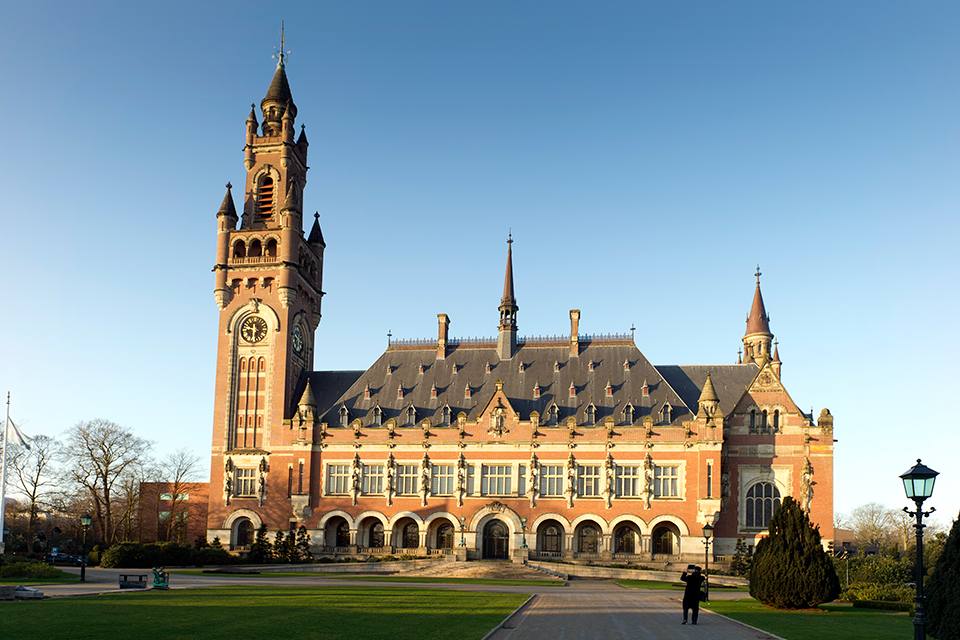
Britain moved within hours of the World Court's landmark genocide ruling against Myanmar, ordering the expulsion of the country's defence attaché from London and calling urgently for a United Nations Security Council session to discuss the judgment. Rights groups followed by demanding military and economic sanctions against Myanmar's military regime, arguing that a historic verdict must now be turned into practical pressure.
The International Court of Justice (ICJ) ruled on Thursday, 19 November, by nine votes to six, that Myanmar committed genocide against the Rohingya Muslim minority during military operations in northern Rakhine State in 2017. It was the first time in the court's 80-year history that it has held a state directly responsible for committing genocide, rather than merely failing to prevent it.
The World Court found Myanmar's security forces killed around 10,000 Rohingya in 2017 and ordered the safe return of refugees, reparations and prosecutions. Read the judgment story
Britain acts within hours
UK Foreign Secretary Ed Miliband announced the measures in a statement on 19 November, calling the judgment a landmark ruling and saying Britain "reaffirms our full support for the Court and the international legal order" and condemns "the horrific treatment of the Rohingya people by the Myanmar military regime".
“We are taking immediate action today in light of this judgment.”
Miliband said Britain was ordering the expulsion of the Myanmar Defence Attaché from the UK, summoning Myanmar's Chargé d'Affaires in London, and calling urgently for a UN Security Council session to discuss the judgment. He added that Britain would set out further action in the coming days, building on existing sanctions against the Myanmar regime.
Campaign group Burma Campaign UK, which has called for the attaché's expulsion since the military coup in 2021, identified him as Captain Soe Aung, a serving member of the Burmese military. The group welcomed the announcement and urged Britain to convene the Security Council meeting with UN human rights experts and Rohingya representatives invited to brief the council.
Security Council to meet — but enforcement faces a wall
The UN Security Council has scheduled closed consultations on the ruling for next Wednesday and a private meeting on 7 December, at the United Kingdom's request. The court itself has no police force and no way to enforce its rulings beyond reporting non-compliance to the Security Council, which alone has the power to impose sanctions.
That route looks difficult. Daniel Forti, head of UN affairs at the International Crisis Group, told the Associated Press that immediate action by the 15-member council was unlikely, and analysts say it is hard to imagine either China or Russia — both veto-holding permanent members — supporting a resolution that attempts to enforce the court's recommendations.
Myanmar's government has already rejected the ruling, calling it unfair and pointing to the dissenting judges. Read Myanmar's response
Rights groups: hit the junta's money and guns
Justice for All, a coalition of 38 Muslim organisations from the United States and Canada that has campaigned for Rohingya rights since 2017, called for targeted sanctions against Myanmar's oil and gas industries and the networks that supply weapons and other support to its military. Human Rights Watch urged governments around the world to step forward to help the Rohingya and ensure justice for the atrocities.
Burma Campaign UK called on Britain to lead the international response by tabling a Security Council resolution to enforce the judgment and introducing regular rounds of targeted sanctions to cut the military's access to revenue and arms, including new sanctions on the jet-fuel sector and on oil and gas extraction. It also noted that Myanmar's military has said on social media that it will no longer cooperate with the court.
What the court ordered — and what happens next
The court ordered Myanmar to end violations of the Genocide Convention, investigate suspected crimes, prosecute and punish those found responsible, and pass legislation giving full effect to the convention. It also ordered the safe, voluntary and dignified return of displaced Rohingya, the reunification of families, the return of their property, and the payment of compensation, with the amount and form to be decided in a later phase. Myanmar must report to the court on its compliance within two years, by November 2028.
The judgment will not affect cases before the International Criminal Court, which deals with individual criminal responsibility rather than state responsibility, the ICC prosecutor's office told the Associated Press. The case at the ICJ was brought by The Gambia in November 2019, with backing from the 57-member Organisation of Islamic Cooperation, and the court heard arguments on the merits in January 2026. More than a million Rohingya refugees remain in camps in Bangladesh, and the court's ruling — final and binding, with no appeal — now moves from the courtroom in The Hague to the politics of the Security Council, where its fate will be decided.