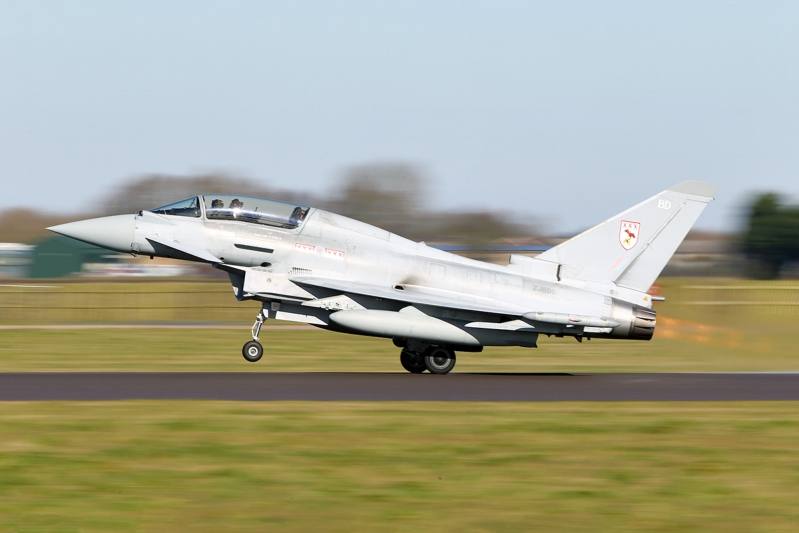
Britain's Royal Air Force is moving aircraft into hangars and hardened shelters at night to protect them from possible drone attacks, British media reported on Wednesday. Troops have also been tasked with putting up Kevlar anti-drone nets, like those used in Ukraine, around jets that have to stay in the open, The Times and Sky News reported.
Source: Reuters
Neither outlet named its sources, and the Ministry of Defence did not immediately confirm the reports. The ministry said it takes 'the security of our bases, equipment and personnel very seriously' and is 'always adapting to counter any potential threats'.
£470 million for base security
The Ministry of Defence said it is investing an additional £470 million — yaani about $615 million — to strengthen security at military sites, including better physical protection, surveillance and counter-drone capabilities. It said £15 million had already been invested in drone and counter-drone technology and that restricted airspace has been introduced over 44 critical defence sites.
The reports came a day after Britain's defence ministry and the domestic spy agency MI5 issued a joint warning on Tuesday about an increased sabotage threat from Russia, aimed at British companies supplying military kit to Ukraine.
Earlier this month, US Air Force personnel at RAF Lakenheath in Suffolk responded to suspected unauthorised drone activity; no personnel, aircraft or infrastructure were affected. Read the earlier report
The reports also follow apparent Iran-linked incidents at British bases. Last month, US President Donald Trump said a threat linked to Iran had prompted the removal of American B-1 bombers from RAF Fairford, and five men were arrested near the base in September after reports of suspicious activity.
Drones have dogged US-operated bases in eastern England before. In November 2024, groups of up to 20 drones appeared over RAF Mildenhall, Lakenheath and Feltwell for several nights, and Britain sent about 60 troops to help defend the installations.
Justin Bronk, a senior researcher at the Royal United Services Institute think tank in London, told Al Jazeera the reported tactics would be 'a sensible, logical response if there is intelligence suggesting a likely drone threat'. He said the main fighter bases — Coningsby, Marham and Lossiemouth — still have Cold War-era hardened aircraft shelters, but not enough to protect every jet.
Retired RAF Air Marshal Greg Bagwell urged calm, noting on X that smaller fighter aircraft 'have always been placed under cover at night'. He added that the challenge is larger aircraft, for which there is not enough hangarage — 'but we are clearly in different times'.
Air Chief Marshal Sir Harv Smyth, the chief of the air force, said on Tuesday evening that the RAF was preparing for a scenario where 'there is no sanctuary at home'. He pointed to dispersal drills over the summer, when a new runway was built at RAF Brize Norton while aircraft were spread from Prestwick to Boscombe Down 'and we have not missed a heartbeat'.
What happens next is a test of whether the new precautions stay in place: the MoD says it will keep adapting its defences, and any further drone sightings or sabotage alerts at British bases are likely to bring the measures back into focus.