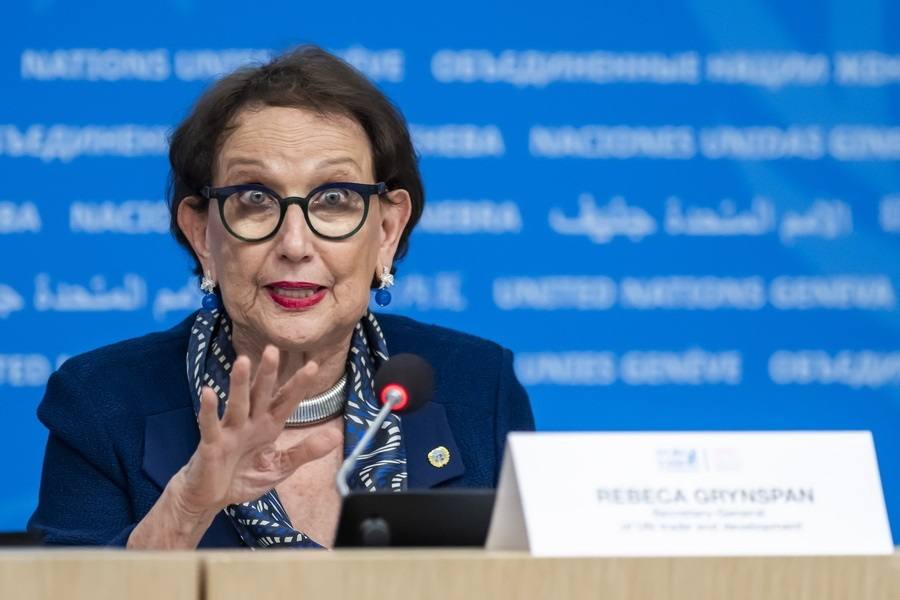
Two permanent members of the United Nations Security Council voted against Costa Rica's Rebeca Grynspan in an informal poll on Friday, November 20, three diplomatic sources told Reuters, in a fresh blow to the frontrunner to become the next secretary-general.
Source: Reuters
Grynspan, a former vice-president of Costa Rica and the former head of the UN's trade and development body, received 10 votes in favour and 4 against, Reuters reported. Two of the votes against her came from the veto-wielding permanent members of the council — Russia, France, China, Britain and the United States. Because the ballot is secret, it was not clear which of the five voted against her.
The result raises the prospect of the United Nations being left without a leader, diplomats said. Secretary-General Antonio Guterres finishes his second five-year term on December 31, and the next secretary-general is due to take office on January 1, 2027. If chosen, Grynspan would be the first woman to hold the post.
The Security Council has now held eight rounds of secret ballots without agreeing on a successor, and officials are drafting contingency plans for a vacancy without precedent. Another secret ballot was expected on Friday, with colour-coded ballots designed to reveal which permanent members cast negative votes. A candidate needs at least nine of the 15 council votes and no veto from a permanent member to be recommended to the 193-member General Assembly.
Grynspan had extended her lead in the eighth round of voting, winning 12 votes to 3, and had led in seven of the eight previous rounds. Friday's poll was the first to show two veto powers voting against her. Read the earlier story
Who else is in the race
The field has eight candidates, most of them from Latin America and the Caribbean, in line with the informal regional rotation. They include Rafael Grossi of Argentina, the chief of the International Atomic Energy Agency, who received three votes against him in Friday's poll; Lana Nusseibeh, a senior diplomat from the United Arab Emirates; and Feridun Sinirlioglu of Turkiye, the head of the Organization for Security and Co-operation in Europe. Guyana's UN ambassador Carolyn Rodrigues-Birkett received two votes against.
Two prominent names have already left the field: Michelle Bachelet, the former president of Chile, and Macky Sall, the former president of Senegal, both withdrew. Each leading candidate still faces at least two discourage votes from permanent members, and none has yet gathered the support needed for a recommendation.
What happens next
The council is expected to keep balloting, but the timetable for choosing a successor has never been breached before, and there are now under two months left in Guterres's term. A September briefing by the 1 for 8 Billion campaign, which pushes for a more open selection process, mapped the possible routes if no one is chosen in time — from the council naming an acting chief to the General Assembly extending a term on its own.
Analysts say the stalemate exposes a decline in the veto-wielding powers' willingness to compromise, worsened by a US administration that increasingly sidelines the UN. It also comes as the UN faces financial strain from missed member contributions and cuts to international aid, alongside a legitimacy crisis over the Security Council's paralysis on conflicts including Ukraine and Iran.
The figures reported are from diplomatic sources speaking to Reuters, and the ballot itself is secret — the identities of the two permanent members who voted against Grynspan have not been officially disclosed.