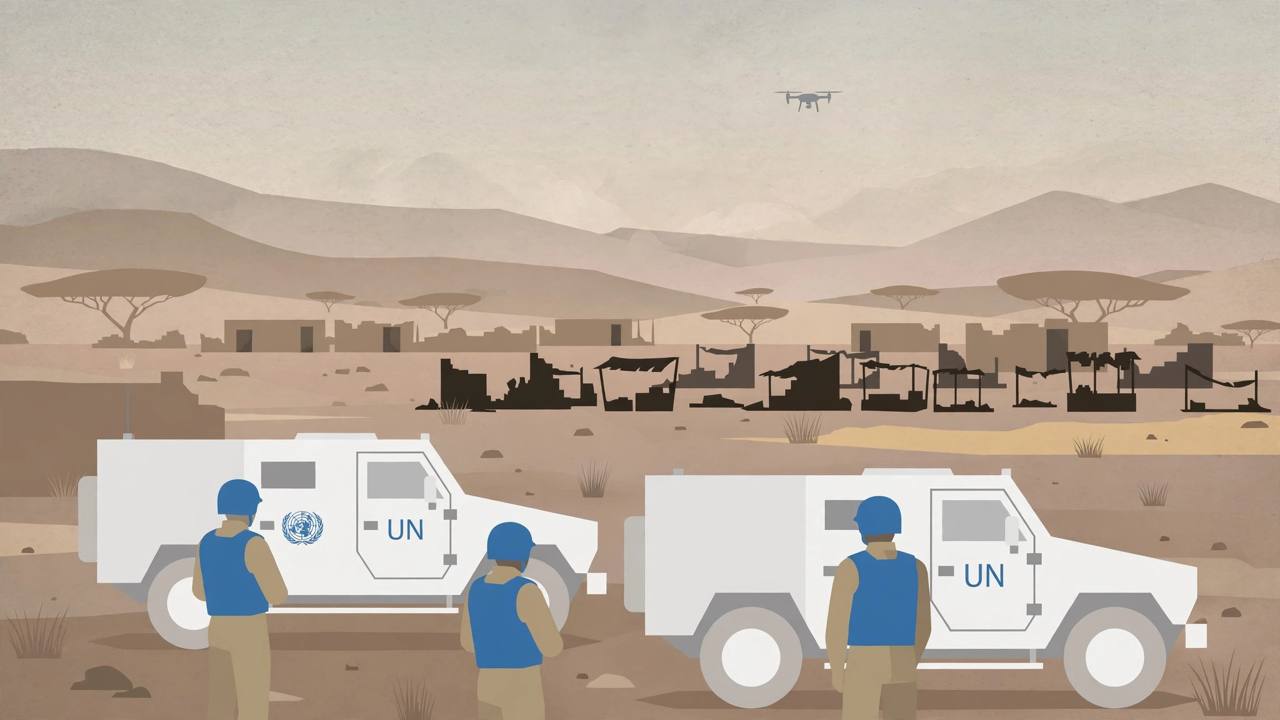
The United Nations peacekeeping chief, Jean-Pierre Lacroix, told the Security Council on Thursday, November 5, that the drone strikes which hit the Abyei area on October 19 — the first attacks of their kind in the territory disputed between Sudan and South Sudan — killed at least 30 people and have added what he called a “new and concerning dimension” to security there, as the Council weighs the future of the UN force in Abyei ahead of its mandate expiry on November 15.
Source: UN News
Lacroix was briefing the Council at UN Headquarters in New York on the Secretary-General's latest report on Abyei (S/2026/821), covering the period from April 16 to October 1, 2026, and on the work of the UN Interim Security Force for Abyei, known as UNISFA. He said the October 19 attacks, which struck in and around the Amiet Common Market and the Todach area, set off major fires, injured about 59 people and forced dozens of civilians from their homes, and he warned that peacekeepers were still checking whether the death toll of at least 30 was an underestimate. The United Nations has not named a perpetrator for the strikes.
Source: UN Media (UNifeed)
Awaaz Punjab has been following the Abyei attacks since they happened, including the Security Council's earlier call for an investigation. Read the earlier report: UN Security Council probe call on the Abyei strikes
The Secretary-General's Special Envoy for the Horn of Africa, Guang Cong, who also briefed the Council, called the October drone strikes one of the deadliest incidents in Abyei's history and urged a prompt and independent investigation to establish the facts and hold those responsible to account. He said the incident was “a stark reminder that the Governments of Sudan and South Sudan must uphold Abyei's demilitarised status, prevent any further attack, and respect international humanitarian law.”
A market already scarred by September's clashes
Lacroix reminded the Council that the drone strikes landed on ground already traumatised a month earlier: violence in and around the Amiet Common Market on September 15, involving members of the Ngok Dinka, Misseriya and Nuba communities, left 124 people dead and 40 injured. He cautioned that “instability in Amiet carries consequences that extend beyond Abyei Area itself,” warning it could affect cross-border trade, migration routes, local livelihoods, Sudan–South Sudan relations and the wider stability of the border region.
Not every figure in the briefing pointed downwards. Lacroix reported that recorded security incidents in Abyei fell by about 32 per cent compared with the same period last year, and that this year's seasonal cattle migration — long a flashpoint between farming and herding communities — passed without a single related death. Sudan and South Sudan resumed formal talks in August through their Joint Political and Security Mechanism, meeting for the first time since January 2023, and a second meeting is due in Khartoum from November 8 to 10.
Elections and the RSF: two new disputes on the table
The briefing also surfaced two fresh political disputes. Lacroix warned that the reported appointment by Sudan's paramilitary Rapid Support Forces (RSF) of its own representative to the Abyei Joint Oversight Committee risks setting up competing claims of authority and drawing the area further into Sudan's civil war. And Sudan's Deputy Permanent Representative to the UN, Mohamed Ibrahim Mohamed Elbahi, told the Council that Khartoum is increasingly concerned by South Sudan's National Elections Commission decision to include Abyei among its electoral constituencies for the December 2026 elections, saying Sudan had already rejected the step in an official statement on July 13 as a violation of the agreements between the two states and an attempt to undermine the area's legal status quo. South Sudan's Deputy Permanent Representative, Sabino Edward Nyawella Amaikwey, said his government had taken note of the concerns raised about elections in Abyei.
The United Kingdom, in its statement to the Council, condemned the October 19 drone attacks near Amiet Market and Todach, which it said killed and injured civilians and displaced thousands, and said continued violations of Abyei's demilitarised status are unacceptable. London said UNISFA remains essential to stability in Abyei, welcomed progress towards deploying the mission's first Formed Police Unit and appointing a civilian Deputy Head of Mission, and said all unauthorised armed forces, including the RSF, must withdraw from Abyei.
Source: UK Government statement at the UN Security Council
What happens next
The Council must decide UNISFA's future before its mandate — and its support for the Joint Border Verification and Monitoring Mechanism — expires on November 15. Lacroix told members that the conditions for any major change to the mission's set-up “do not yet exist,” called for stronger protection for peacekeepers against aerial threats, and said plainly: “UNISFA needs the Council's support now more than ever.” Abyei's final status has been unresolved since South Sudan's independence in 2011; the oil-rich area is claimed by both countries and is supposed to remain demilitarised while its future is negotiated.