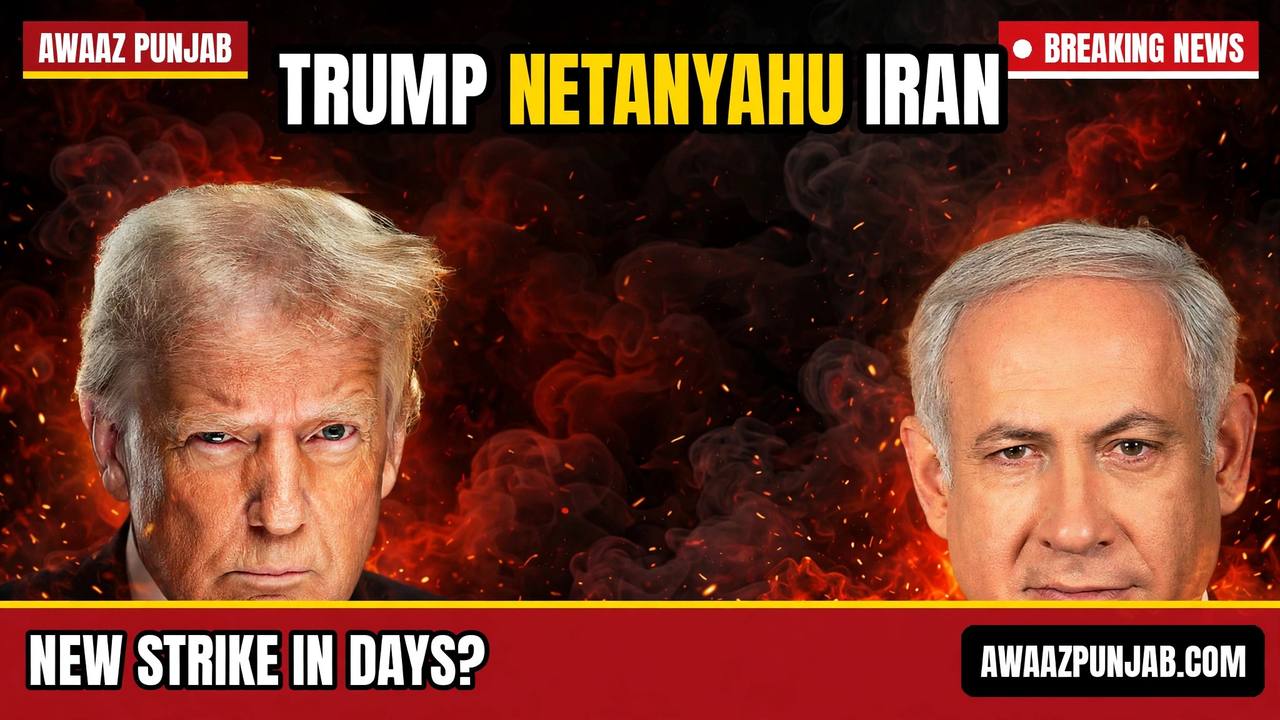
On Thursday, Gulf governments, Pakistan and Turkey launched a concerted diplomatic push to stop the confrontation sliding back into full-scale war, as Israel's prime minister pressed Washington for strikes on Iran. Read the earlier story
The United States and Israel are considering launching a new assault on Iran in the short term, CBS News reported on Friday, citing sources familiar with the matter. The report says it remains unclear whether President Donald Trump wants to order new military action — and if so, what kind.
Source: CBS News
Israel's government is concerned about how quickly Iran is rebuilding its ballistic missile manufacturing capability and moving military and nuclear infrastructure underground to shield it from attack, the sources told CBS News. Israel's military is prepared for another round of fighting and is in what the sources called a peak defensive posture, ready to respond to any first strike by Iran.
Trump: ‘not rushing into any decision’
Trump has sent mixed signals. He told Fox News on Wednesday that he still wants a deal with Iran, but one that lasts, and he renewed his threat of force. On Thursday he told Israel's Channel 12 that he is ‘not rushing into any decision’, adding: ‘We will see what happens after the beginning of the year.’
Source: CBS News
Trump also said this week that Iran may be seeking chemical or biological weapons. He provided no evidence for the claim, and Tehran rejected it. CNN separately reported, citing seven US officials, that Iran was developing plans to target senior Trump administration officials in Washington with a bomb laced with radioactive or chemical material — described as an effort to create options rather than evidence of an imminent attack.
The military picture
The US has tens of thousands of troops in the region and two aircraft carriers with their strike groups, amounting to dozens of warships and aircraft, CBS News reported. With those assets already in place, a new offensive could be mounted within two to four days if the president gave the order. The White House and the US military declined to comment on the administration's thinking.
Source: CBS News
Military consultations are continuing. US Central Command chief Admiral Brad Cooper met top Israeli security officials at Israel's defence ministry on Wednesday, including military chief Eyal Zamir and Mossad director Roman Gofman, for what the Israeli military called a joint, comprehensive situational assessment. Reuters reported on November 18 that Gofman had urged senior US officials during a visit to Washington last week to support renewed joint military strikes against Iran.
Source: Reuters
Why the window may be closing
CBS News reported that the window for joint action may be closing. Netanyahu could lose his position as prime minister in the coming weeks after Israel's national election late last month: the 26th Knesset was sworn in on November 10, with Netanyahu staying on as caretaker prime minister without a majority as the battle over the speaker continues.
The war so far
The war began almost nine months ago, when the US and Israel launched a massive round of strikes on Iran in late February. Fighting flared again this week: American jets struck a Revolutionary Guard missile site on the Iranian island of Qeshm on Tuesday, and Iran hit back at US bases in Kuwait and Bahrain and at targets in Saudi Arabia. The Pentagon has put the cost of the war to the US at $48.3 billion — yaani 4,830 crore dollars. On Thursday, the US Senate voted down a resolution that would have restricted Trump's war powers on Iran.
Oil steady, but the risk premium is back
Brent crude traded at $92.22 a barrel in early Asian trade on Friday, Reuters reported, and settled at $91.98 on Thursday. The benchmark is heading for a third straight weekly fall of about 3.5 percent and is down roughly a fifth this month, as shipments through the Strait of Hormuz have returned to roughly pre-war levels. But tanker incidents are holding a floor under the price: Iran's Revolutionary Guards Navy said two oil tankers struck naval mines in the strait on Thursday, and analysts at UOB Group say tanker attacks are running at roughly one incident a day in November.
Source: Reuters
What it means for Punjabi and Indian workers in the Gulf
Lakhs of Punjabis and Indians live and work in the Gulf, and the last round of fighting showed how quickly they can be caught in it: this week's exchanges reached Kuwait, Bahrain and Saudi Arabia, and India has already advised its citizens in Saudi Arabia against filming missile interceptions. A new round of US–Israeli strikes — and any Iranian retaliation — would again put workers, flights and remittances at risk across the Gulf.
What happens next
Everything now turns on Trump's decision, which he has signalled may wait until after the beginning of 2027. Talks remain stalled: Iran says the US must lift its naval blockade and release some frozen overseas assets before negotiations can begin. Gulf mediators, who pressed Washington against a new war this week, are expected to keep pushing for a deal — while Israel's military stays on its highest defensive footing.
What is solid
- CBS News reported, citing sources familiar with the matter, that the US and Israel are considering a new assault on Iran in the short term.
- The US has tens of thousands of troops and two aircraft carrier strike groups in the region, and a new offensive could be mounted within two to four days of an order, according to the same sources.
- Admiral Brad Cooper met Israeli security chiefs, including Eyal Zamir and Roman Gofman, in Tel Aviv on Wednesday.
- Trump told Israel's Channel 12 he is ‘not rushing into any decision’ and that ‘we will see what happens after the beginning of the year’.
- Brent crude traded at $92.22 a barrel in early Asian trade on Friday, Reuters reported.
What is only claimed
- Trump's suggestion that Iran may be seeking chemical or biological weapons — he gave no evidence and Tehran rejected the claim.
- Iran's Revolutionary Guards Navy said two oil tankers struck naval mines in the Strait of Hormuz and caught fire — the claim has not been independently verified.
- Any casualty or damage figures from either side's strikes, which neither side has independently confirmed.