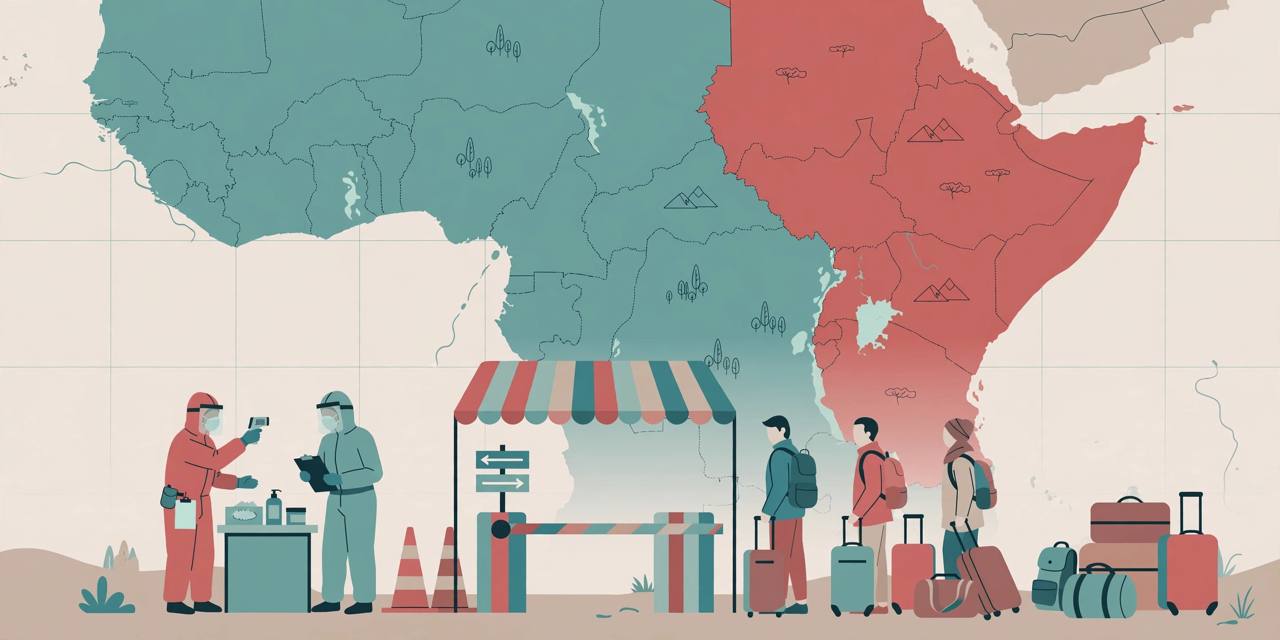
The World Health Organization has raised its estimated risk of Ebola Bundibugyo virus disease (BVD) being imported into South Sudan from the neighbouring Democratic Republic of Congo (DRC) to 99 percent, up sharply from 67 percent in June, the WHO Regional Office for Africa said in an update published on Thursday.
Source: WHO Regional Office for Africa, Nov 12, 2026
South Sudan has not reported any confirmed case of Bundibugyo virus disease, WHO stressed. The rising risk is driven, it said, by porous borders, cross-border trade, population movements, humanitarian displacement and major transport corridors, particularly along the western and southern border areas with the DRC.
Source: WHO Regional Office for Africa, Nov 12, 2026
The recent detection of BVD in Nagero town, in the DRC's Dungu Health Zone, has brought the risk closer, WHO said. In the South Sudanese border town of Nabanga, it added, fear of the ongoing outbreak across the border is already shaping daily life.
Source: WHO Regional Office for Africa, Nov 12, 2026
What preparedness looks like on the ground
A joint assessment by health authorities and partners in September identified 3,450 people who had crossed into South Sudan from the DRC amid rumours and growing community concern, WHO said. Health authorities are responding through border screening and community engagement, with targeted preparedness in 15 high-risk counties.
Source: WHO Regional Office for Africa, Nov 12, 2026
As of the end of October, South Sudan's overall readiness level stood at 72.5 percent across 11 response pillars, WHO said, alongside strengthened surveillance, screening, isolation and referral capacities. Surveillance investments had recorded a cumulative 76 BVD alerts by October 30.
Source: WHO Regional Office for Africa, Nov 12, 2026
A full-scale simulation exercise held from October 19 to 24 found that South Sudan could detect suspected BVD cases but was not yet adequately equipped to contain an outbreak safely, WHO said — a gap the agency and the Ministry of Health are working to close under the National Bundibugyo Virus Disease Preparedness and Response Plan.
Source: WHO Regional Office for Africa, Nov 12, 2026
Six embassies press Juba on health spending
In a joint statement issued on Thursday, November 12, the embassies of Germany, Japan, the Netherlands, Norway, the United Kingdom and the United States warned of a high risk of an Ebola outbreak in South Sudan and called on the government to increase public health funding, pay health workers' salaries and ensure unrestricted humanitarian access across the country.
Source: Addis Standard, Nov 13, 2026
South Sudan's Ministry of Foreign Affairs rejected what it described as public statements that could create unnecessary fear, emphasising that no confirmed cases had been reported and urging diplomatic missions to raise their concerns through established channels, Addis Standard reported.
Source: Addis Standard, Nov 13, 2026
What happens next depends on whether the virus crosses the border: WHO and South Sudanese health authorities say preparedness and readiness work is being intensified in line with the preparedness plan and the International Health Regulations (2005) emergency committee's temporary recommendations, while the DRC outbreak continues on the other side of the frontier.