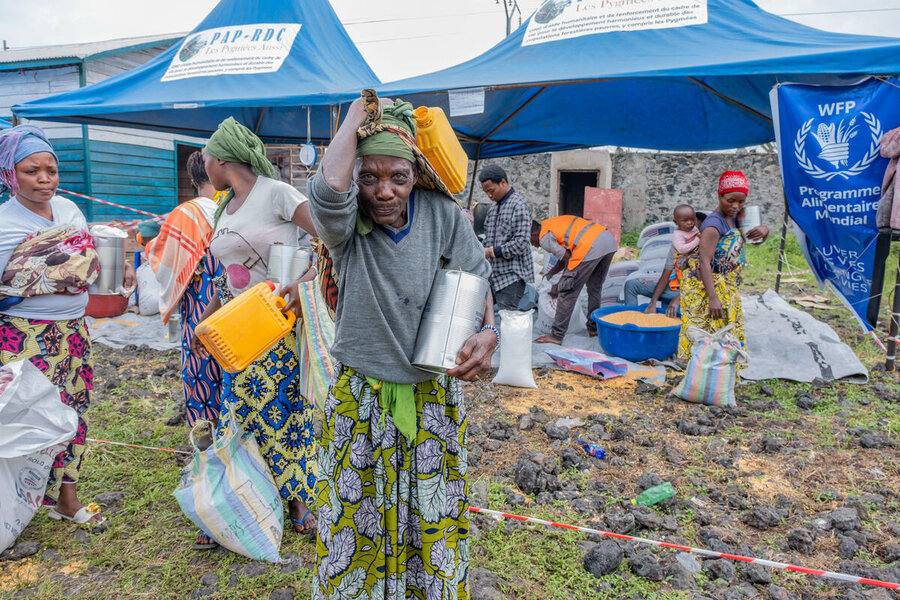
Hunger in the Democratic Republic of the Congo (DRC) is set to reach a record level, with 30.3 million people projected to face Crisis levels of acute food insecurity or worse between January and June 2027, four United Nations agencies warned on Friday, November 13, citing the latest Integrated Food Security Phase Classification (IPC) analysis.
Source: FAO / WFP / UNICEF / WHO joint release via UNICEF, Nov 13, 2026
Nearly 29 million people — 28.8 million, or 23 per cent of the population analysed — are already facing acute food insecurity at Crisis level or worse between September and December 2026, including 3.6 million people at Emergency levels of hunger. By early 2027, the number in Emergency conditions is projected to rise by nearly 600,000 to 4.2 million, the Food and Agriculture Organization (FAO), the World Food Programme (WFP), UNICEF and the World Health Organization (WHO) said.
The agencies said armed conflict, mass displacement and rising food prices are driving the crisis, compounded by disease: an Ebola outbreak that has accumulated nearly 11,200 cases and around 5,500 deaths in less than six months, according to UN reporting, alongside cholera, mpox and other epidemic outbreaks. Displacement is separating families from their farmland while insecurity disrupts markets and farming itself.
The east bears the worst of it
More than 11 million people in the eastern provinces of North Kivu, South Kivu and Ituri are projected to be in Crisis or worse in the first half of 2027, and the FAO's representative in the DRC, Ibrahim Abdoul Nasser, told a UN briefing in Geneva that more than 80 per cent of the people facing food insecurity are in those three provinces. Nine territories are projected at Emergency level: Djugu in Ituri; Lubero, Masisi and Oicha in North Kivu; and Fizi, Kalehe, Mwenga, Shabunda and Walungu in South Kivu.
"Conflict is driving families from their homes, cutting them off from their fields and putting food beyond their reach," said Ross Smith, the WFP's Director of Emergency Preparedness and Response. At the Geneva briefing, the WFP's Director of Food Security and Nutrition Analysis, Jean-Martin Bauer, repeated the warning: nearly 29 million people are facing acute food insecurity now, and the number is projected to rise to 30.3 million in early 2027, with conflict and disease the two main compounding factors.
The four agencies warned that humanitarian assistance is now falling dangerously behind growing needs. They said agricultural support delivered before planting in early 2027 could still help families harvest by the middle of the year. The projection is not a declaration of famine — the IPC's most severe category, Phase 5 — but the agencies called for urgent action and safer access to communities before conditions worsen further.
At 30.3 million people in Crisis or worse, the DRC projection would be the largest hunger caseload the IPC has recorded for the country — up from 26.5 million in the same period of 2026 — driven by the same eastern conflict and the deadliest Ebola outbreak in the country's history, both already straining aid operations on the ground.