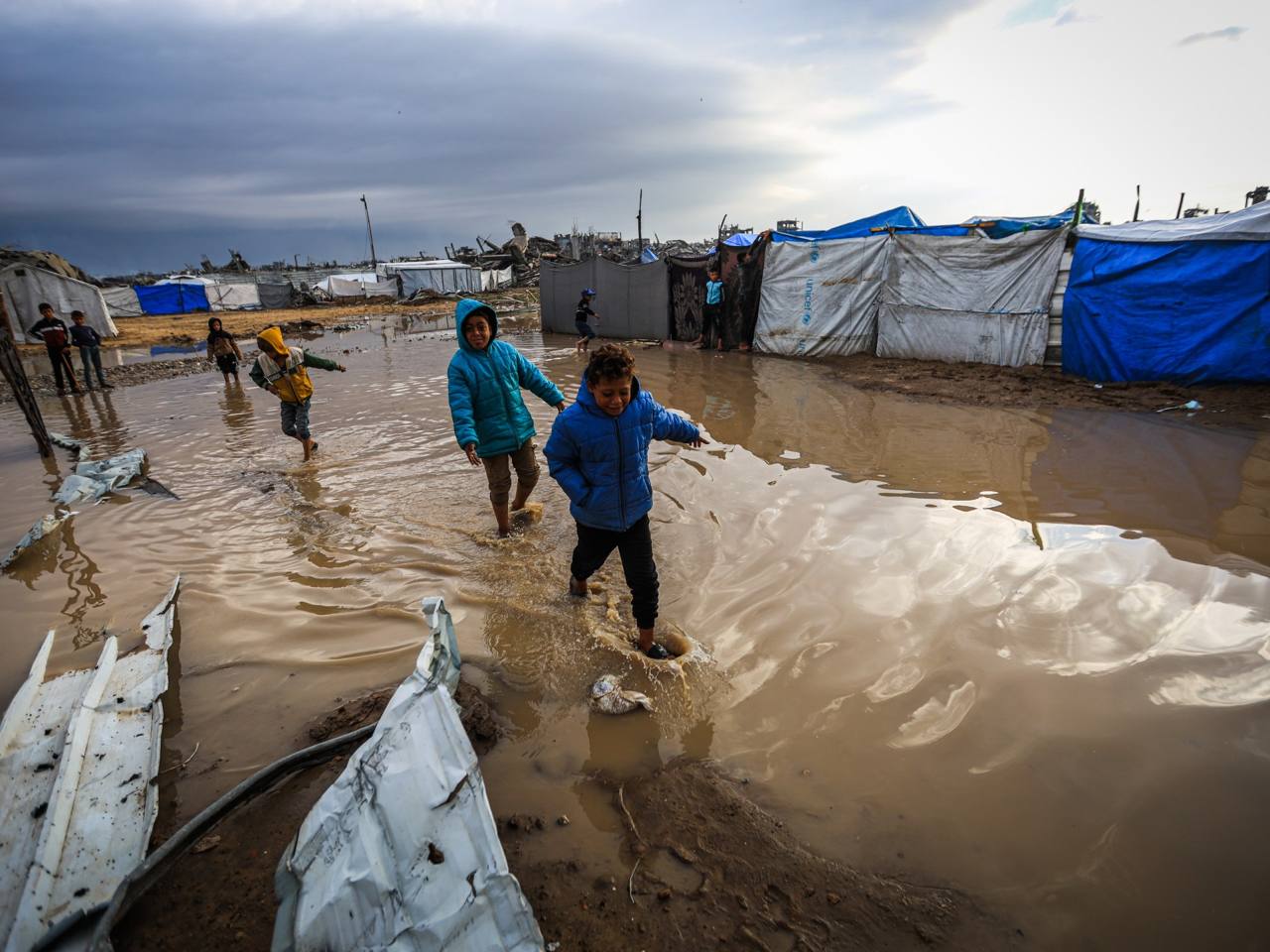
The Humanitarian Country Team (HCT) in the Occupied Palestinian Territory - the forum that brings together the heads of UN agencies and international and Palestinian non-governmental organisations - issued an urgent appeal on Friday, November 13, saying winter supplies must enter the Gaza Strip immediately because 'lives are at stake', in the wake of deadly rainfall this past weekend.
Source: UN News
'The devastating impact of the latest rainstorm in Gaza was preventable,' the team said in its statement. 'Children and adults were killed, critical services suspended, and thousands of family shelters flooded, swept away, or torn apart - not by the storm alone, but by policy decisions.' The statement did not publish a consolidated casualty figure for the rainstorm.
The team said the humanitarian community had presented a plan months ago to help Palestinians prepare for the 2026-2027 winter season. The plan set out what agencies would deliver: shelter, improved health and protection services, drainage and sandbag reinforcement, and support for people choosing to relocate from dangerously damaged buildings and flood-prone displacement areas.
It also identified the supplies that needed to enter Gaza: tents, cement, warm clothes, blankets, sandbags and safe heaters; pumps, generators, fuel, engine oil and spare parts; equipment to pump out water, remove debris and clear explosive ordnance; and oxygen concentrators, laboratory equipment, vaccines, antibiotics, medicines and supplies to combat infectious diseases.
Source: ReliefWeb / OCHA - HCT statement
Although funding 'has fallen far short of what is needed', more than 150,000 tents procured by humanitarian partners and Member States are outside Gaza ready for dispatch, most of them in Al Arish, just 50 kilometres from Khan Younis, the statement said. Inside Gaza, each rainstorm destroys more tents and the needs keep growing, it added, warning that figures on incoming supplies do not mean people's needs have been met.
The team underlined Israel's obligation, as the Occupying Power, to ensure the basic needs of Gaza's population. 'Yet Israeli policies continue to obstruct the entry of critical items as well as access to most of Gaza's land, including areas away from the shoreline that are less prone to flooding,' it said, adding that incoming supplies face multiple approval requirements, limited crossing capacity and unpredictable or narrow delivery windows.
Israeli authorities dispute the picture of blocked aid. Israel's Coordinator of Government Activities in the Territories (COGAT) announced on social media that, as of November 11, more than 91,000 tents had entered Gaza under its winter plan, and Israeli figures cited in coverage of the appeal put the total since the start of winter at more than 93,000 tents, alongside hundreds of trucks of winter supplies. The HCT statement did not include an Israeli response.
What is solid
- The HCT issued its urgent appeal on Friday, November 13, 2026
- More than 150,000 tents are outside Gaza ready for dispatch, most in Al Arish, according to the HCT
- A winter-preparedness plan was presented by aid agencies months ago, according to the HCT
What is only claimed
- Whether Israeli policies are obstructing winter supplies - the HCT says they are; COGAT says more than 91,000 tents had entered Gaza under its winter plan by November 11
The appeal follows weeks of warnings as cold and rainy weather, severe overcrowding, deteriorating shelters and poor water and sanitation conditions create what UN News called a high disease-transmission environment across Gaza. UN emergency relief coordinator Tom Fletcher had already warned on November 11 that winter-supply delays would cost lives, and a baby's cold-related death in a Khan Younis tent was reported on November 12.
The earlier warning from the UN's relief chief, before the deadly rainstorm, is here: Fletcher's November 11 winter-aid warning
What happens next: the team called on Israeli authorities to expedite life-saving supplies in sufficient quantities, every day and through every available crossing, lift restrictions, enable repairs to water and wastewater networks, let all humanitarian partners operate and allow meaningful commercial activity. It also urged Member States to use their influence and provide funding without delay. 'Winter will last for months,' it said. 'Winter supplies must reach families immediately to prevent further loss of life and protect their dignity. People cannot wait.'