Latest News — Punjab, India, USA and the World
Awaaz Punjab is an independent digital news platform publishing original, source-verified reporting in English, Punjabi and Hindi. Every story below is published with its sources named and dated, and every article is available in all three languages. Our newsroom covers Punjab first — its politics, districts and the road to the 2027 assembly election — along with India, the Punjabi diaspora in the USA and Canada, and world affairs that touch Punjab's people, from the Gulf to North America.
An eight-count superseding indictment unsealed in Manhattan federal court on Tuesday charges Mohammad Baqer Saad Dawood al-Saadi, Mohsen Mohajeri and Mohammad Ali al-Hassani with terrorism offences for the IRGC and Kata'ib Hizballah, including a September plot against RAF Fairford in England, where US bombers were stationed. Prosecutors allege al-Saadi coordinated from a New York jail cell through coded family calls. Only al-Saadi is in custody; all charges are allegations and Iran has denied involvement in the Fairford episode.
Published 2026-11-10 · Awaaz Punjab
Travis Shaquann Fair escaped from FCI Edgefield in South Carolina on November 8 while serving 80 months for a felon-in-possession gun conviction. On Tuesday morning a four-agency Marshals task force found him hiding in a hotel off Tunnel Road in Asheville — his home town — and took him back into custody without incident.
Published 2026-11-10 · Awaaz Punjab
A major new development in the October case this site first reported when NYPD was searching for a suspect: the department announced Nov. 10 that Rivera-Deleon was taken into custody at his Miami workplace by the U.S. Marshals NY/NJ fugitive task force, with alleged links to two earlier park attacks.
Published 2026-11-10 · Awaaz Punjab
The NYCAIRR center, first announced in January, is now formally live with 80-plus researchers, interim leaders from Cornell Tech and Columbia, and a RAISE Act registration portal that gives big AI developers until January 1, 2027 to sign up with the state.
Published 2026-11-10 · Awaaz Punjab
Ukraine's Foreign Minister Andrii Sybiha urged US Secretary of State Marco Rubio in Paris on Tuesday, November 10, 2026, to front-load air-defence interceptor deliveries as Russia targets the power grid ahead of winter, and said Black Sea ceasefire proposals sent via Turkey, Egypt and India still await a Russian reply.
Published 2026-11-10 · Awaaz Punjab
A major new development in the October 25 crash this site first reported: Conroe police on Nov. 10 named the pickup driver, said a warrant was secured with the DA's Vehicular Crimes Unit, and confirmed Lamoreau surrendered at the Montgomery County Jail on Nov. 9 after leaving hospital.
Published 2026-11-10 · Awaaz Punjab
A woman identified as Pinky, a resident of Bulandshahr, was allegedly beaten to death with a brick in the Indrapuri Chowki area under the Loni Border police station in Ghaziabad on Monday, November 9, after an argument with Pintu, a man she had befriended on Facebook four to five months earlier, police said. The accused has been detained and is being questioned, and the body has been sent for a post-mortem examination.
Published 2026-11-10 · Awaaz Punjab
San Jose police announced on Monday, November 9, that three men — Dennis Jackson, 19, of Stockton; Charles Gaston, 30, of Sacramento; and Richard Burton, 32, of Tracy — have been arrested over an August 7 armed robbery in which a family of three, including a child, was held up at gunpoint in their East San Jose driveway and robbed of jewellery and belongings. Detectives say automated licence plate reader data identified the suspect vehicle. All three were booked into Santa Clara County Main Jail on armed robbery charges; the charges are allegations and the men have not been convicted.
Published 2026-11-10 · Awaaz Punjab
MEA spokesperson Randhir Jaiswal trashed remarks by two USCIRF commissioners alleging vigilante attacks on gurdwaras, and asked why the body stays silent on attacks on religious places and hate crimes against Indians in the US.
Published 2026-11-10 · Awaaz Punjab
In an unsigned order in Mullin v. Friends of the Ruidosa Church, the justices stayed Judge Kathleen Cardone's October 2 injunction, said there is no such thing as a 'constitutional' major-questions claim, and cited a delay cost of more than $460,000 a day — while leaving the lawfulness of three DHS waivers undecided.
Published 2026-11-10 · Awaaz Punjab
Air quality across Rajasthan remained in the 'poor' to 'very poor' range for a second consecutive day on Tuesday, days after Diwali, with CPCB data putting Sri Ganganagar at 272, Alwar at 270 and Bikaner at 259, while Jaipur's worst locality, Mansarovar, recorded 230.
Published 2026-11-10 · Awaaz Punjab
Riverside County sheriff's deputies found Shawn Ripley, 55, with a gunshot wound on Pecan Street in Wildomar at 2:04 a.m. on November 7; he died in hospital. Homicide investigators arrested Daniel Grossman, 34, of Brea at his home on November 8 and served a second search warrant in Fullerton. He was booked into the Cois Byrd Detention Center on suspicion of murder, and the Sheriff's Office says the investigation is ongoing, with no motive released.
Published 2026-11-10 · Awaaz Punjab
Passengers reported login, search and payment trouble on the IRCTC website and app during peak festive hours on Tuesday. IRCTC said the portal never shut down — exceptionally high concurrent logins slowed it — and that e-ticketing is now normal on all channels.
Published 2026-11-10 · Awaaz Punjab
The UN Special Rapporteur on the situation of human rights in Myanmar, Kelley E. Currie, will conduct a country visit to Bangladesh from November 11 to 18, 2026, the UN human rights office announced on Tuesday. She will assess the impact of Myanmar's deteriorating human rights situation on Bangladesh, with particular attention to Rakhine State, the broader armed conflict, the situation of Rohingya refugees and future cooperation, visiting Dhaka and the camp sites in Cox's Bazar district. Currie had formally requested a visit to Myanmar itself and was informed by the regime that it is not ready to accommodate one. Her Bangladesh visit ends one day before the International Court of Justice delivers its judgment in The Gambia's genocide case against Myanmar on November 19.
Published 2026-11-10 · Awaaz Punjab
Eight people — five road construction workers, two National Police Reservists and a driver — were killed in Mandera County in northeastern Kenya on Tuesday morning when suspected al-Shabaab militants ambushed a security vehicle escorting a road-building team near the Somali border, police and a senior regional official said. The attackers were believed to have crossed from Somalia, and no group had claimed responsibility at the time of reporting.
Published 2026-11-10 · Awaaz Punjab
Mackenzie McGee slowed or stopped in a northbound lane of I-71 early Saturday and moved into a semi's path, Columbus police say; she died Monday night at Grant Medical Center, and investigators have not said why her car slowed.
Published 2026-11-10 · Awaaz Punjab
The Punjab Congress will launch its statewide 'Punjab Mangda Insaaf' (Punjab Demands Justice) outreach campaign at 11 am on November 11 from Punjab Congress Bhawan in Chandigarh, party president Pargat Singh has announced in a signed letter — a drive the party says will take its fight over drugs, the farmers' crisis, law and order and the alleged neglect of youth and workers directly to affected families across the state's Assembly constituencies ahead of the 2027 elections.
Published 2026-11-10 · Awaaz Punjab
Members of the U.S. Marshals Great Lakes Regional Fugitive Task Force were preparing to serve an arrest warrant at a South Hermitage Avenue home around 9:35 a.m. Monday when the man shot himself, Chicago police said. No officer fired a weapon, and the department's Investigative Response Team is investigating.
Published 2026-11-10 · Awaaz Punjab
The Election Commission of India has told the Delhi High Court that a 'grave and highly sensitive' objection alleging separatist roots continues to block a final decision on registering Akali Dal (Waris Punjab De) — the organisation headed by jailed Khadoor Sahib MP Amritpal Singh that plans to contest the 2027 Punjab Assembly elections — because a comprehensive background inquiry report from Punjab's Chief Electoral Officer is still awaited. The allegation is an untested input, not a court finding.
Published 2026-11-10 · Awaaz Punjab
The Central Pollution Control Board said on Tuesday that Delhi's missing Diwali-night PM2.5 readings were excluded because its analysers are calibrated only up to 1,000 micrograms per cubic metre — after a Hindustan Times analysis found 125 hourly readings, every one above that mark, absent from the central record.
Published 2026-11-10 · Awaaz Punjab
European nations have taken no concrete steps to strengthen shipping protection in the Red Sea, Italy's defence minister Guido Crosetto said on Tuesday, November 10, 2026, adding that governments have failed to respond to his calls to bolster the European Union's Aspides naval mission. In September, Crosetto urged the EU to bolster Aspides, launched in 2024 to protect commercial shipping from attacks by Yemen's Iran-aligned Houthis. 'I have yet to see anything concrete,' Crosetto told Reuters, although he said EU foreign policy chief Kaja Kallas had 'fully understood' the importance of Italy's request. After his appeal, Kallas wrote to the bloc's 27 member states urging them to increase their contributions, saying more than 10 warships would be needed for the mission to be truly effective; Italian daily Il Sole 24 Ore reported talks on boosting contributions have so far been inconclusive.
Published 2026-11-10 · Awaaz Punjab
Foreign Secretary Vikram Misri and France's Martin Briens co-chaired the dialogue in Paris on November 10, reviewing ISRO-CNES cooperation and opening pathways for commercial space collaboration, the MEA said.
Published 2026-11-10 · Awaaz Punjab
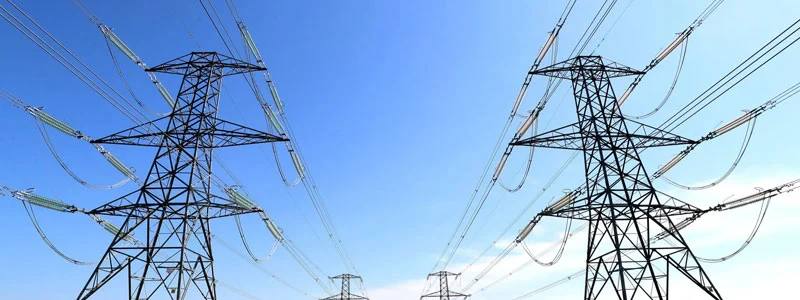
Aleksei Ivakhin, 48, took off from Bir Billing and got tangled in a high-tension line near Tandu; NDRF, SDRF, Home Guards and Fire Services brought him down by crane, and he is stable.
Published 2026-11-10 · Awaaz Punjab
Houston police say Tony Ledet Johnson was detained at the scene at 8615 Winkler Drive in the early hours of Sunday, November 8, interviewed by homicide detectives and charged after consultation with the Harris County District Attorney's Office. The 41-year-old victim died in hospital and has not yet been publicly named.
Published 2026-11-10 · Awaaz Punjab
Published 2026-11-10 · Awaaz Punjab
Published 2026-11-10 · Awaaz Punjab
Published 2026-11-10 · Awaaz Punjab
Published 2026-11-10 · Awaaz Punjab
Published 2026-11-10 · Awaaz Punjab
Published 2026-11-10 · Awaaz Punjab
Published 2026-11-10 · Awaaz Punjab
Published 2026-11-10 · Awaaz Punjab
Published 2026-11-10 · Awaaz Punjab
Published 2026-11-10 · Awaaz Punjab
Published 2026-11-10 · Awaaz Punjab
Published 2026-11-10 · Awaaz Punjab
Published 2026-11-06 · Awaaz Punjab
Published 2026-11-10 · Awaaz Punjab
Published 2026-11-10 · Awaaz Punjab
Published 2026-11-10 · Awaaz Punjab
Published 2026-11-10 · Awaaz Punjab
Published 2026-11-10 · Awaaz Punjab
Published 2026-11-10 · Awaaz Punjab
Published 2026-11-11 · Awaaz Punjab
Published 2026-11-11 · Awaaz Punjab
Published 2026-11-10 · Awaaz Punjab
Published 2026-11-10 · Awaaz Punjab
Published 2026-11-10 · Awaaz Punjab
Published 2026-11-10 · Awaaz Punjab
Published 2026-10-22 · Awaaz Punjab
Published 2026-10-19 · Awaaz Punjab
Published 2026-10-18 · Awaaz Punjab
Published 2026-10-18 · Awaaz Punjab
Published 2026-10-18 · Awaaz Punjab
Published 2026-10-18 · Awaaz Punjab
More from Awaaz Punjab
Our Editorial Standards
How we work: every story is checked against at least two independent, reputable sources before publication; allegations are labelled as allegations; figures carry the name of the outlet or agency that reported them and the date; corrections are published openly. Read our full verification method on the How We Verify page, our data desks on the School, Podcast and SUNO audio pages, and our numbered original investigations in the Investigations section.
Awaaz Punjab is an independent, trilingual newsroom — for Punjab, by Punjabis. We do not sell aggregated news; we publish investigations that stand on sources, with the outlet and date attached to every claim. Our first beat is Punjab's drug crisis, our second is Punjab politics. From Amritsar to Toronto — wherever a Punjabi lives, Awaaz Punjab reaches.