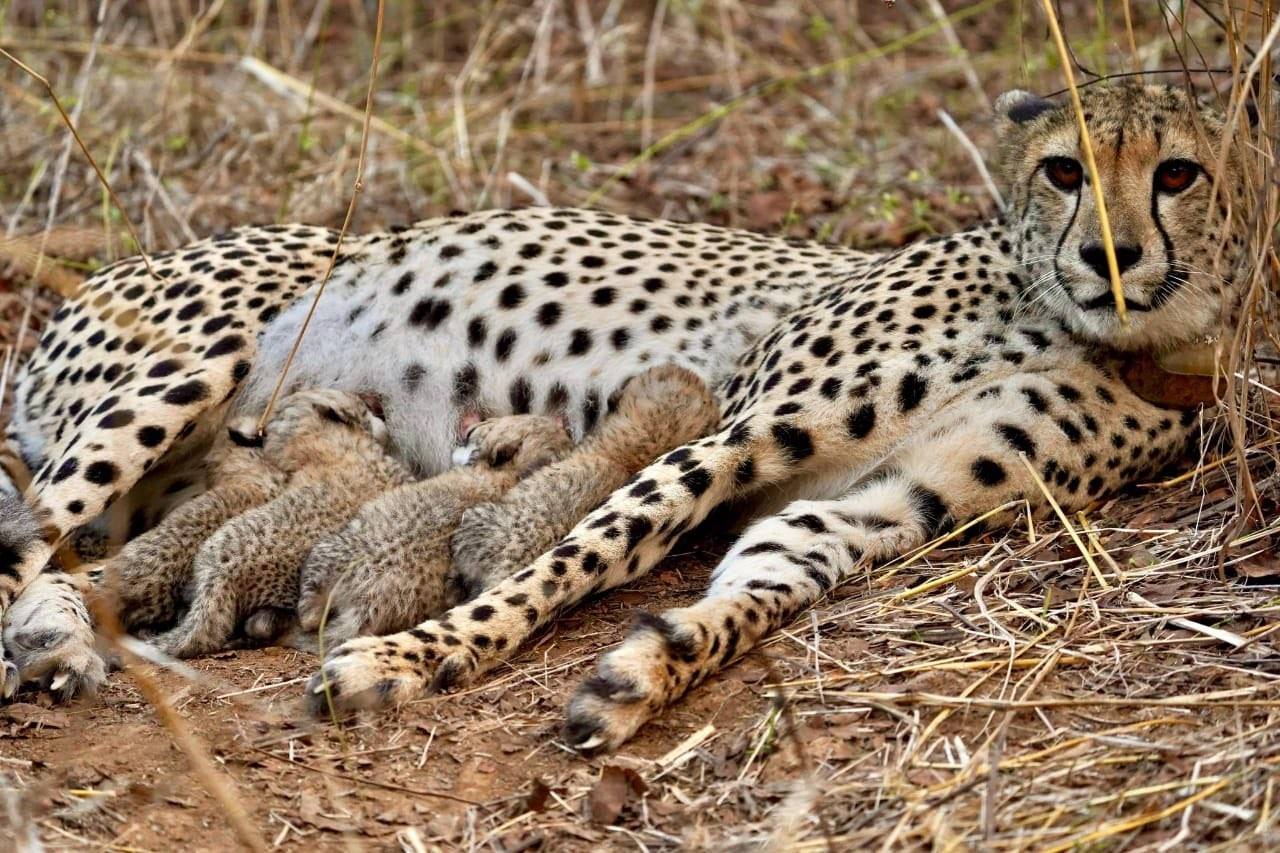
India's cheetah population has reached 62 after two litters added nine cubs at Kuno National Park in Madhya Pradesh, the government said on November 26, calling it an encouraging milestone for Project Cheetah.
Source: Press Information Bureau
The first litter arrived on 5 October 2026, when KJP21, a 32-month-old India-born female, gave birth to five healthy cubs. The second followed on 20 November, when KOMG 3, a 30-month-old female brought from Botswana, gave birth to four healthy cubs.
KOMG 3's litter was reported earlier this month as the first birth by a Botswana-born female in India. Read: Botswana cheetah KOMG 3 gives birth to four cubs in the wild at Kuno
Significantly, KOMG 3 became the first female cheetah brought from Botswana to give birth in India, delivering her cubs in free-ranging conditions after spending more than four months in the wild. Her litter is only the second recorded birth in the wild, outside the fenced areas, since the reintroduction programme began in 2022.
With the arrival of the November litter, India's cheetah population reached 62, including 43 cheetahs born within the country. India-born cheetahs now account for nearly 70 per cent of the total population.
Two milestones reached
The government said two milestones of the National Action Plan were reached with these births: breeding by the India-born (F1) generation, and birth in the wild. KJP21's litter was the first by a cheetah born in India.
The long-term objective is a self-sustaining population of 60 to 70 cheetahs by 2032. The current total of 62 reaches the lower end of that range — though the government noted the nine cubs are very young and their survival cannot yet be taken for granted, making the milestone encouraging rather than final.
Project Cheetah uses African cheetahs to rebuild a population in India, which lost its native cheetahs more than seven decades ago. The programme widened on 28 February 2026, when nine cheetahs arrived from Botswana. Kuno National Park, in Sheopur district, was set up as a wildlife sanctuary in 1981 and upgraded to a National Park in 2018.
What happens next: forest officials will monitor the nine cubs and their mothers through the winter, with the next population assessment expected as the young animals grow.