Latest News — Punjab, India, USA and the World
Awaaz Punjab is an independent digital news platform publishing original, source-verified reporting in English, Punjabi and Hindi. Every story below is published with its sources named and dated, and every article is available in all three languages. Our newsroom covers Punjab first — its politics, districts and the road to the 2027 assembly election — along with India, the Punjabi diaspora in the USA and Canada, and world affairs that touch Punjab's people, from the Gulf to North America.
An unidentified man snatched a white Mahindra XUV500 at gunpoint near Sujanpur on the Pathankot–Jammu National Highway late on Sunday night, forcing police in Punjab and Jammu & Kashmir to step up checking across border routes. Pathankot SSP Manpreet Singh told PTI police have important leads and are tracing the vehicle; police have not confirmed any terror link.
Published 2026-11-16 · Awaaz Punjab
The September 12 crash on Serrano Parkway was covered locally as a fiery single-car wreck with no mention of Autopilot. Tesla's report to NHTSA, surfaced on November 16, marks the system “Verified Engaged” at 74 mph. The CHP says the cause is still under investigation.
Published 2026-11-16 · Awaaz Punjab
Speaking at the White House as he left for Manila and Shenzhen on Monday, Donald Trump floated a possible meeting with North Korea's Kim Jong Un in China, said denuclearisation would lead Thursday's trilateral talks with Xi Jinping and Vladimir Putin, and added Iran and Ukraine to the agenda — while stressing no Kim meeting is confirmed and any invitation is Xi's to make.
Published 2026-11-16 · Awaaz Punjab
The Khadoor Sahib MP's lawyers filed a fresh application in Amritsar on Monday seeking custody parole from November 21 to 23 for the cremation, ash collection and bhog of Charan Kaur, after the one-day parole granted for November 14 could not be executed. The court of Additional Sessions Judge Parinder Singh issued notice to the Punjab government, which must reply on Tuesday.
Published 2026-11-16 · Awaaz Punjab
Mayor Zohran Mamdani and Commissioner Jessica Tisch announced Monday that the SRG — about 500 officers handling both counterterrorism and protest response since 2015 — will dissolve in the spring. A civilian dialogue division, a 30-officer First Amendment Support Team and bans on kettling, tear gas, long guns and crowd-control pepper spray replace it, drawing fire from the police union and from the mayor's own base at the same time.
Published 2026-11-16 · Awaaz Punjab
At the Press Council of India's National Press Day event in New Delhi on Monday, the minister questioned whether platform community guidelines can handle deepfakes and misinformation, as the Council released its 2026 Norms of Journalistic Conduct under the theme 'Journalism: Populist or Responsible'.
Published 2026-11-16 · Awaaz Punjab
The formal launch at Delhi's Hotel Maurya on Monday evening, six days after the book went on sale on November 10, drew Congress leaders, INDIA bloc partners and chief ministers; publisher HarperCollins India says more than two lakh copies have sold in under a week.
Published 2026-11-16 · Awaaz Punjab
Nepal's Prime Minister Balendra Shah will travel to New Delhi on November 22 for his first bilateral visit abroad since taking office in March, with a one-on-one meeting with Prime Minister Narendra Modi, delegation-level talks, air-route and reconstruction-aid discussions and a Janakpur-Ayodhya train inauguration on the reported itinerary — though neither government has formally announced the final schedule.
Published 2026-11-16 · Awaaz Punjab
The State Crime Commission voted November 10 to recommend a $5,000 minimum penalty per plate record shared against the rules, decertification for officers who break the sharing law, and a unanimous carve-out letting police share data with federal agencies without a court order when lives are at stake. A statewide survey behind the vote found 20 agencies reporting unauthorized use by their own staff.
Published 2026-11-16 · Awaaz Punjab
The Somali-flagged freighter, sailing from Tulcea in Romania to Egypt with 3,000 tonnes of wheat, overturned about 40 nautical miles off Cape Kaliakra on Monday morning. Bulgarian, Romanian and Turkish naval vessels joined the rescue; the cause is unknown, and officials have not confirmed a rescued sailor's claim of a two-drone attack.
Published 2026-11-16 · Awaaz Punjab
The CBI says NCB sub-inspector Ajit Singh Meena allegedly demanded Rs 25 lakh from a Shahjahanpur chemist to keep him out of an NDPS case, and that fellow sub-inspector Sumeet Kumar was caught accepting Rs 12 lakh in a trap near Tamil Sangam Marg. Both are in two days' police custody; the allegations are yet to be tested in court.
Published 2026-11-16 · Awaaz Punjab
Gangster Goldy Dhillon, described as an associate of Lawrence Bishnoi, has reportedly threatened actors Amitabh Bachchan and his son Abhishek in a social media post, claiming the arrest of two alleged shooters from Punjab would not stop an alleged attack plan and that bulletproof protection would not save them. Authorities have not verified the authenticity of the post, and every claim in it is reported here as the gangster's claim, not as fact.
Published 2026-11-16 · Awaaz Punjab
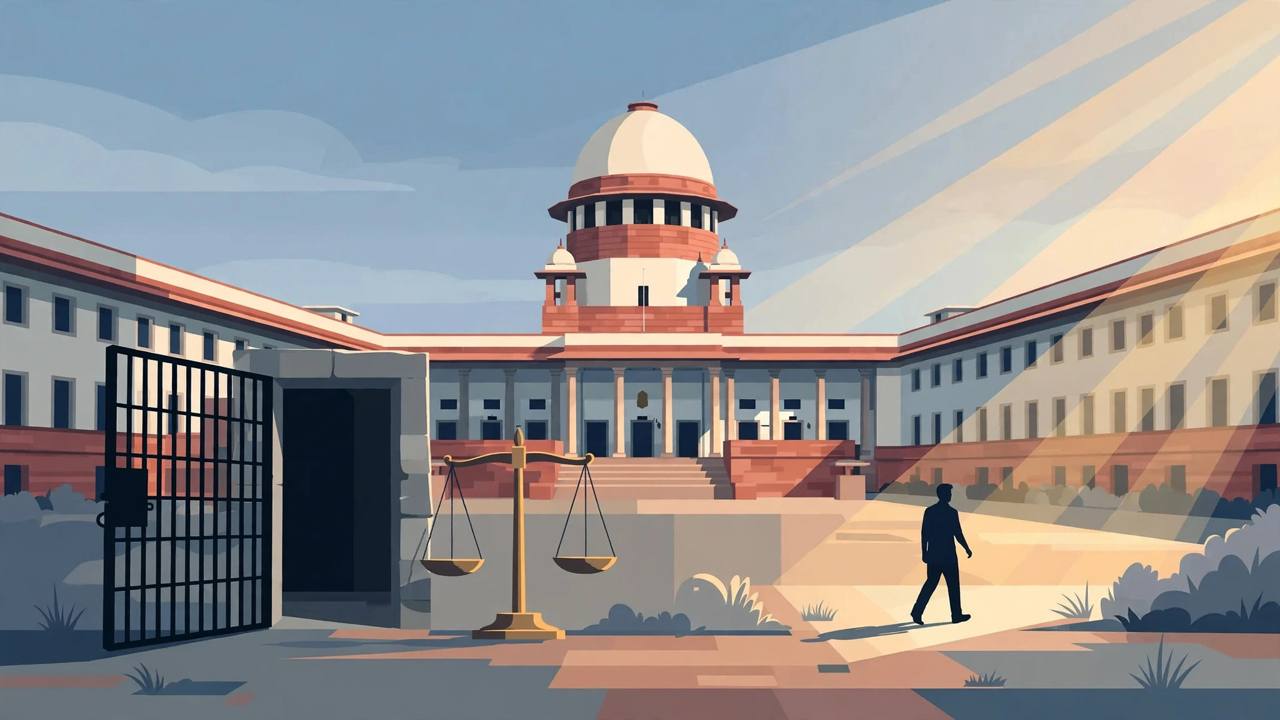
Holding that mere suspicion cannot defeat a civil claim supported by credible evidence, the Supreme Court on Monday restored a trial court's award of Rs 8.70 lakh with 6 per cent interest to a woman whose right hand was amputated after she touched a low-hanging live wire in 2011.
Published 2026-11-16 · Awaaz Punjab
The Tamil Nadu government told the Madras High Court on Monday that the DVAC has registered an FIR naming publisher Mohan as an accused, as searches were carried out at seven locations in the alleged fraudulent procurement of books for public libraries.
Published 2026-11-16 · Awaaz Punjab
Fairfax County police say FCPS reported concerns about alleged conduct toward a student on November 10, detectives arrested Morgan at his home on November 12, and he is held on no bond, suspended without pay, with court dates on February 1 and February 25. The charges are allegations and he is presumed innocent.
Published 2026-11-16 · Awaaz Punjab
Cascade PBS reports more than 300 children were arrested in Washington immigration enforcement in the first half of this year, advocates estimate over 1,000 children have had hearings this year, and Seattle's packed mega master dockets now average 50–60 cases on a regular day — up from about a dozen.
Published 2026-11-16 · Awaaz Punjab
The CBI says the two Narcotics Control Bureau officers were caught in a trap in Delhi's R K Puram after allegedly demanding Rs 25 lakh from a Shahjahanpur chemist to keep him out of an NDPS case; a court has sent them to two days of police custody.
Published 2026-11-16 · Awaaz Punjab
The justices declined to hear the Wyoming crypto bank's appeal, leaving the Federal Reserve's discretion over who gets direct access to its payment system untouched — even as rival Kraken holds a limited account from the same Fed bank.
Published 2026-11-16 · Awaaz Punjab
The justices turned away a gun-rights challenge to Maryland's location bans on Monday without comment. Justice Clarence Thomas said the bans may well be unlawful — but invited a narrower case to prove it.
Published 2026-11-16 · Awaaz Punjab
Bahrain's High Criminal Court convicted all 69 defendants on Monday — 64 life sentences and five 15-year terms, according to BIRD — in the IRGC-collusion trial that began July 5 after the May–June arrests of more than 50 clerics. Sheikh Isa Qassim, in Iran since 2018, was sentenced in absentia; rights groups allege torture and coerced confessions, while prosecutors say legal rights were upheld.
Published 2026-11-16 · Awaaz Punjab
The Idaho State Police says a 32-year-old Rigby man's Kia crossed into the westbound lanes of US 20 near milepost 374 at about 10 p.m. on Sunday to pass a semi, struck a California driver's Lexus head-on, and was then hit by an eastbound Freightliner. The Rigby man died at the scene; the 80-year-old Lexus driver was airlifted with non-life-threatening injuries, and the Ohio semi crew was unhurt.
Published 2026-11-16 · Awaaz Punjab
The Polk County Sheriff's Office says a semi tanker pulling out from the stop sign on 125th Avenue was turning south onto US 63 at about 4:15 a.m. on Sunday when a northbound pickup hit the rear of its trailer and caught fire. Both people in the pickup died at the scene; the semi driver was not hurt, and the names of the dead are still to be released.
Published 2026-11-16 · Awaaz Punjab
Punjab Chief Minister Bhagwant Mann on Monday appealed to Prime Minister Narendra Modi — in a post on X and at a state function in Sarabha, Ludhiana — to reopen the Sri Kartarpur Sahib Corridor, shut since May 7, 2025, for Guru Nanak Dev Ji's 557th Parkash Purab on November 24, saying devotees could visit and return the same day. AAP leaders Malvinder Singh Kang and Kuldeep Singh Dhaliwal joined the appeal; the Centre has announced no decision so far.
Published 2026-11-16 · Awaaz Punjab
The justices declined on Monday to review the Wyoming crypto bank's case, leaving the 10th Circuit's ruling in force: the Fed may refuse even an eligible bank direct access to the nation's payment plumbing.
Published 2026-11-16 · Awaaz Punjab
Published 2026-11-16 · Awaaz Punjab
Published 2026-11-16 · Awaaz Punjab
Published 2026-11-16 · Awaaz Punjab
Published 2026-11-16 · Awaaz Punjab
Published 2026-11-16 · Awaaz Punjab
Published 2026-11-16 · Awaaz Punjab
Published 2026-11-16 · Awaaz Punjab
Published 2026-11-16 · Awaaz Punjab
Published 2026-11-16 · Awaaz Punjab
Published 2026-11-16 · Awaaz Punjab
Published 2026-11-16 · Awaaz Punjab
Published 2026-11-16 · Awaaz Punjab
Published 2026-11-16 · Awaaz Punjab
Published 2026-11-16 · Awaaz Punjab
Published 2026-11-16 · Awaaz Punjab
Published 2026-11-16 · Awaaz Punjab
Published 2026-11-16 · Awaaz Punjab
Published 2026-11-16 · Awaaz Punjab
Published 2026-11-16 · Awaaz Punjab
Published 2026-11-16 · Awaaz Punjab
Published 2026-11-16 · Awaaz Punjab
Published 2026-11-16 · Awaaz Punjab
Published 2026-11-16 · Awaaz Punjab
Published 2026-11-16 · Awaaz Punjab
Published 2026-10-22 · Awaaz Punjab
Published 2026-10-19 · Awaaz Punjab
Published 2026-10-18 · Awaaz Punjab
Published 2026-10-18 · Awaaz Punjab
Published 2026-10-18 · Awaaz Punjab
Published 2026-10-18 · Awaaz Punjab
Original Reporting — Only on Awaaz Punjab
Some of what we publish exists nowhere else: our numbered Awaaz Punjab Jaanch Reports are original, document-based investigations, and our Punjab Election 2027 hub tracks all nine parties and all 117 MLAs with their official 2022 affidavit data, a promise-by-promise Vaada Tracker and reader polls — a permanent public archive built from primary records.
More from Awaaz Punjab
Our Editorial Standards
How we work: every story is checked against at least two independent, reputable sources before publication; allegations are labelled as allegations; figures carry the name of the outlet or agency that reported them and the date; corrections are published openly. Read our full verification method on the How We Verify page, our data desks on the School, Podcast and SUNO audio pages, and our numbered original investigations in the Investigations section.
Awaaz Punjab is an independent, trilingual newsroom — for Punjab, by Punjabis. We do not sell aggregated news; we publish investigations that stand on sources, with the outlet and date attached to every claim. Our first beat is Punjab's drug crisis, our second is Punjab politics. From Amritsar to Toronto — wherever a Punjabi lives, Awaaz Punjab reaches.