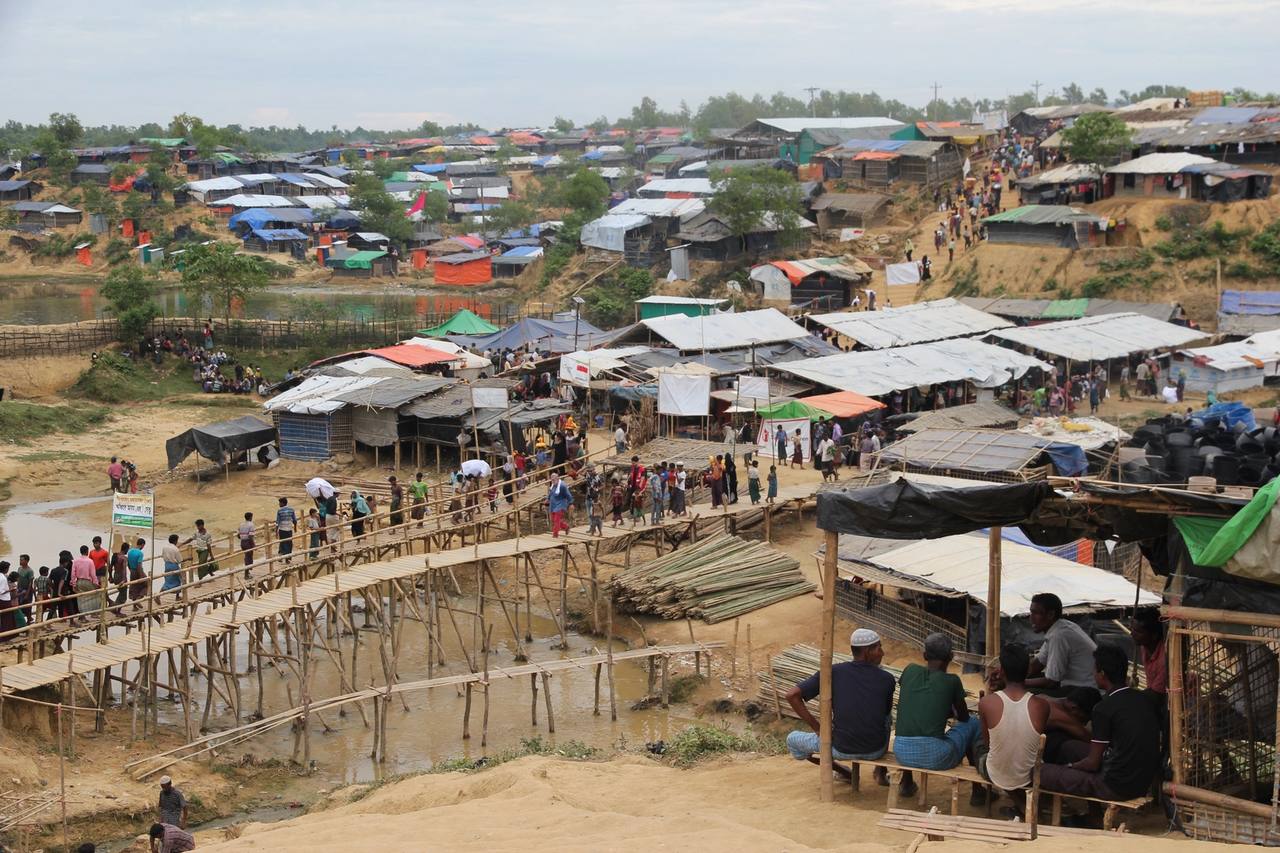
The President of the United Nations General Assembly visited the Rohingya refugee camps in Cox's Bazar, Bangladesh, on Friday and told thousands of refugees that Myanmar must bring them home, a day after the world's highest court found Myanmar committed genocide against the Rohingya.
Source: UN News
On Thursday, the International Court of Justice found Myanmar's forces committed genocide in 2017. Read our report on the ruling. Read the earlier story
General Assembly President Khalilur Rahman, who is also Bangladesh's Foreign Minister, addressed refugees gathered at a camp in Cox's Bazar. "Yesterday in The Hague, the highest court of the United Nations spoke. It spoke your name: Rohingya. Yes, Rohingya. Its decision was clear. What was done to you in 2017 was genocide," he said, according to UN News.
Source: UN News
"Myanmar must bring the Rohingya home," Mr. Rahman told the crowd, calling for a safe, voluntary and dignified return. "For years you have asked the world to hear you. Now they have heard you," he said. "You will not be alone. I will do my part."
Source: Bangkok Post
Four priorities to turn the ruling into action
Mr. Rahman set out four priorities. The first is justice: Myanmar must investigate and, where the evidence supports it, prosecute those suspected of genocide, and reform its laws. The second is a safe return: the court ordered Myanmar to make it possible for the Rohingya to come home voluntarily and with dignity, and Mr. Rahman said no one should be sent back into danger. Any return, he said, must come with real guarantees of safety, freedom of movement and a voice for the Rohingya in decisions about their future.
The third is reparations. The court ordered Myanmar to compensate victims and report back within two years. "Money cannot replace life. Money cannot replace loved ones that were lost," Mr. Rahman said — but meaningful reparations, he added, could help survivors regain a sense of safety, hope and dignity.
The fourth is prevention, through legal reform, training for the security forces and genuine civilian control over them. Mr. Rahman said the international community must also make sure the judgment is carried out, and pledged to work with UN member states on what comes next.
Myanmar has rejected the ruling. Its military government called the 9–6 judgment "unfair" and refused to accept it, a position this site reported on Friday. The court, ruling in a case brought by The Gambia, found that Myanmar's security forces and other state bodies committed acts of genocide in Rakhine state in 2017, involving mass killings, widespread sexual violence and the destruction of entire villages.
Before becoming Bangladesh's Foreign Minister and then Assembly President, Mr. Rahman served as his country's top envoy on the Rohingya issue and visited the camps many times. "I did not wish to speak to you from New York. I wish to come here to the camps and stand with you at this historic moment," he told the refugees. He also urged that aid to the refugees continue, while saying Dhaka "cannot be expected to shoulder" the cost alone.
"Let history record that 19 November, 2026, was the day the road home began for you," Mr. Rahman told the crowd. The ruling was the first time in the International Court of Justice's 80-year history that it has found a state responsible for genocide.
What happens next is uncertain. The court ordered Myanmar to pay compensation and report back within two years, but it has limited power to enforce its orders, and Myanmar has already rejected the verdict. One concrete step came separately on Friday, when Malaysia said it would resettle 10,000 Rohingya refugees in Türkiye through skills training.