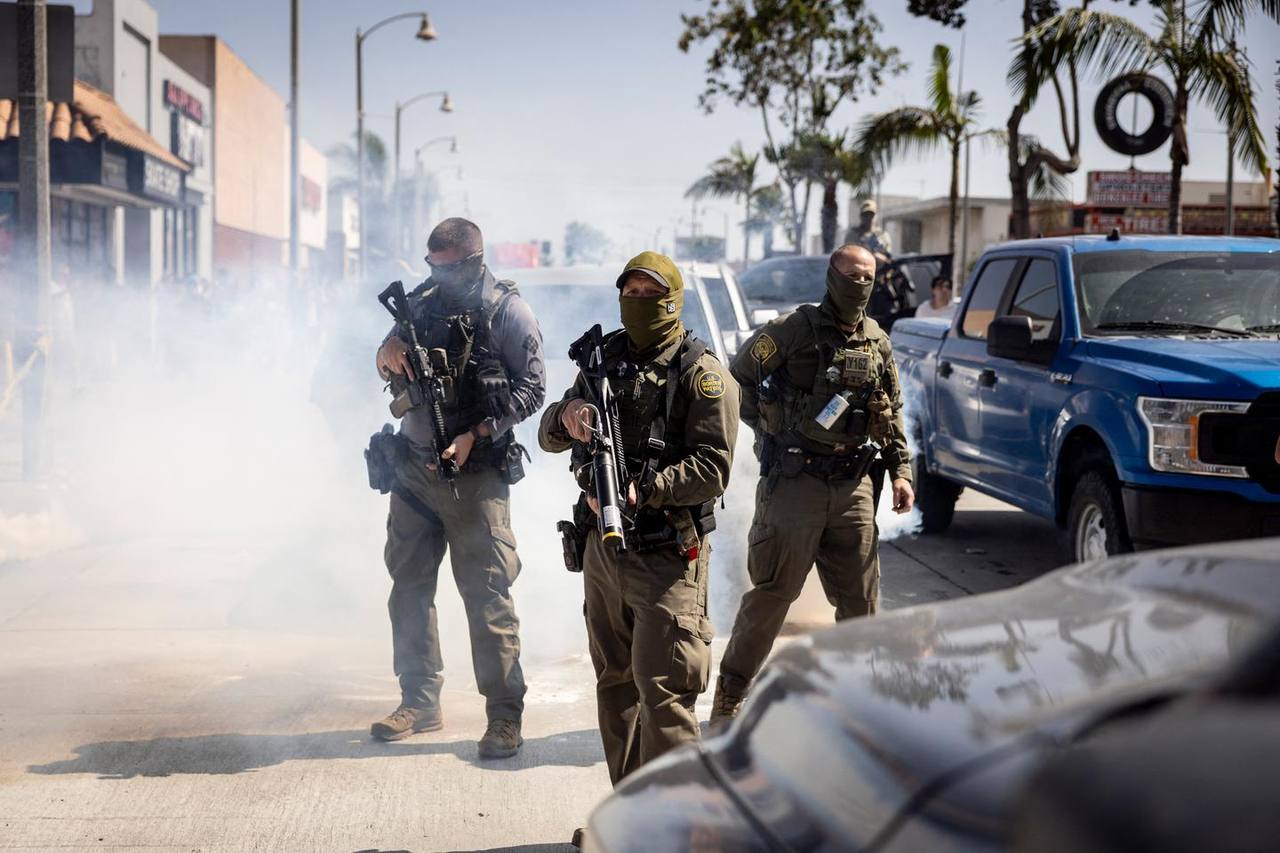
A federal judge in Los Angeles has permanently blocked California from enforcing its laws requiring federal immigration agents to remove their masks and show identification, ending a year-long court battle between the state and the Trump administration. U.S. District Judge Christina A. Snyder entered the permanent injunction on Tuesday, and the Justice Department announced the final resolution of the case on Thursday, November 19.
The order bars Governor Gavin Newsom and Attorney General Rob Bonta, in their official capacities, from enforcing four California statutes — Government Code sections 7288 and 7289 and Penal Code sections 185.5 and 13654 — against the United States, federal law enforcement officers and federal agencies. The case was dismissed with prejudice, and the court kept jurisdiction to implement and enforce the final judgment.
What the judge decided
"The Constitution does not permit states to interfere with federal operations or place federal officers and their families at risk," Associate Attorney General Stanley E. Woodward Jr. said in a statement on Thursday. "This injunction ensures that federal law enforcement officers can continue carrying out their important missions without unlawful state interference."
Source: U.S. Department of Justice
"This permanent injunction protects… the safety of federal law enforcement officers," Acting Assistant Attorney General Jonathan D. Guynn said. "The Federal Government, not the states, gets to decide what equipment federal officers may use and what measures they may take to protect themselves while performing their official duties."
Source: U.S. Department of Justice
A year-long legal fight
The Justice Department sued California on November 17, 2025, arguing the laws unlawfully interfered with federal enforcement by restricting officers' ability to protect their identities. On February 9, 2026, Judge Snyder issued a preliminary injunction blocking the mask ban as applied to federal officers, ruling it discriminated against the federal government because it exempted state officers, including the California Highway Patrol — while she let the identification requirement stand.
The identification law then lost on appeal. On October 14, 2026, a unanimous three-judge panel of the 9th U.S. Circuit Court of Appeals — Judges Jacqueline Nguyen, Mark J. Bennett and Daniel Collins — ordered the ID requirement blocked against federal officers. Judge Bennett wrote that "no set of circumstances exist under which the Act would be valid."
Last month's appeals court ruling blocked the identification requirement — the permanent injunction now ends the whole case. Read the earlier story
Attorneys for the state acknowledged in a court filing that the injunction ends the case. Although they said the state defendants continue to dispute the United States' claims, they agreed to resolve the matter rather than pursue additional appeals. Neither side had appealed the February mask ruling, so the 9th Circuit never ruled on the mask ban itself.
Why California passed the laws
The two laws were signed on September 20, 2025, after a summer of high-profile immigration enforcement operations in Los Angeles, when masked ICE and Customs and Border Protection agents became a familiar — and, for many residents, frightening — sight. The "No Secret Police Act," Senate Bill 627, banned officers, including federal agents, from wearing face coverings on duty. The "No Vigilantes Act," Senate Bill 805, required non-uniformed officers, federal ones included, to visibly display identification showing their agency and a name or badge number.
The bills were authored by Democratic state Senators Scott Wiener and Sasha Renee Perez. Democrats in California and across the country also considered measures targeting federal immigration enforcement after the killing of anti-ICE protester Renee Good in Minneapolis, according to reports on the case.
California tried again — and passed more laws
Senator Wiener vowed to rewrite the mask ban to cover state officers as well. On September 29, 2026, Governor Newsom signed the follow-up bill, Senate Bill 1004, which adds state peace officers to the mask ban and pushes the deadline for agencies' mask policies to January 1, 2027. This year the state also passed additional laws banning "wearable electroshock devices," barring ICE agents accused of serious misconduct from state employment and allowing residents to sue federal immigration officials — though state legislative analysts have warned that this year's court rulings could undermine those new laws.
What it means for Californians
For now, federal immigration agents operating in California may keep their faces covered and are not required by the state to display a name or badge number. Community advocates had pushed for the laws so residents could identify the officers carrying out arrests in their neighbourhoods; the ruling takes that tool away. The decision does not touch city measures — Fresno's city council, for example, voted this month to ban ICE from staging immigration operations on city property — but the legal reasoning behind the federal win is likely to be tested against those local rules too.
For Punjabi families and truckers across California — from the Central Valley to Los Angeles — the ruling means the masked-agent operations that drew protests through the summer and autumn will continue under the same federal rules, with no state identification requirement to fall back on. Anyone stopped or approached by federal agents should note the time, place, agency markings and any badge numbers visible, and seek legal advice before signing documents.
What happens next
The next test is Senate Bill 1004, the rewritten mask ban that now covers state officers. Its January 1, 2027 deadline for agency mask policies sets up a fresh legal fight over whether a uniform rule — one that treats federal and state officers alike — can survive. The court has kept jurisdiction over the case, so any dispute over the final judgment returns to Judge Snyder. California's newer 2026 enforcement laws face their own court challenges, and the ruling is likely to be cited in the other states — Virginia and New York passed similar mask laws, and courts have blocked those as applied to federal officers as well.
California's bid to force federal immigration agents to show their faces is over — for now. The permanent injunction ends the case, the state will not appeal, and the next round will be fought over the rewritten law that takes effect in January 2027.
What is solid
- Judge Snyder entered a permanent injunction on Tuesday, November 17, 2026, blocking enforcement of both California laws against federal officers.
- The case was dismissed with prejudice, and the state agreed to resolve it rather than appeal.
- The 9th Circuit blocked the ID requirement on October 14, 2026; the February preliminary injunction had blocked only the mask ban.
What is only claimed
- Whether face coverings are essential to officer safety — the Justice Department says masking protects officers and their families; critics say visible identification is essential for accountability during arrests.